The Solid-State Battery Breakthrough
After years of laboratory promises, solid-state electric vehicle batteries are finally approaching commercial production in 2026. Multiple automakers and battery manufacturers have announced timelines for mass production, with the first vehicles equipped with solid-state packs expected to reach consumers within the next twelve to eighteen months.
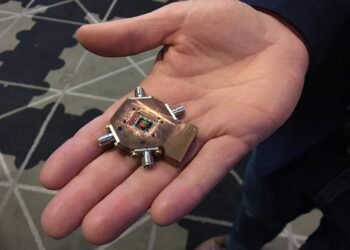
Solid-state batteries replace the liquid electrolyte found in conventional lithium-ion cells with a solid ceramic or polymer alternative. The result is a battery that charges faster, lasts longer, and—crucially—is far less prone to the thermal runaway events that can cause EV fires. Early prototypes demonstrate energy densities 40–50% higher than today’s best lithium-ion packs, translating to ranges exceeding 800 kilometres on a single charge for mass-market vehicles.
Automakers Commit to Timelines
Toyota, long considered the leader in solid-state battery research, has reaffirmed its target of limited production by 2027 and has begun building pilot manufacturing lines in Japan. Nissan has unveiled its own solid-state prototype and plans to begin pilot production at its Yokohama plant. Meanwhile, Chinese manufacturers including NIO and CATL are racing ahead, with semi-solid-state batteries already appearing in production vehicles in the Chinese market.
Volkswagen, through its battery subsidiary PowerCo, has partnered with US-based QuantumScape to industrialise the technology, reporting significant progress in manufacturing yield rates—historically the biggest barrier to commercial viability. QuantumScape’s latest results show that its ceramic separator technology can now be produced at scale with defect rates low enough for automotive-grade applications.
What It Means for Consumers
For everyday EV drivers, the arrival of solid-state batteries promises to address the three biggest remaining pain points of electric vehicle ownership: range anxiety, charging time, and long-term battery degradation. A solid-state pack that charges from 10% to 80% in under 15 minutes while retaining over 90% of its capacity after 500,000 kilometres would make the internal combustion engine obsolete for all but the most niche applications.
Analysts caution that early solid-state vehicles will command a premium—likely €8,000 to €12,000 above equivalent lithium-ion models—but project that costs will fall rapidly as manufacturing scale increases. By 2030, solid-state batteries are expected to reach price parity with today’s lithium-ion technology, paving the way for mass adoption across all vehicle segments.
The Netherlands, for internationals
One email a week: the week's news for internationals in the Netherlands, new practical guides and what changed in the cities. No spam, unsubscribe any time.