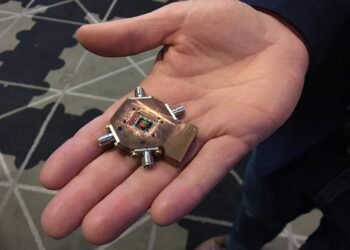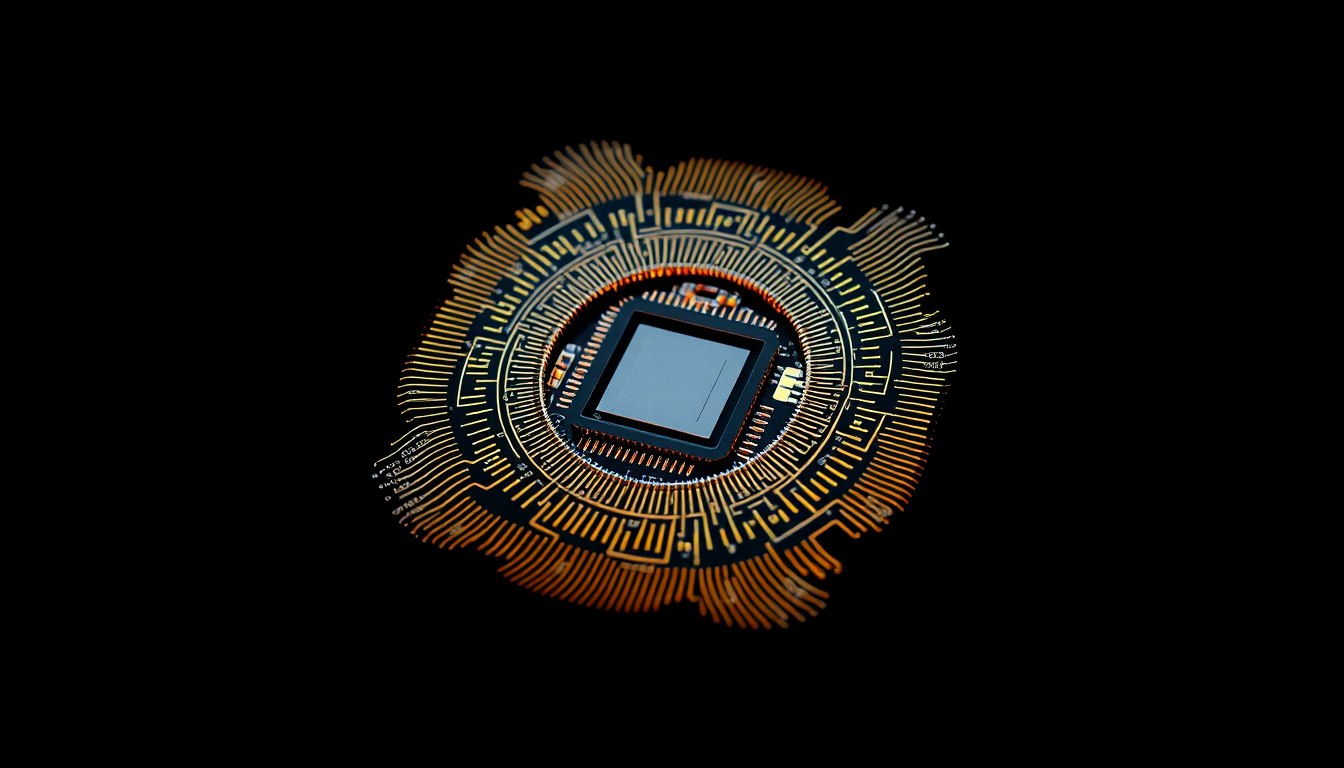
Europe’s quantum computing ambitions took a significant leap forward this month as Finland-based IQM Quantum Computers became the first European quantum hardware company to list on the Nasdaq, raising $340 million in its initial public offering. The listing marks a watershed moment for Europe’s quantum ecosystem and signals growing investor confidence in the continent’s ability to compete in the global quantum race.
IQM’s Nasdaq Debut
IQM, founded in 2018 as a spin-out from Aalto University and VTT Technical Research Centre of Finland, priced its shares at $18, giving the company a market capitalization of approximately $2.4 billion. The stock surged 34% on its first day of trading, reflecting strong demand for exposure to the superconducting quantum computing sector.
The company, which already operates quantum computers at facilities in Finland, Germany, and France, plans to use the proceeds to expand its manufacturing capacity and accelerate development of its 1,000-qubit processor, targeted for completion by 2028. IQM has also announced plans to open a quantum data centre in the Netherlands in partnership with QuTech at TU Delft.
Europe’s Quantum Ecosystem Matures
IQM’s IPO is just one signal of Europe’s growing quantum maturity. The European High Performance Computing Joint Undertaking (EuroHPC JU) has now deployed six quantum computers across the continent — in the Czech Republic, France, Germany, Italy, Poland, and Spain — with a further four sites planned by 2027. These systems are integrated with classical supercomputers, allowing European researchers to experiment with hybrid classical-quantum workflows.
In the United Kingdom, Oxford Quantum Circuits (OQC) recently announced a $150 million Series C round, while Paris-based PASQAL, which takes a neutral-atom approach to quantum computing, secured $110 million in fresh funding to expand its operations in North America and Asia.
The Geopolitical Dimension
Europe’s quantum push is increasingly viewed through a geopolitical lens. With the United States and China investing heavily in quantum research — and with export controls on advanced quantum technologies tightening — European policymakers see domestic quantum capability as essential for technological sovereignty.
The European Commission’s Quantum Flagship programme, now in its eighth year with over €1 billion in cumulative funding, has been renewed through 2030 with an expanded budget of €2.5 billion. The renewed programme places greater emphasis on commercialization and industrial adoption, reflecting a shift from pure research toward economic competitiveness.
Applications Coming Into Focus
While fault-tolerant quantum computing remains years away, near-term applications are beginning to demonstrate real-world value. European pharmaceutical companies including Roche and Bayer are using quantum-classical hybrid algorithms for molecular simulation in drug discovery. Financial institutions such as BBVA and Commerzbank are exploring quantum optimization for portfolio management and risk analysis.
The Netherlands, home to QuTech and a growing cluster of quantum startups, is positioning itself as a key node in Europe’s quantum network. The Dutch Quantum Delta NL programme has invested over €270 million since 2021 and recently announced a new €150 million funding round focused on quantum internet technologies and quantum sensing applications.
What’s Next
With IQM’s successful IPO opening the door for other European quantum companies to access public markets, and with sustained government investment creating a strong foundation for research and commercialization, Europe is poised to be a serious contender in the quantum computing era. The next milestone to watch: which European quantum company will be the first to demonstrate a clear quantum advantage on a commercially relevant problem.
The Netherlands, for internationals
One email a week: the week's news for internationals in the Netherlands, new practical guides and what changed in the cities. No spam, unsubscribe any time.