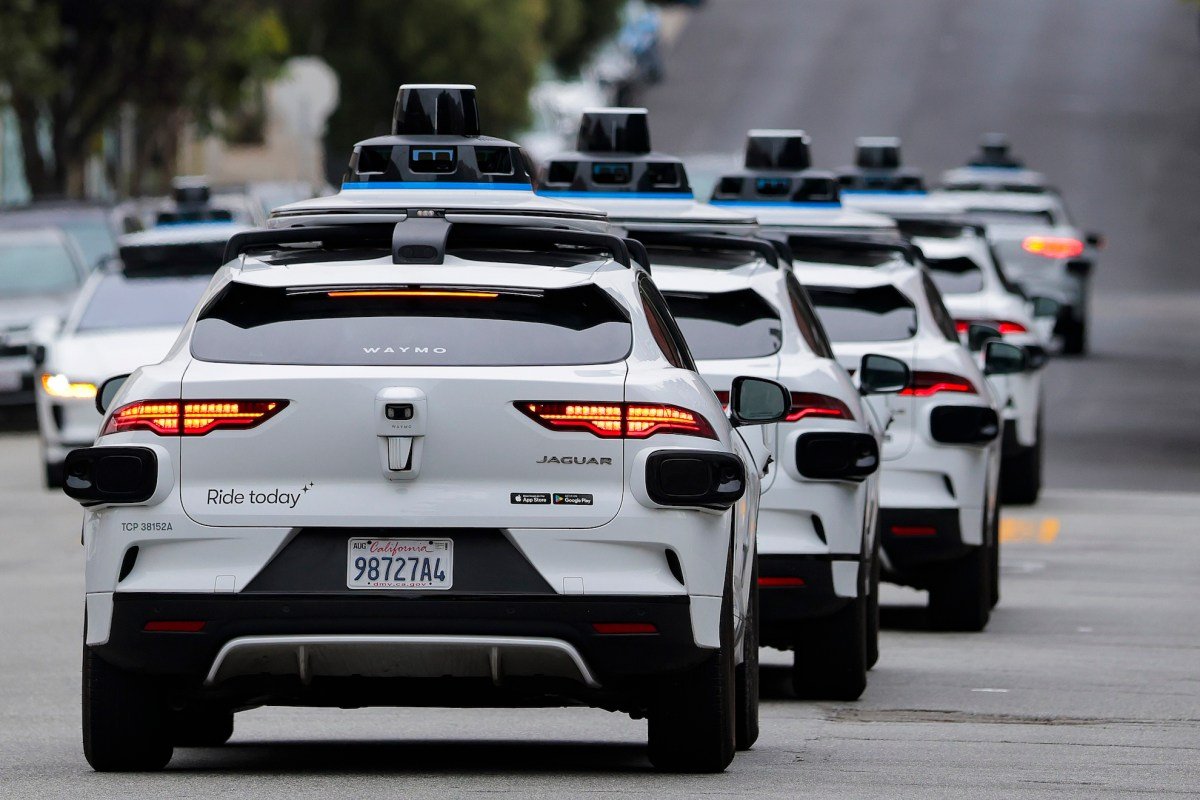
The National Highway Traffic Safety Administration has issued a blunt ultimatum to every company operating autonomous vehicles on American roads: stop interfering with emergency crews or face consequences. Administrator Jonathan Morrison sent a directive this week stating that robotaxis and other self-driving vehicles must be able to detect and appropriately respond to first responder scenes, calling the current inability to do so a functional insufficiency that cannot be dismissed as a rare edge case.
Morrison did not single out any specific company in his letter, but the message landed hardest on Waymo. The Alphabet subsidiary operates the largest robotaxi fleet in the United States, with thousands of vehicles roaming cities like Los Angeles, Phoenix, and San Francisco. A TechCrunch investigation earlier this year documented repeated run-ins between Waymo robotaxis and police, fire trucks, and ambulances. Just days before the NHTSA warning, San Francisco Supervisor Bilal Mahmood announced plans to investigate how autonomous vehicles affected emergency responders after a July 4 fireworks show created massive gridlock that left multiple Waymo vehicles stranded and requiring towing after their batteries died.
The directive gives AV developers a tight deadline. Companies must present solutions to the agency by the end of the month. Whether the NHTSA will take enforcement action beyond that remains unclear, but Morrison made the agency position unmistakable. Emergency scenes are not rare or extreme edge cases, he wrote, and the industry must immediately focus resources on fixing this issue.
Rivian raises $1.32 billion as R2 deliveries begin
In other mobility news, Rivian announced a major capital raise that surprised some observers. The electric vehicle maker sold 86.25 million shares of Class A common stock at $15.50 each, with underwriters purchasing an additional 11.25 million shares. The company said it expects to raise approximately $1.32 billion in net proceeds.
The timing is notable. Rivian began delivering its smaller R2 SUV just last month and recently raised its 2026 sales forecast to between 65,000 and 70,000 vehicles. The company credited strong quarter over quarter growth in its EDV delivery vans and R1 models, combined with the early R2 rollout, for beating its own expectations in the second quarter.
Rivian did not disclose a specific use for the new capital, but scaling production of a new vehicle line is expensive and the company is not yet profitable. The cash infusion gives it more runway to ramp up R2 manufacturing and continue developing its next generation vehicles.
Regulatory shifts could benefit steering wheel free vehicles
Meanwhile, the federal government published its 2026 Regulatory Plan and Unified Agenda, which includes a long list of proposed changes to Federal Motor Vehicle Safety Standards. These rules govern vehicle design and equipment requirements. Several proposed changes could ease the path for autonomous vehicle companies like Tesla and Zoox that are developing cars without steering wheels, pedals, or other traditional driver controls. If enacted, the updates would remove regulatory barriers that currently force such vehicles to include equipment designed for human drivers.
The autonomous vehicle policy landscape is also shifting at the local level. The Uber-Waymo partnership in Phoenix has ended, though the two companies still cooperate in Atlanta and Austin. Tension between the ride hailing giant and the robotaxi leader is growing. Uber executives have taken public shots at Waymo, and industry watchers expect the remaining partnerships to dissolve eventually. When they do, both companies are likely to compete aggressively over policy and market access in cities where robotaxi services are expanding.
On the venture capital front, Bidbus, a Los Angeles startup that built a digital marketplace enabling multiple dealers to bid on a single car, raised $15 million in a Series A round led by Ibex Investors. Lyft announced plans to acquire Serveo, a bike share business in Spain, though terms were not disclosed. In the battery space, UK startup TaiSan raised 4.65 million pounds in seed funding for next generation battery technology. And Beta Technologies completed operational eVTOL flights covering 275 nautical miles across Virginia and Maryland under a new FAA integration pilot program.
The race to deploy autonomous vehicles at scale is accelerating, but regulators are making it clear that safety cannot take a back seat. As companies like Waymo push into more cities, the tension between rapid deployment and public safety will only intensify. For a deeper look at how the leading players are competing in this space, check out our coverage of the humanoid robot race.
Industry Response and Compliance Challenges
The federal order has sent shockwaves through the autonomous vehicle industry. While major players like Waymo and Cruise have publicly committed to compliance, the technical challenges of implementing the new requirements are significant. Robotaxis must now be able to detect emergency vehicles at greater distances, interpret hand signals from traffic officers, and provide first responders with manual override capabilities that earlier vehicle designs did not include.
Smaller autonomous vehicle startups face particular challenges, as retrofitting existing fleets to meet the new standards can cost millions of dollars per vehicle. The industry has requested a phased implementation timeline, arguing that simultaneous compliance across all operational domains — from vehicle design to software updates to emergency protocols — is technically infeasible within the current deadlines.
Related: Edge AI Revolution: How On-Device Intelligence Is Reshaping the Tech Industry in 2026
The Netherlands, for internationals
One email a week: the week's news for internationals in the Netherlands, new practical guides and what changed in the cities. No spam, unsubscribe any time.