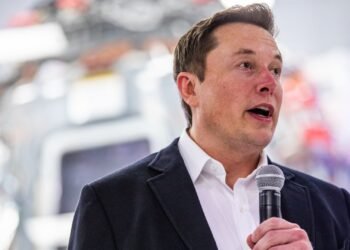

An OpenAI researcher whose work focused on using artificial intelligence to accelerate scientific discovery is leaving the company to start a new venture in drug discovery. Miles Wang, who joined OpenAI in 2024 after dropping out of Harvard, is in discussions to launch a startup that builds AI models for the pharmaceutical industry. Four sources familiar with the matter confirmed his departure and the formation of the new company.
A $2 Billion Ambition
Wang is reportedly in talks to raise approximately $200 million at a valuation of $2 billion. Lightspeed is in discussions to lead the funding round, according to two sources. However, the details are not yet final. Wang himself disputed the reported funding figures and the description of the company, though he did not provide corrected numbers. Lightspeed did not respond to requests for comment.
Several other OpenAI researchers are expected to join Wang at the new startup. The exact focus of the company remains somewhat unclear, but sources indicate the team is working on AI models that could help identify new uses for existing drugs. This approach, known as drug repurposing, can significantly shorten the time to revenue because the safety of these medicines has already been established through previous clinical trials.
Investors Bet on AI for Life Sciences
The funding discussions underscore a broader trend of venture capital flowing into AI-powered drug discovery. Just days before the news about Wang broke, Chai Discovery, a two-year-old startup that builds AI models to predict molecular interactions, announced it had raised $400 million at a $3.8 billion valuation. Chai Discovery was co-founded by Josh Meier, another OpenAI alumnus. Meanwhile, Isomorphic Labs, a spinout from Google DeepMind that also develops AI models for drug discovery, closed a $2.1 billion Series B in May.
These investments reflect growing confidence that AI can make breakthroughs in life sciences that have eluded traditional methods. The ability to model complex biological interactions and simulate drug candidates at scale could drastically reduce the time and cost of bringing new treatments to market.
Wang’s Background and Vision
Wang joined OpenAI in 2024 after leaving Harvard, where he was pursuing a bachelor’s degree in computer science. His decision to drop out aligns with a renewed willingness among investors to back young founders who have not completed college. At OpenAI, Wang co-authored research papers that explored how AI models could automate and accelerate scientific discovery. That work now forms the foundation of his new entrepreneurial effort.
The startup may also focus on reviving drugs that previously failed in clinical trials. By analyzing vast datasets with machine learning, Wang’s team could identify overlooked therapeutic potential in compounds that were abandoned for safety or efficacy reasons. This strategy could provide a faster path to market than developing entirely new molecules from scratch.
Wang’s move is the latest example of top AI talent leaving major labs to launch specialized startups. As the cost of training large models continues to drop and open source tools become more powerful, researchers see opportunities to apply AI to specific high value domains like drug discovery. The pharmaceutical industry, with its lengthy timelines and high failure rates, presents a natural target.
For now, the funding round remains in flux. The valuation and size of the investment could change before the deal closes. But the interest from Lightspeed and the exodus of OpenAI researchers suggests that Wang’s vision has attracted serious attention. If successful, the startup could help reshape how new medicines are discovered, bringing the power of AI to one of the most challenging scientific problems. For more on how artificial intelligence is transforming education and research, check out our AI in education coverage.