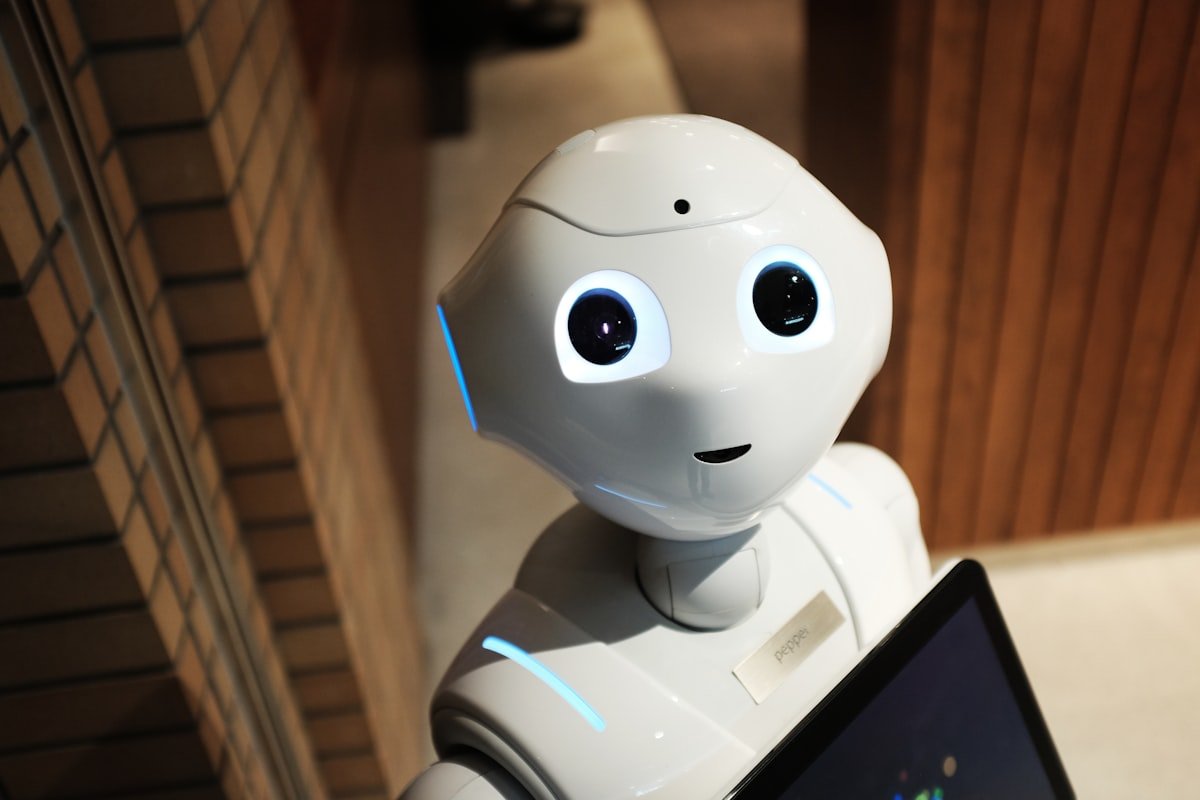
The most talked-about humanoid robot in China right now is not built to assemble cars or move warehouse pallets. It is built to keep you company. UBTech’s new U1, an ultra-biomimetic humanoid with realistic silicone skin and 88 degrees of freedom, is aimed squarely at living rooms, and it has reportedly drawn tens of thousands of orders already.
Research firm TrendForce published its analysis of the companion robot market on Thursday, and the headline figure is hard to ignore. The firm estimates humanoid companion robots will be a $1.1 billion market by 2030, driven by what its researchers call a companionship economy: aging populations, declining birth rates, and a steadily growing number of single-person households, all creating demand for machines whose job is emotional presence rather than productivity.
From factory floors to living rooms
UBTech is not a newcomer pivoting into robotics for attention. The Shenzhen company has specialized in humanoid machines for years, mostly aimed at industrial and research applications. The U1 extends that hardware expertise in an unexpected direction. Alongside the lifelike skin and articulation, the robot runs an emotion-focused large language model that can recognize multiple emotional states, and it targets family interaction and psychological support rather than work.
That ordering is deliberate, and it reverses the usual path. Most companion robot makers started with companionship and bolted on humanoid features later. UBTech built the humanoid first and is now teaching it to care. TrendForce argues this was made possible by the rapid advance of China’s supply chain, AI models, and manufacturing capacity, which lets sophisticated humanoid hardware be paired with emotional software at consumer prices.
Two philosophies of artificial company
Japan pioneered this category, and it did so with a very different design language. GROOVE X’s LOVOT is built entirely around emotional interaction and therapeutic companionship, deliberately forgoing productivity functions altogether. PARO, a seal-shaped therapeutic robot developed by Japan’s National Institute of Advanced Industrial Science and Technology, has been widely adopted by long-term care facilities for dementia care and psychological support. Both bet on cuteness, choosing cartoon-like and deliberately unrealistic designs to make the machines approachable.
Chinese developers are betting the other way. TrendForce describes a wave of products chasing realism: biomimetic appearances, expressive faces, natural conversation. Noetix Robotics sells Xiao Yue, a desktop companion with synchronized voice and facial expressions. Chunshuitang Health focuses on highly realistic human appearances, tactile feedback, and simulated body temperature. The U1 pushes the same idea all the way into full humanoid territory.
A new supply chain problem
TrendForce sees the U1 as a signal of something larger: the humanoid robot supply chain expanding beyond industrial buyers into consumer electronics. Companion machines still need the traditional components, the servo motors, reducers, and joint modules that any humanoid requires. But they also demand parts that factory robots never needed, including high-fidelity synthetic materials, multimodal sensors, micro-expression actuators, emotion AI models, and the on-device inference hardware to run them privately inside a home.
Each of those categories is a fresh market for component makers, which is why an analyst firm best known for tracking chips, memory, and display panels is paying close attention to robots that hold conversations.
The hard part comes after the demo
The obstacles TrendForce lists are sobering. Battery life remains limited for machines meant to be constant presences. Emotional interactions still drift into uncanny territory. Long-term personality and memory consistency, the thing that separates a companion from a gadget, is unsolved. Functional safety and privacy protection raise obvious questions for a sensor-covered machine living in a bedroom. And nobody has yet found the right balance between capability and price for a true mass-market product.
Then there is the demand question. Tens of thousands of reported orders is an encouraging start, but early adopters buy novelty. Whether U1 owners are still talking to their robots in two years will tell the industry far more than any launch-week figure, and TrendForce itself flags the uncertainty, noting it remains to be seen whether demand can be sustained beyond the first wave.
The 2030 forecast leaves room for this market to develop in either direction. What is already clear is that the humanoid robot industry no longer sees the factory as its only destination, and that the next competition may be fought over emotional intelligence rather than payload capacity.
For more coverage of robotics and AI, visit Mylistingo.
The Netherlands, for internationals
One email a week: the week's news for internationals in the Netherlands, new practical guides and what changed in the cities. No spam, unsubscribe any time.