



In May 1960, a physicist named Theodore Maiman switched on the world’s first working laser at Hughes Research Laboratories in Malibu, California. Sixty-six years later, the lab that built it has a new owner. IBM announced on August 26 that it has completed its acquisition of HRL Laboratories, the research institution long owned by Boeing and General Motors, in a bet that HRL’s quantum expertise can shorten the road to a practical quantum computer.
Financial terms were not disclosed. What IBM did spell out is why it wanted HRL, and the answer says a lot about where the quantum race is heading.
Two kinds of qubits under one roof
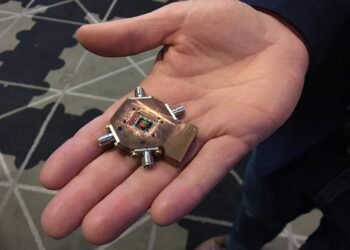
IBM has spent two decades building quantum computers around superconducting qubits, circuits chilled to near absolute zero inside dilution refrigerators. HRL specialised in a different approach: silicon-spin qubits, which store quantum information in the spin of electrons inside silicon. The two camps have often been framed as rivals. IBM’s announcement frames them as complements, with HRL’s silicon work strengthening a hardware roadmap that remains anchored in superconducting designs.
Just as important is the supporting cast. HRL brings capabilities in quantum sensing, quantum materials, cryogenics, control electronics, packaging and interconnect technologies. That list sounds like plumbing, and in a sense it is. It is also exactly the plumbing that decides whether a quantum machine can grow from a laboratory demonstration into a system that runs reliably at scale.
Quantum sensing deserves its own mention. Long before quantum computers reach maturity, quantum sensors are expected to find work in navigation systems that function without GPS, in medical imaging and in detecting what lies underground. HRL’s sensing portfolio gives IBM a stake in that nearer-term market while the bigger computing bet plays out.
The road to Starling and Blue Jay
IBM’s public roadmap centres on Starling, a fault-tolerant quantum computer the company expects to deliver by 2029. IBM says Starling is designed to perform 100 million quantum operations, far beyond what today’s machines can manage. A successor called Blue Jay, targeted for the mid-2030s, is meant to push further still.
Fault tolerance is the field’s central obstacle. Today’s quantum processors can run only short calculations before noise overwhelms the result, which is why error correction dominates the agenda of every serious quantum roadmap. A fault-tolerant machine changes the mathematics: instead of racing to finish before errors pile up, it detects and repairs them as it runs.
The HRL deal also connects to manufacturing. IBM operates Anderon, a pure-play quantum wafer foundry, and says HRL’s silicon-based expertise creates opportunities for collaboration there, supporting scalable production and faster learning cycles across more than one quantum computing approach. Building qubits in silicon has one obvious industrial attraction: the world already knows how to manufacture silicon at enormous scale.
A lab with unusual history
HRL is not a startup. It began as the research arm of Howard Hughes’ aircraft empire and spent decades on its clifftop campus in Malibu producing foundational work in lasers, microelectronics and materials science. After the Hughes businesses were broken up, the lab carried on as a joint venture of Boeing and General Motors, serving as a quiet engine of advanced research for aerospace and automotive projects.
Both former owners are staying close. IBM says Boeing and GM will continue to partner with the lab on quantum applications and advanced technology development, so the aerospace and automotive ties survive the change in ownership. That continuity matters, because HRL’s value is largely its people and their accumulated craft. Institutions like this change hands rarely, and the buyer is really acquiring decades of expertise that hiring alone cannot reproduce.
Consolidation comes to quantum
The deal fits a pattern that has been building all year. Quantum computing is moving from pure research toward early commercial revenue, and the largest players are responding by buying specialised capability rather than growing it slowly in-house. For IBM, which measures its quantum ambitions in decade-long roadmaps, adding an institution that spans qubits, sensing, materials and manufacturing in a single transaction is a shortcut that money can actually buy.
The proof will show up on the roadmap. Watch whether silicon-spin qubits start appearing in IBM’s public plans alongside its superconducting machines, and whether Starling arrives on schedule in 2029. For more coverage of quantum computing and the technologies shaping the next decade, visit Mylistingo.
The Netherlands, for internationals
One email a week: the week's news for internationals in the Netherlands, new practical guides and what changed in the cities. No spam, unsubscribe any time.