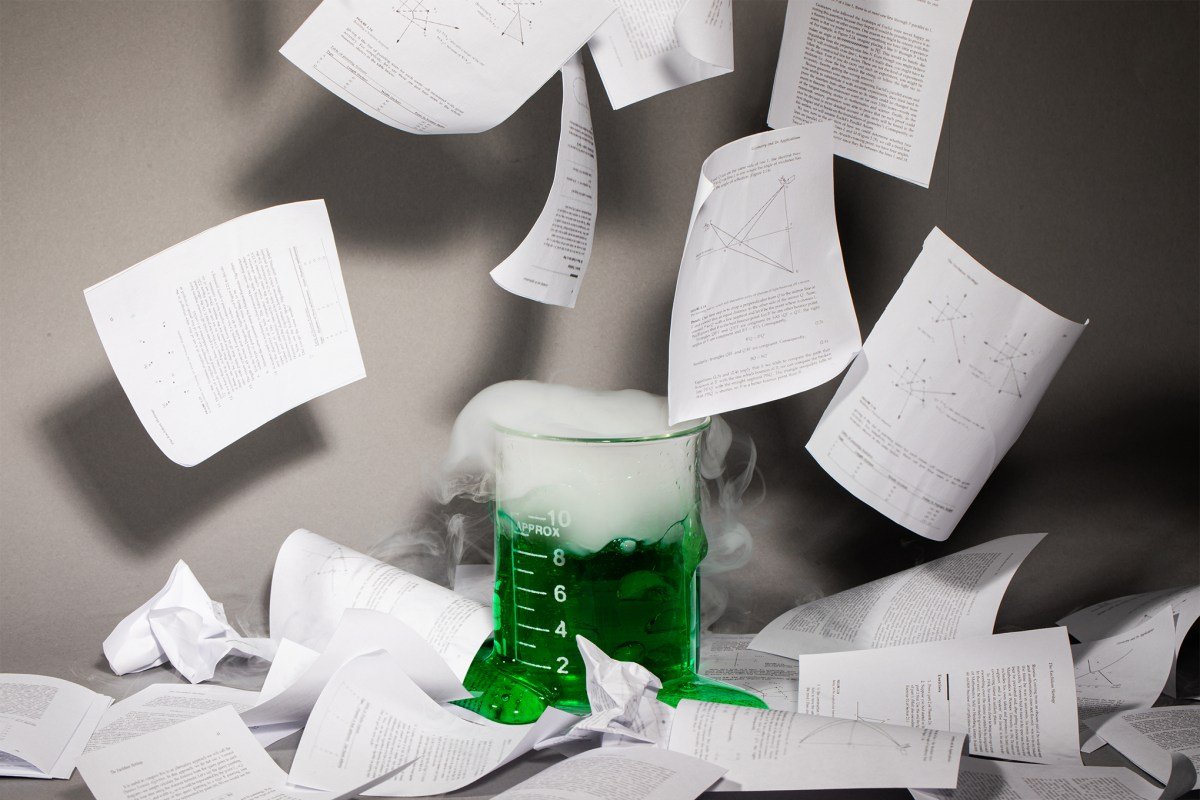
Peer review is buckling under a wave of machine-made science. Journal editors now receive papers that are hard to tell apart from human work, and the problem keeps growing as AI improves.
Peter Degen, a researcher at the University of Zurich, spotted the shift last year. A paper written by his supervisor was suddenly cited hundreds of times. The citing papers all followed the same template. They leaned on a public health dataset to churn out an endless list of predictions.
Degen traced the flood back to a company in Guangzhou. The firm sells tutorials on producing publishable research in under two hours. The papers were not very good, but they were also not obviously wrong. That makes them difficult to filter out.
“It’s a huge burden on the peer-review system, which is already at the limit,” Degen told The Verge. “There’s just too many papers being published and there’s not enough peer reviewers.”
The deeper issue is that generative AI keeps improving. Early AI papers had obvious tells. A diagram might show a rat with impossible anatomy, or text might still read “as an AI assistant.” Those slips were easy to catch. Newer models no longer make them.
Matt Spick, a lecturer at the University of Surrey, watched papers about one public dataset multiply overnight. Each one claimed a fresh link, from walnuts and memory to skim milk and mood. Many were random flukes dressed up as findings.
New agentic science tools raise the stakes further. Researchers at Carnegie Mellon found these systems can invent data or use misleading methods while the final paper still looks polished.
Spick and his colleagues tested OpenAI’s Prism tool on data about ripening vegetables. It wrote a complete paper with charts and correct citations in under 26 minutes. “This is actually a decent piece of work,” Spick recalled thinking.
The question now is whether science can keep up. If machines can mass-produce competent papers, the system built to check them may simply run out of room.
Source: The Verge. Related: AI Detectors Are Creating a New Era of Distrust.
The Netherlands, for internationals
One email a week: the week's news for internationals in the Netherlands, new practical guides and what changed in the cities. No spam, unsubscribe any time.