AlphaFold 3 Goes Commercial: AI Drug Discovery Moves from Academic Tool to Pharma Production Line
DeepMind’s AlphaFold 3 has crossed from academic novelty to pharmaceutical workhorse. Two years after the protein-structure prediction model stunned the biology world, major drugmakers including Novartis, AstraZeneca, and Eli Lilly have integrated the latest version into their early-stage discovery pipelines — and early results suggest the AI is cutting target-identification time from years to months.
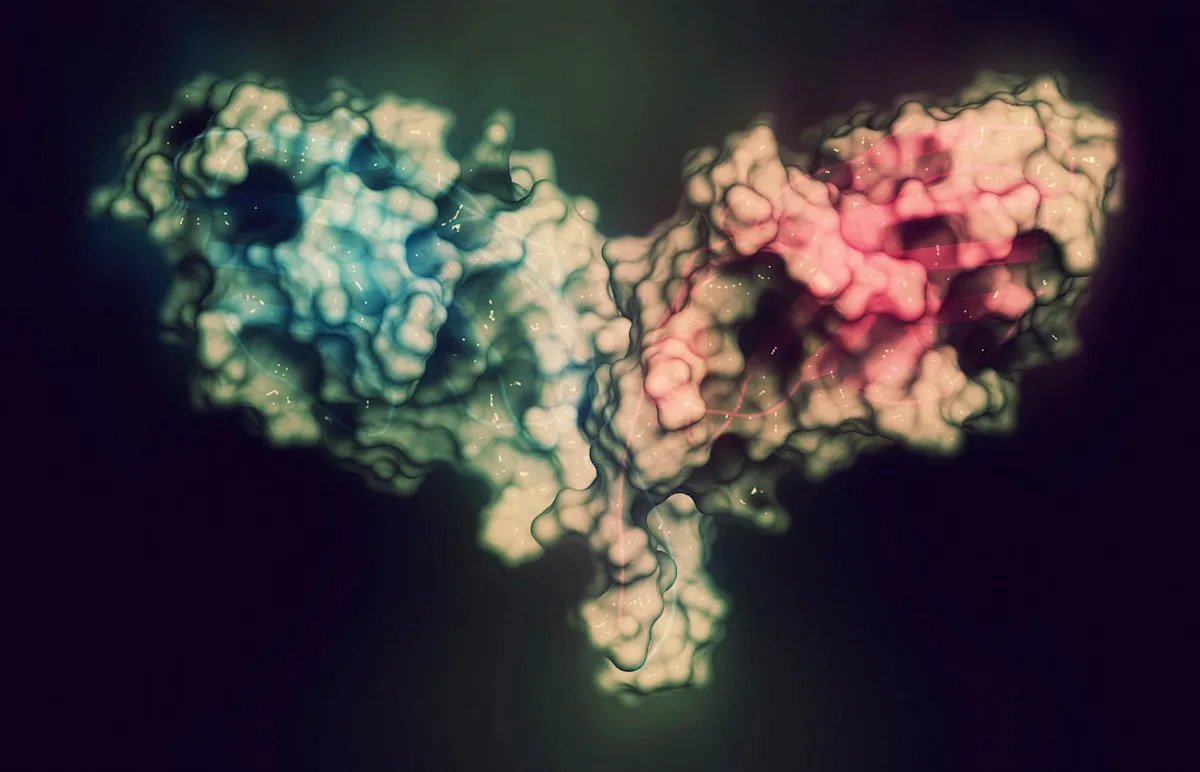
AlphaFold 3, released in mid-2025, expanded beyond protein folding to model the full molecular dance of life: proteins interacting with DNA, RNA, small molecules, and ions. The update was the critical piece the pharmaceutical industry was waiting for. Drug discovery isn’t just about knowing a protein’s shape — it’s about finding a molecule that binds to the right pocket with the right affinity, and predicting how that binding alters cellular behavior downstream.
“AlphaFold 2 was a microscope. AlphaFold 3 is a flight simulator,” said Dr. Demis Hassabis, DeepMind’s CEO, at the Bio-IT World conference in June. “You can now test thousands of candidate molecules against a target protein computationally before ever touching a pipette.”
The numbers bear this out. AstraZeneca reported at a June investor briefing that AlphaFold 3 predictions matched experimental co-crystal structures for 74 of 78 kinase targets tested — a 95% success rate. Traditional homology modeling on the same targets achieved roughly 60%. For a single oncology program, the AI identified a novel allosteric binding pocket on a historically “undruggable” transcription factor that had stumped medicinal chemists for a decade.
Isomorphic Labs, the Alphabet subsidiary spun out to commercialize AlphaFold, has signed partnerships worth over $2.8 billion in milestone payments across six pharma collaborators. The business model is straightforward: Isomorphic runs the AI predictions, delivers a ranked list of candidate molecules with predicted binding affinities, and collects milestone fees as compounds advance through clinical trials.
The impact on timelines is dramatic. The traditional hit-to-lead phase — narrowing millions of screening compounds to a handful of drug-like candidates — averages 18-24 months. Programs using AlphaFold 3-guided screening are compressing this to 3-6 months, according to data presented at the Drug Discovery Chemistry conference in San Diego. One Novartis program targeting a rare metabolic disorder identified a clinical candidate in 11 months from project initiation, roughly a third of the historical average.
Not everything is solved. AlphaFold 3 still struggles with intrinsically disordered proteins — the floppy regions that constitute roughly 30% of the human proteome — and with accurate prediction of binding kinetics rather than just binding affinity. But the remaining challenges don’t diminish the achievement: for the first time, AI-predicted protein structures are reliably guiding real drug development, and the molecules coming out the other end are heading toward clinical trials.
The Netherlands, for internationals
One email a week: the week's news for internationals in the Netherlands, new practical guides and what changed in the cities. No spam, unsubscribe any time.