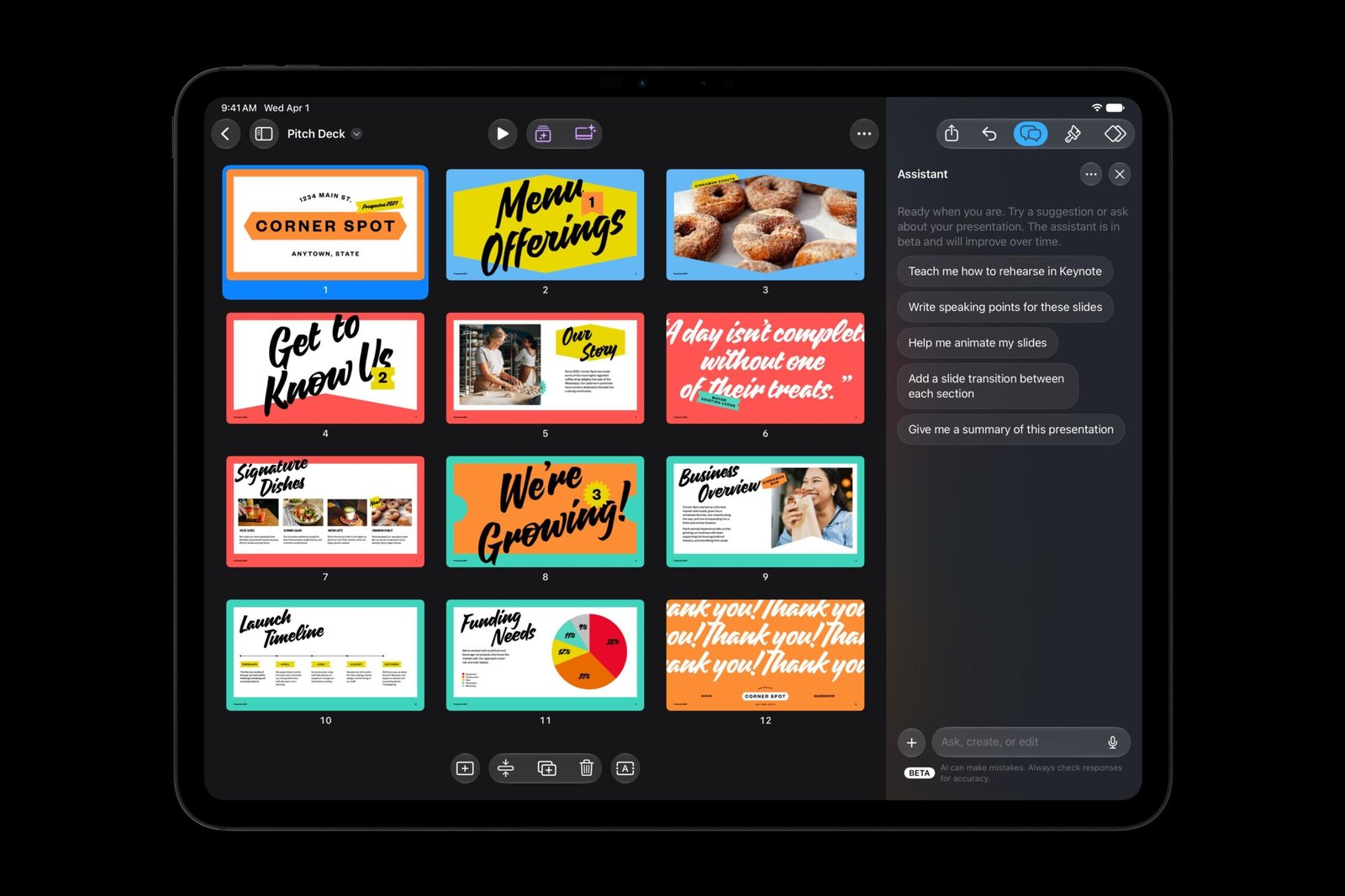
Apple is putting an AI assistant inside its productivity apps. Keynote, Pages and Numbers all get the feature in beta. The assistant runs on a mix of Apple models and OpenAI models, and it reads the document in front of it.
Each app gets different help. In Keynote, the assistant designs slides, animates them, and refines layouts. In Pages, it drafts sections, restructures arguments, and adjusts tone. In Numbers, it calculates, visualizes and organizes data, then suggests chart types and builds custom tables.
There is a bigger change underneath all that. All three apps now support the Model Context Protocol on macOS 27 and later. That lets third-party AI agents plug straight into the apps instead of scraping the screen.
Hardware requirements are strict. The assistant needs Apple Intelligence, so it runs on iOS 27, iPadOS 27, or macOS 27 and newer. Older devices are left out of this release, and no workaround was announced.
Apple’s creative apps get updates too. Pixelmator Pro adds Generate Fill, which edits part of an image from a text description. Apple says the tool matches the lighting, perspective and texture around the edit so changes blend into the scene.
Logic Pro for Mac and iPad picks up a Liquid Glass redesign. It also gets an assistant that sets up a vocal track from a single prompt and can edit existing projects. A rebuilt Browser on Mac uses on-device AI to analyse, classify and tag recorded sounds.
Final Cut Pro gets templates, graphics, titles and transitions through MotionVFX, pulled directly into the editor rather than installed separately.
The pattern here is familiar. Apple is not launching one big assistant. It is threading small model features through every app it sells, and it is letting outside agents in through a standard protocol instead of a private integration.
That second part may matter more than any single feature. If agents from other companies can drive Pages or Keynote through a shared protocol, Apple stops selling a closed suite and starts selling a workspace other tools can inhabit. It is the same shift in emphasis that Apple’s October hardware event hinted at, where the company leaned on software and services to justify new prices.
Beta access starts with Apple Intelligence devices. Apple did not announce a price change for any of the three apps. The Verge’s Emma Roth reports that the assistant is rolling out now to compatible hardware.
For anyone on an older Mac or iPhone, the practical answer is simple. This release will not reach you. The software costs nothing, but the device requirement is not free.
The Netherlands, for internationals
One email a week: the week's news for internationals in the Netherlands, new practical guides and what changed in the cities. No spam, unsubscribe any time.