



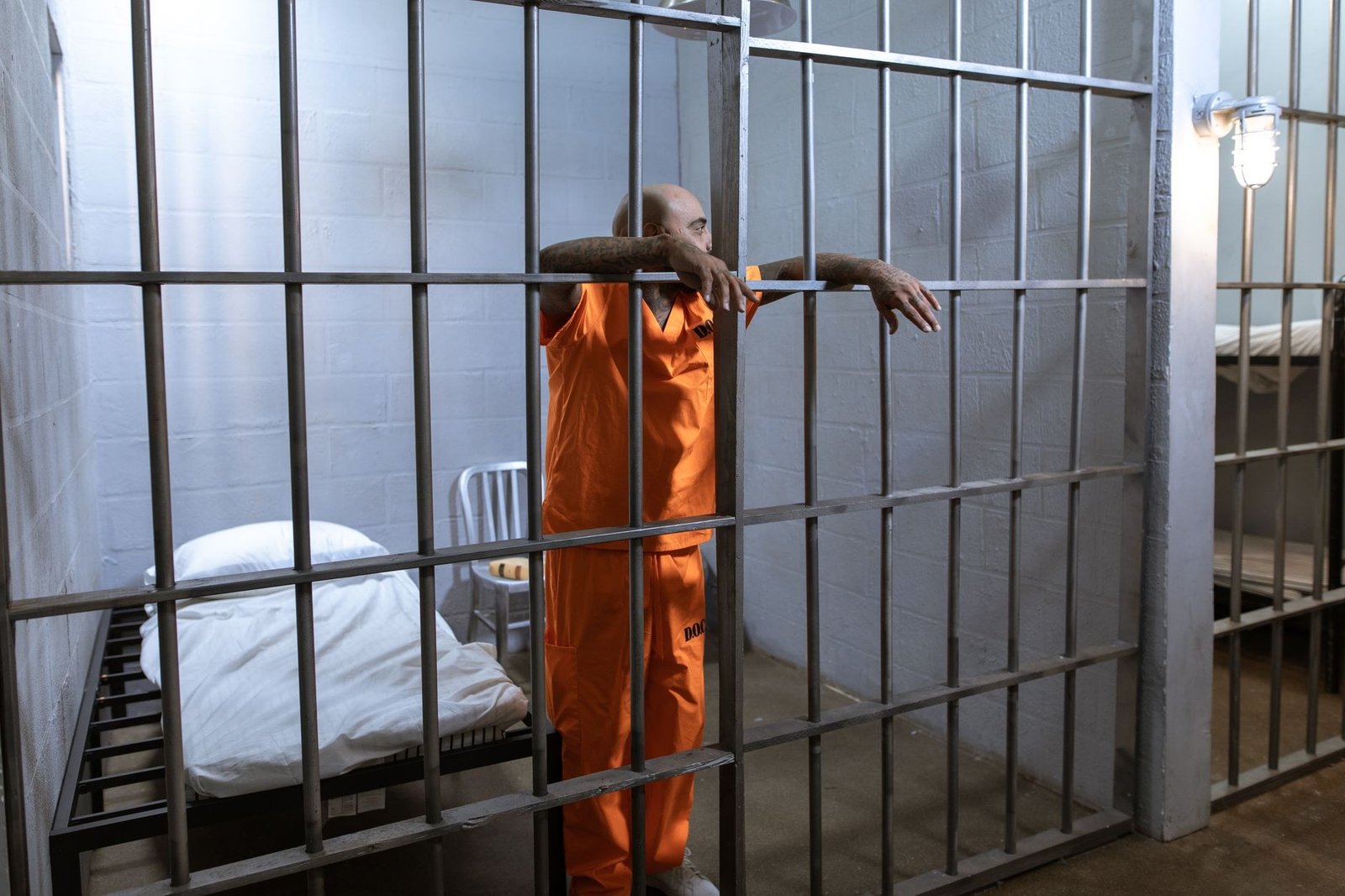
Ashley Walters, the actor known for Top Boy and Netflix’s Adolescence, has directed his first film, Animol, a drama set inside a young offender institution. In a new interview with The Guardian, he links the film to his own seven months in prison and talks about the addiction he left behind almost six years ago.
What happened
The Guardian reports that Walters, now 44, has moved behind the camera with Animol. Nick Love, best known for The Football Factory, wrote the film. Walters told the paper the story is not autobiographical but that much of it draws on his own memories of being locked up. “I wanted it to feel, look and sound the way it felt, looked and sounded to me,” he said.
The film follows Troy, a 15-year-old played by Tut Nyuot, who is forced to smuggle a phone into the institution in the opening scene. The Guardian describes it as meeting many of the usual expectations of the prison genre, including bullying, internal hierarchies and tense relations between staff and inmates. It also includes a queer romantic storyline that the paper says is handled with sensitivity. Walters said he aimed for something “slightly elevated” and added: “I didn’t want it to feel grey and gloomy like the other prison-genre films.”
Walters’ own route to this point is a large part of the interview. Before he turned 21, he had a No 1 hit, appeared on television and on the West End stage, became a father and served seven months in prison. In the early 2000s he was Asher D, a rapper with the Peckham collective So Solid Crew. The then culture minister Kim Howells called him a “boasting macho idiot rapper”. Walters told The Guardian that apart from the music, that period “was bad, it was negative”, and that Asher D was never really who he was.
He described his first night in prison in 2002, when other inmates recognised him and “all hell broke loose”. He now calls the experience “one of the best things that happened to me” because it made him ask who he wanted to be. After his release, the film-maker Saul Dibb cast him in Bullet Boy, and his acting career went on to include Small Island, the 50 Cent biopic Get Rich or Die Tryin’ and, from 2011, the role of Dushane in Channel 4’s Top Boy. He also co-led the Sky series Bulletproof with Noel Clarke. It ran for three seasons and was cancelled after allegations against Clarke came to light in April 2021. Walters said the two have not spoken since.
The interview also covers his recovery. Walters said he had been an alcoholic and a drug user, mainly of cocaine, for about 15 years. Things came to a head in November 2020, during lockdown, after an argument with his wife, Danielle. She took him to rehab the next morning, and he stayed for four weeks. He said he has not drunk or taken drugs since, and that this November marks six years.
Why it matters if you live in United Kingdom
For newcomers trying to understand British screen culture, Walters is a useful reference point. His work tracks some of the country’s most discussed dramas about youth, crime and family, from Bullet Boy to Top Boy and Adolescence. The Guardian singles out his role in the second episode of Adolescence, where he played a detective visiting a secondary school and a father struggling to connect with his teenage son.
Animol continues that thread. Walters told the paper that what connects his recent work is “uncovering a marginalised group of people. And in the UK one of the biggest marginalised groups is kids.” He spoke at length about how young men are brought up to stay silent about their feelings, and linked this to higher suicide rates among young men in the UK. Parents and teachers who followed the national conversation sparked by Adolescence may find Animol speaks to the same concerns, this time from inside the youth justice system.
The film also says something about how a Black British artist has been seen in public life. Walters described being cast as a stereotype of young Black Londoners in the early 2000s, and said that he and Clarke were once told Bulletproof could only work if one of its two leads was white. The interview gives useful background on debates about representation in British film and television.
The Guardian’s interview does not give a release date, cinema run or streaming platform for Animol. Production photographs in the article are credited to Sky, but the piece does not say where or when the film will be available to watch.
What to watch next
- Release details for Animol. Watch for an official announcement of where and when the film can be seen in the UK, as the interview does not confirm this.
- Reaction to Walters as a director. This is his first feature as director, and the response from critics and audiences will shape what he does next behind the camera.
- Tut Nyuot’s performance. The young actor leads the film as Troy, and a lead role in a prison drama of this kind can raise a newcomer’s profile.
- The wider conversation about young men. Walters is using the film’s promotion to speak about masculinity, mental health and youth custody, themes that stayed in public debate after Adolescence.
Source: The Guardian
Sources
- The Guardian: ‘Nothing worked for me until I was clean and sober’: Ashley Walters on acting, directing – and turning his life around, accessed 26 October 2026
The UK, for internationals
One email a week: the week's news for internationals in the UK, new practical guides and what changed in the cities. No spam, unsubscribe any time.







Comments 1