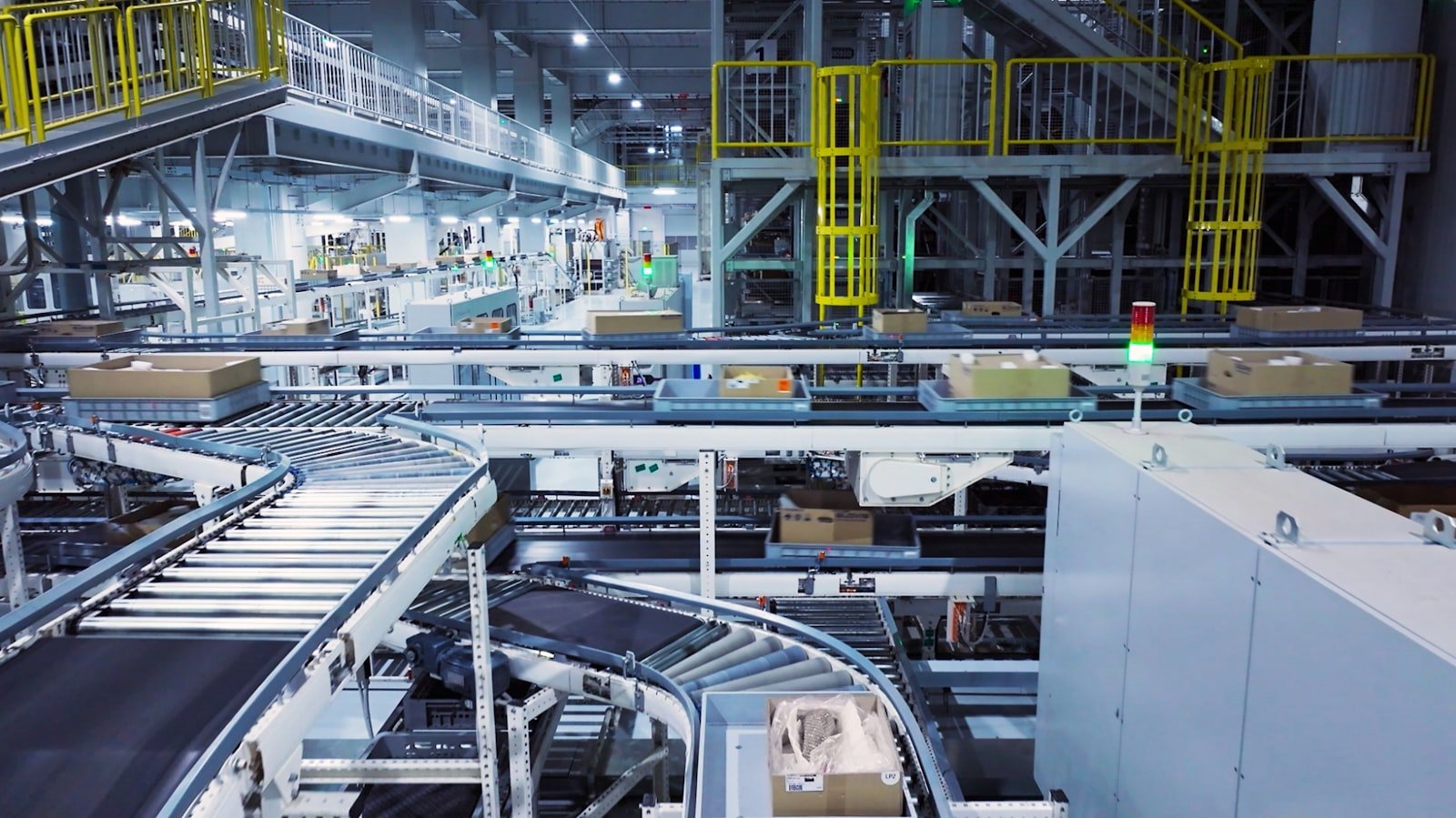
Torrance, California is an unglamorous stretch of the Los Angeles basin, better known for refineries and aerospace subcontractors than for anything a venture capitalist would call frontier technology. It is also where Chris Power has spent the past four years arguing that America has forgotten how to build things at scale. On August 6, investors gave his company $1.37 billion to make the case.
Hadrian, which operates heavily automated factories for defense and aerospace manufacturers, closed a Series D that values it at $7.87 billion. The company raised its Series C only twelve months earlier. Crunchbase data put Hadrian at a $1.6 billion valuation seven months before this round, meaning the price has roughly quintupled inside two quarters.
Who wrote the checks
The round was co-led by WCM Investment Management, Washington Harbour Partners, Valor Equity Partners, 137 Ventures and Baillie Gifford. JPMorganChase’s Strategic Investment Group joined as anchor co-lead, investing through the bank’s Security and Resiliency Initiative, a program dedicated to industries it treats as critical to national and economic security.
1789 Capital took a major position. Morgan Stanley Wealth Management, funds managed by Apollo, accounts advised by T. Rowe Price Associates, CapitalG, Andreessen Horowitz, Founders Fund, Lux Capital, Altimeter and Construct Capital all participated alongside existing investors.
Read that list twice. Baillie Gifford, T. Rowe Price and Morgan Stanley Wealth Management are public-market names. They tend to show up on a private cap table when the people writing the checks expect the company to list, and to list at a price that makes a late private entry look cheap.
What Factories-as-a-Service actually means
Hadrian’s product is not a machine. It is a factory. The company combines process engineering, industrial robotics and AI-driven scheduling inside facilities designed to be replicated, then sells that capacity to defense and space manufacturers under a model it calls Factories-as-a-Service. Customers get precision parts today and, increasingly, complete systems.
Since the Series C, Hadrian has opened plants in Mesa, Arizona and Muscle Shoals, Alabama. That brings the company to four sites covering just under three million square feet, with the two original facilities still in Torrance. Over the next year it plans further factories and new production lines covering munitions and autonomous systems.
“Production is now the frontline of deterrence,” Power said in the funding announcement. “America’s ability to lead will depend on whether we can build, train, and scale faster.”
The timing is not accidental. Pentagon procurement has run into a supply problem that money alone does not fix. Shipyards, munitions plants and drone lines cannot turn out hardware fast enough to match demand, and the bottleneck is machine tools and trained technicians rather than budget authority. Hadrian is selling the shortcut: capacity that can be stood up in months instead of years.
A billion dollars is now an ordinary round
Hadrian’s raise looks enormous, and by historical standards it is. By 2026 standards it is closer to routine. Crunchbase’s June analysis found the median U.S. late-stage round this year was exactly $100 million, roughly double the 2020 figure. Of the 250 U.S. financings of $100 million or more recorded by that point in the year, half were $200 million or larger and eighteen crossed $1 billion.
The same pattern shows up further down the stack. A total of 195 companies joined the Crunchbase Unicorn Board in the first half of 2026, already more than the 193 minted across all of 2025, with robotics and AI labs leading the cohort. Nearly 80 percent of global seed-through-growth funding this year has gone to U.S. companies, a concentration with little precedent.
The workforce bet
One detail in Hadrian’s announcement deserves more attention than it is likely to get. The company is extending equity to technicians, not only to engineers and executives, and it is hiring and training operators to work in plants where software, robotics and human judgement share the floor.
That is a deliberate answer to a familiar objection, which is that automated plants hollow out the manufacturing jobs politicians keep promising to bring back. Hadrian’s version of the argument is that the work changes rather than disappears, moving from running one machine to supervising a cell of them. Whether the pay follows is a separate question, and one the company has not yet had to answer at scale.
What no funding round can settle is whether Hadrian’s factories can hit delivery schedules on munitions and shipbuilding programs where late is functionally the same as failed. The next twelve months, and the plants the company says it will open in them, will supply that answer. For more coverage of the startups rebuilding American industry, visit Mylistingo.