This guide is for internationals in Utrecht who want to share a house, join a housing group or sublet a room or a whole home. After reading it, you will know which forms of shared living the municipality recognises, when a house share needs a conversion permit, and what you have to arrange before you sublet.
- Ways to live together in Utrecht
- When a shared house needs a conversion permit
- Subletting your room
- Renting out your whole home
- Your protection as a tenant
- FAQ
Ways to live together in Utrecht
The municipality of Utrecht describes two main forms of shared living: the housing cooperative (wooncoöperatie) and the housing group (woongroep). Different rules apply to each.
Housing cooperative (wooncoöperatie)
In a wooncoöperatie, several households live together and decide for themselves how they share their home and what they share. A cooperative can include rules in its statutes that keep its homes affordable, so a social rental home can stay a social rental home permanently. Cooperatives can compete in tenders for building plots. To take part, you register in the “kaartenbak” through the Crowdbuilding website. Under its implementation programme for cooperatives for 2024-2028, the municipality makes at least 2 locations available each year through tenders. It also plans to publish a tender for a plot in Zuilense Vecht around the summer of 2026.
Housing group (woongroep)
A woongroep is a group of households who share an outlook on life and want to live together in one home or building for a longer, open-ended period. Anyone can start a woongroep in Utrecht, but the group has to meet certain rules. These include allocation rules for getting a home and requirements for the living space. Which rules apply depends on who owns the property:
- Privately owned, self-initiated group: no allocation rules apply, so you do not need a housing permit (huisvestingsvergunning). You do need a conversion permit (omzettingsvergunning).
- Group in a housing corporation property: allocation rules do apply, and you need a housing permit. Most of these groups fall under the housing regulation and appear on the list of recognised woongroepen (erkende woongroepen). Recognised groups have their own allocation rules, which give suitable candidates a fair chance of a place.
The municipality does not keep a waiting list for woongroepen and has no housing of its own for them. A woongroep is registered with the municipality by the owner of the property, not by the residents.
When a shared house needs a conversion permit
Utrecht has a conversion policy for house sharing (woningdelen). It applies when a self-contained home is turned into several non-self-contained rooms. In practice, this means letting to more than 3 people who each have their own household, such as a student house or a friends’ house (friendswoning).
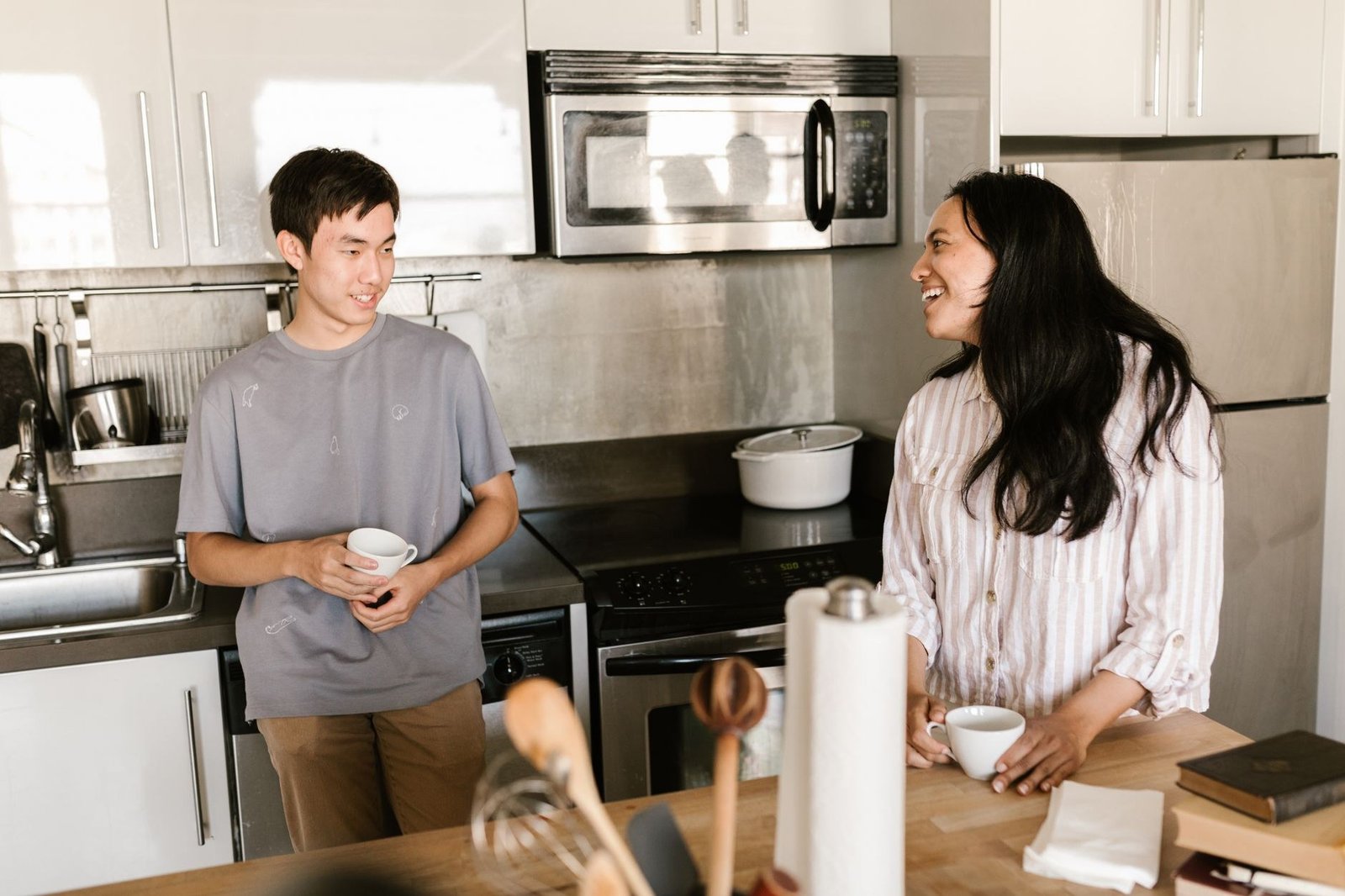
How the residents share the home does not matter much. What counts is that they do not each have their own home with their own facilities. They share the shower, toilet and kitchen, and the rooms do not have their own entrance with a house number assigned by the municipality.
In that situation, the owner must apply for two permits:
- An omzettingsvergunning (conversion permit), which protects the housing supply for first-time buyers and renters and for people moving up the housing ladder. One of the conditions is a liveability assessment (leefbaarheidstoets).
- An omgevingsvergunning (environmental permit), needed to depart from the omgevingsplan (zoning plan).
If you plan to share a self-contained home with several people as a woongroep, you usually need a conversion permit as well. Some woongroepen that were set up under the earlier policy, and met it at the time, are exempt. If you are unsure whether your group qualifies, the municipality decides case by case.
The official page does not list processing times, fees or a full set of required documents for these permits. Ask the municipality before you sign a lease or start letting rooms.
Subletting your room
If you will be away from your room for a while, you can let it to someone else in the meantime. This is called onderhuur (subletting).
If you are the one subletting
- You arrange the sublet yourself with the owner of the house.
- For a short stay abroad, you can usually stay registered at the address. The municipality advises you to agree this with your subtenant.
- If you stay abroad for longer than 8 months, you must deregister with the municipality by reporting your emigration.
If you are the subtenant
A subtenant may register as a resident at the address. You do this by reporting your move to the municipality, and you can attach the sublet contract when you do.
Correct registration matters for fire safety. In a fire, the fire brigade assumes that the people registered at an address may be inside the building.
Renting out your whole home
The municipality has a separate page on renting out your home. The rules depend on the type of rental.
Holiday rental to tourists
- You must be the owner or main tenant and live at the address yourself.
- You are not at home during the rental.
- You may rent to tourists for at most 60 nights per calendar year.
- A home with up to 200 m² of living space may host at most 6 people. A home of 200 m² or more may host at most 8.
- You need a registration number, requested through toeristischeverhuur.nl, and you must show it in every advert. The number does not by itself give you permission to rent.
- You must report each rental in advance, with the number of nights and guests. You cannot report a rental after the fact.
Advertising without a registration number, or renting for more than 60 nights, can lead to a fine. The amount depends on whether it is a first or repeat offence. See the official page and the council decision it links to for the exact amounts.
Bed and breakfast
For a B&B, you must be the owner or main tenant and live at the address. As a main tenant, you need the owner’s permission. You rent out part of the home with no maximum number of nights, usually up to 50% of the home. The exact percentage is set in the omgevingsplan. You must be present, at least in the evenings and at night. You also need a registration number, you pay tourist tax through BghU, and the home must meet fire safety rules, including smoke detectors on every floor.
Other situations
- Short stay: letting a space all year round for periods from 2 weeks to half a year is only possible at a location zoned for short stay. You need an omgevingsvergunning and a hospitality permit, and you must complete the Bibob questionnaire.
- Home for sale: renting it out temporarily requires a permit.
- Buy-to-let protection (opkoopbescherming): some recently bought homes below a certain WOZ value cannot be rented out, not even a single room, without a permit. Check the official page to see whether your home qualifies.
Your protection as a tenant
The Good Landlordship Act (Wet goed verhuurderschap) is meant to stop unacceptable behaviour by landlords and letting agents, such as charging an excessive deposit, discrimination and threats. Landlords may only charge the service costs listed in the law. The Affordable Rent Act (Wet betaalbare huur) added two rules to it: one on maximum rent and one on how much the rent may rise each year.
If a landlord breaks these rules, the municipality can give a warning or a fine, and the amount depends on the violation. As a tenant or home seeker, you can file a report with the municipality. Housing corporation tenants file complaints with their corporation. For questions, call the municipality on 14 030.

FAQ
Can I share a rented house with friends without a permit?
Under Utrecht’s house sharing policy, the owner needs a conversion permit and an environmental permit when a home is let to more than 3 people with their own households. The owner applies for these, not the tenants. Whether your specific setup falls under the policy is decided by the municipality case by case.
Do I need to deregister if I sublet my room while abroad?
Only if you stay abroad for longer than 8 months. For a shorter stay you can usually remain registered, and the municipality advises you to agree this with your subtenant.
Can my subtenant register at my address?
Yes. A subtenant may register as a resident by reporting their move to the municipality and can attach the sublet contract during that process.
How many nights can I rent my home to tourists?
At most 60 nights per calendar year, and only if you are the owner or main tenant and live there yourself. You need a registration number and must report each rental in advance.
Official sources: utrecht.nl · utrecht.nl · utrecht.nl · utrecht.nl
Last verified: 24 October 2026 against the official pages linked above. Rules and fees change; the official page always wins. General information, not legal or tax advice.
Sources
- utrecht.nl: Samen wonen | gemeente Utrecht, accessed 24 October 2026
- utrecht.nl: Woningdelen | gemeente Utrecht, accessed 24 October 2026
- utrecht.nl: Kamers onderverhuren | gemeente Utrecht, accessed 24 October 2026
- utrecht.nl: Woning (onder)verhuren | gemeente Utrecht, accessed 24 October 2026
Utrecht, for internationals
One email a week: what changed for internationals in Utrecht, the week's news from the Netherlands, and one guide worth reading. No spam, unsubscribe any time.