Meta is selling a squishy AI companion called Muse Charm this holiday season, and reviewers are already calling it a Tamagotchi with a cloud connection. The pitch is simple: a small screen with a friendly face that talks to you and lives in your pocket.
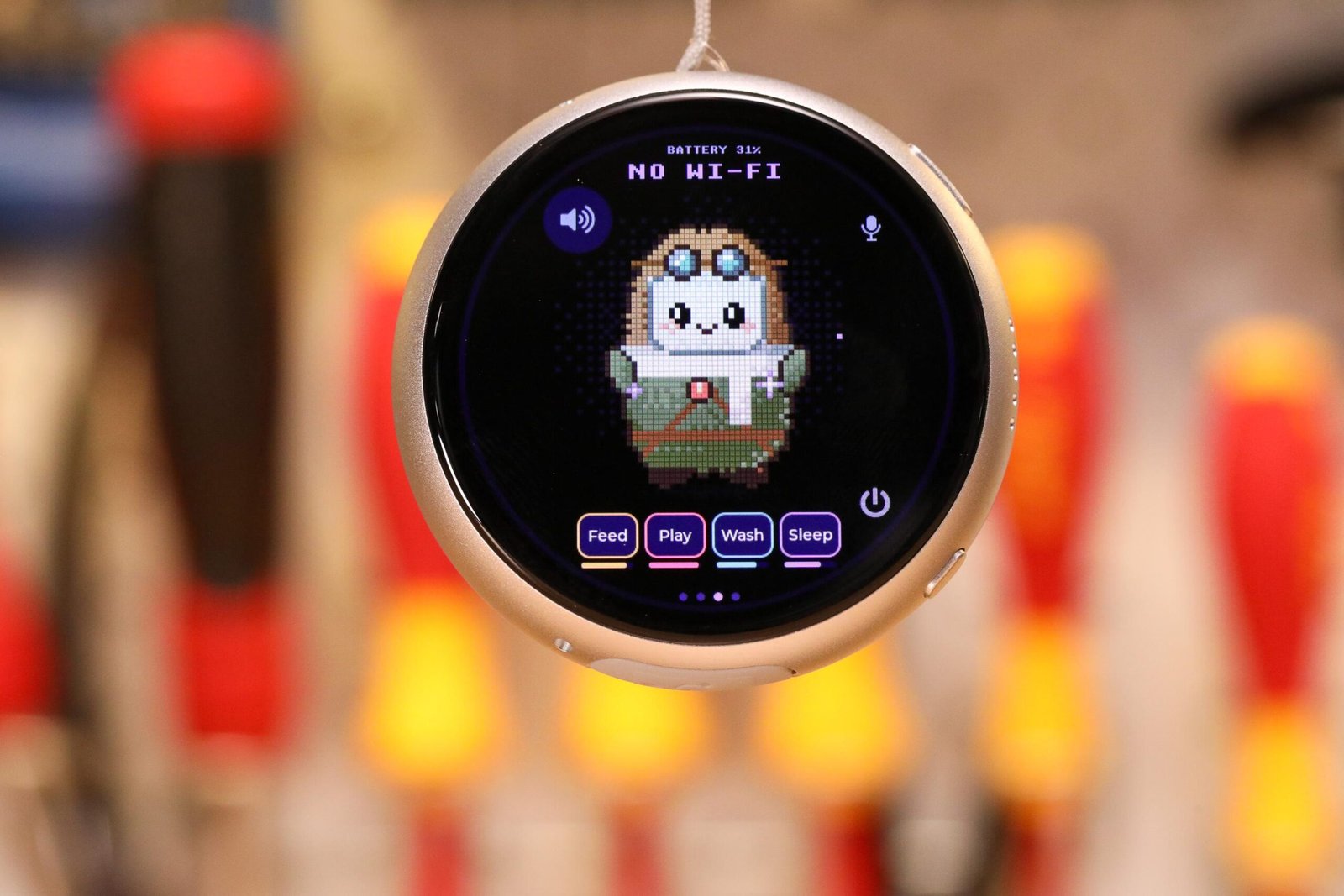
The Verge’s Sean Hollister found a cheaper route. He paid $50 for a 1.75-inch touchscreen computer pendant from China and turned it into something close to Meta’s product in a weekend.
What Meta Is Actually Selling
Muse Charm carries cameras and a 5G cellular radio, so it works away from your phone. That hardware is what separates a retail gadget from a developer toy, and it is where most of the cost goes.
Meta built the softer parts too. The device uses Meta’s Muse AI cloud, and the company published open-source code plus tokens so people can build their own hardware around it.
The $50 Build
Hollister’s device is the Waveshare ESP32-S3 1.75C, a silver pocket-watch-sized devkit with a small touch display. It is not a random clone, because Meta officially suggests it for building a “Muse Gadget.”
Setup was easier than expected. He plugged the pendant into a PC, pointed Claude at Meta’s GitHub repository, and paired the device with the Muse phone app.
The first failure was telling. Even with Meta’s keys installed, Muse treated incoming audio as clips to transcribe instead of spoken commands. That is a reminder of how thin the line is between voice assistant and voice recorder.
After more prompting and extra code, the pendant began answering questions out loud. It also picked up useful side jobs, acting as a pocket watch, a remote camera viewfinder, and a voice control point for a smart home.
Why This Matters Beyond One Gadget
Consumer AI hardware has struggled because the software usually arrives before the use case. Meta is trying the opposite approach by shipping a platform, a developer kit, and a store shelf product at the same time.
That combination changes the economics. A company can test an idea with a $50 devkit, learn what breaks, and sell a polished version to people who never want to open a code editor.
It also puts pressure on pricing. If a determined builder can reach 80 percent of the experience for a fraction of the cost, the premium version has to justify itself with cameras, connectivity, and support.
Meta has not shared sales targets or a full feature list. The holiday season will reveal whether shoppers want a talking pendant, or whether the AI companion stays a project for people who enjoy wiring their own.
Source: The Verge — I built an AI Tamagotchi before Meta could
Related reading on Mylistingo: Meta keeps selling camera glasses as Dutch groups plan court case.
The Netherlands, for internationals
One email a week: the week's news for internationals in the Netherlands, new practical guides and what changed in the cities. No spam, unsubscribe any time.