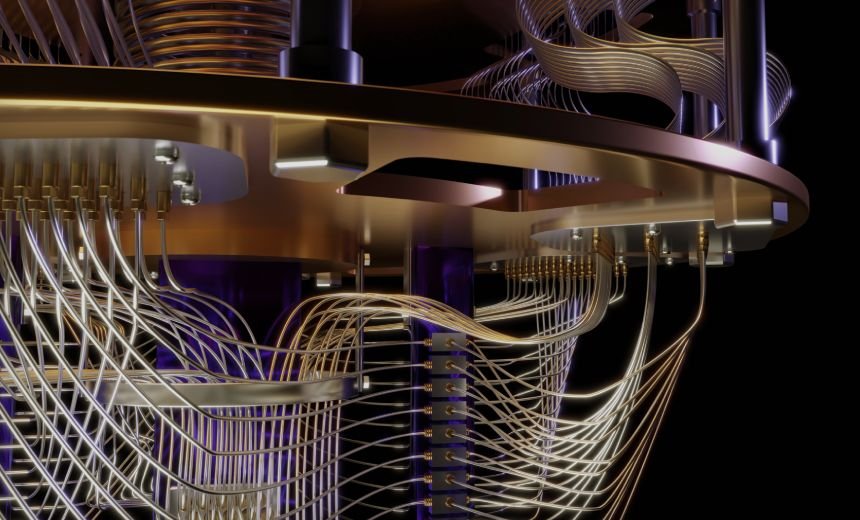
The Netherlands has quietly built one of the world’s most advanced quantum computing ecosystems, and in 2026 it stands unchallenged as the European leader in the field. With QuTech at TU Delft serving as the gravitational centre, the country now hosts five operational quantum processors and a growing network of applied research labs spanning from Eindhoven to Groningen.
QuTech: The Crown Jewel
QuTech, the joint venture between TU Delft and the Netherlands Organisation for Applied Scientific Research (TNO), remains the flagship. Its 17-qubit superconducting processor achieved a 99.9% single-qubit gate fidelity in early 2026 — a milestone that puts fault-tolerant quantum computing within realistic reach. The lab also leads European efforts in quantum internet development, having demonstrated entanglement distribution between Delft and The Hague over existing fibre optic infrastructure, a breakthrough that proves quantum communication networks can be built using conventional telecommunications infrastructure rather than requiring entirely new dedicated fibre.
“What makes the Dutch approach distinctive is the integration of fundamental research with industrial application,” explains Professor Lieven Vandersypen, QuTech’s research director. “We have ASML literally across the street, providing cryogenic engineering expertise that no other quantum lab in the world can access.” This cross-pollination between the semiconductor industry and quantum research has led to several practical innovations in qubit control electronics and chip fabrication that have been adopted by quantum labs worldwide.
Beyond Delft: A National Network
The Netherlands’ quantum strategy extends far beyond a single campus. The Quantum Delta NL programme, backed by €615 million from the National Growth Fund, has created a distributed network of research hubs with specific focuses: Amsterdam for quantum algorithms and software, Leiden for quantum sensing, Eindhoven for photonic quantum computing, and Twente for quantum materials. This deliberate specialisation, rather than competition, is a key reason the Netherlands has attracted over €900 million in private quantum investment since 2024 — more than Germany and France combined.
American tech giants including IBM, Google, and Microsoft all maintain quantum research partnerships with Dutch institutions. IBM opened a dedicated quantum research centre in Amsterdam in early 2026, hosting one of its Quantum System Two machines, making it only the third location worldwide — after Yorktown Heights and Tokyo — to house the company’s latest-generation quantum hardware. The centre will serve both research partners and commercial clients across Europe, demonstrating that the Netherlands has become an indispensable node in the global quantum computing ecosystem.
Startup Ecosystem
The research strength is translating into commercial activity. Delft alone has produced seven quantum startups, including QuantWare (quantum processors), Qblox (control electronics), and Orange Quantum Systems (testing equipment). Amsterdam-based Quantum.Amsterdam secured €45 million in Series A funding in June 2026 to build quantum machine learning tools for the financial services sector, targeting applications in portfolio optimisation, risk modelling, and fraud detection that are expected to reach commercial deployment by 2028.
The talent pipeline is strengthening through innovative education programmes. TU Delft’s Master’s programme in Quantum Science now admits 120 students annually — up from just 30 in 2022 — and has become the most selective programme at the university. A pilot programme placing quantum engineers as interns at Dutch financial institutions and logistics companies has shown that quantum-optimised routing algorithms can reduce transportation costs by 12-18% compared to classical optimisation methods, opening a clear commercial pathway for the technology.
The Netherlands now ranks third globally in quantum patents per capita, behind only Singapore and Switzerland. With the European Quantum Communication Infrastructure (EuroQCI) initiative selecting The Hague as one of its first operational nodes, and the Dutch government committing an additional €250 million to quantum research in the 2027 budget, the country’s quantum leadership looks set to deepen through the rest of the decade. As the technology transitions from laboratory demonstration to commercial reality, the Netherlands’ early and sustained investment positions it to capture a disproportionate share of the economic value that quantum computing will create.
Quantum Workforce and Education
The Netherlands is investing heavily in building its quantum workforce beyond traditional PhD programmes. The Quantum Delta NL initiative includes a dedicated talent programme that has trained 2,400 professionals through industry-oriented courses since 2024, covering quantum algorithms, quantum error correction, and cryogenic engineering. A partnership with the Dutch vocational education system has created quantum technician programmes at five universities of applied sciences, producing graduates qualified to operate and maintain quantum hardware. The workforce development strategy addresses a critical bottleneck: while the Netherlands produces world-class quantum researchers, the commercial scaling of quantum technology requires thousands of technicians and applications engineers that traditional academic programmes alone cannot supply.
Industrial Applications and Commercial Roadmap
Dutch quantum companies are moving beyond research into practical industrial applications. The Quantum Application Lab, a public-private consortium including Shell, ING, Philips, and three Dutch universities, has identified 17 use cases where quantum computing could deliver commercial advantage within five years. These include molecular simulation for battery chemistry, portfolio optimisation for energy trading, drug discovery for neurodegenerative diseases, and supply chain optimisation for the Port of Rotterdam. The consortium estimates that quantum computing could add €8-12 billion annually to Dutch GDP by 2035 across finance, logistics, energy, and life sciences sectors. The Dutch government has committed €45 million for a “quantum readiness” programme helping small and medium enterprises identify and prepare for quantum computing applications relevant to their industries.
Related: Small Language Models Having a Big Moment in 2026 | Humanoid Robots Entering the Workforce in 2026
The Netherlands, for internationals
One email a week: the week's news for internationals in the Netherlands, new practical guides and what changed in the cities. No spam, unsubscribe any time.