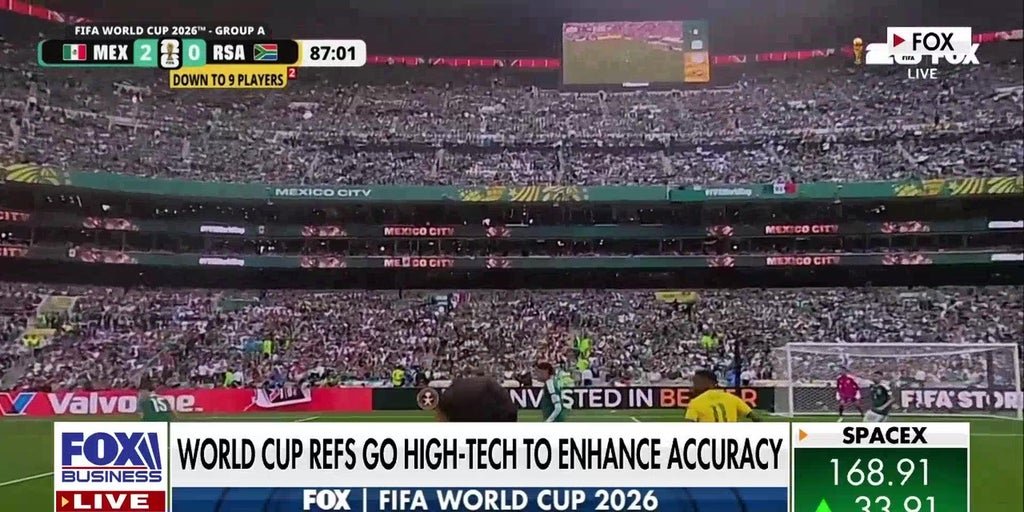
The 2026 FIFA World Cup in North America has become the biggest real-world test of artificial intelligence in the history of sport. From the moment a referee spots a potential offside call to the late-night film sessions coaches run before a quarterfinal, AI is now embedded in almost every decision-making layer of the tournament. What makes this year different is not just the technology itself, but the scale at which it is being deployed and the democratizing effect it is having on competition.
At the heart of it all is a partnership between FIFA and Lenovo, the tournament’s Official Technology Partner. Together, they have unveiled a suite of AI-powered tools designed to change how football is played, refereed, broadcast, and analyzed. The ambition is significant: to use machine intelligence not as a luxury for the wealthiest nations, but as a level playing field for all 48 competing teams.
Football AI Pro: The Digital Tactical Assistant
The most talked-about innovation heading into the knockout rounds is Football AI Pro, a generative AI assistant that FIFA and Lenovo built specifically for this tournament. The tool ingests hundreds of millions of FIFA-owned football data points and turns them into actionable insights in text, video, graphs, and 3D visualizations. Coaches can query it before and after matches, receiving intelligence on opponents, set pieces, and player patterns in multiple languages.
Crucially, all 48 competing nations receive the same access. That matters because the gap between the analytical resources available to nations like Germany or Brazil and those available to smaller footballing nations has historically been enormous. Football AI Pro is not designed to replace a coach or call plays in real time, but it could meaningfully close that gap in preparation and tactical awareness.
Offside Decisions Get a 3D Upgrade
Offside has been the most contentious technology battleground in football since semi-automated systems were first introduced at the 2022 World Cup in Qatar. In 2026, the technology has taken a substantial leap forward. Every player has been digitally scanned using a process that takes approximately one second and captures precise body-part dimensions. Those scans feed into AI-enabled 3D avatars that the VAR system can use to determine offside positions with far greater accuracy than before.
The practical impact is twofold. First, the system can now track players reliably even during fast movement or when bodies are partially obscured. Second, when a VAR decision is made, the 3D model is displayed in the stadium and on broadcast feeds, giving fans a clearer visual explanation of what the system determined. The idea is to reduce the sense of mystery and frustration that has followed previous video review decisions.
In clear-cut cases, the upgraded system can send an alert directly to on-field referees rather than routing everything through the VAR room first. That change is small on paper but significant in practice, shaving critical seconds off the decision-making chain during high-pressure moments.
The Numbers Behind a Sporting AI Revolution
The World Cup does not exist in isolation. It is the flagship event in a broader transformation that has been building across professional sport for several years. According to a report published by SportsPro in early 2026, more than 80 percent of sports organizations are now using AI, with the technology no longer viewed as experimental but as a genuine driver of financial and athletic performance. The generative AI in sports market was valued at approximately $0.28 billion in 2025 and is projected to reach $0.36 billion in 2026, a compound annual growth rate of 26.8 percent.
The applications extend well beyond football. In June 2026, Affinity Interactive’s Daily Racing Form partnered with Horseshoe Indianapolis to launch A.I. Alan, described as the industry’s first virtual AI handicapper for horse racing. It is a sign of how quickly AI-driven analytics and fan engagement tools are spreading from the pitch to every corner of competitive sport.
Limits Still Matter
Not everyone is swept up in the enthusiasm. Researchers from Northeastern University, who published findings in June 2026, found that while AI models have become reasonably good at describing what happens in a match, they struggle to explain why certain plays worked or to reliably predict outcomes. The gap between descriptive capability and genuine tactical understanding remains real. Coaching staffs who treat Football AI Pro as a source of insight rather than a source of answers are likely to get the most from it.
What the 2026 World Cup is demonstrating is that AI in sport has moved from the laboratory to the main stage. The tools are no longer being tested quietly in training sessions. They are being deployed in front of billions of viewers, with a trophy at stake. Whether they prove their value over the coming weeks will say a great deal about where sports technology goes next.
For more coverage of AI transforming industries worldwide, visit Mylistingo.