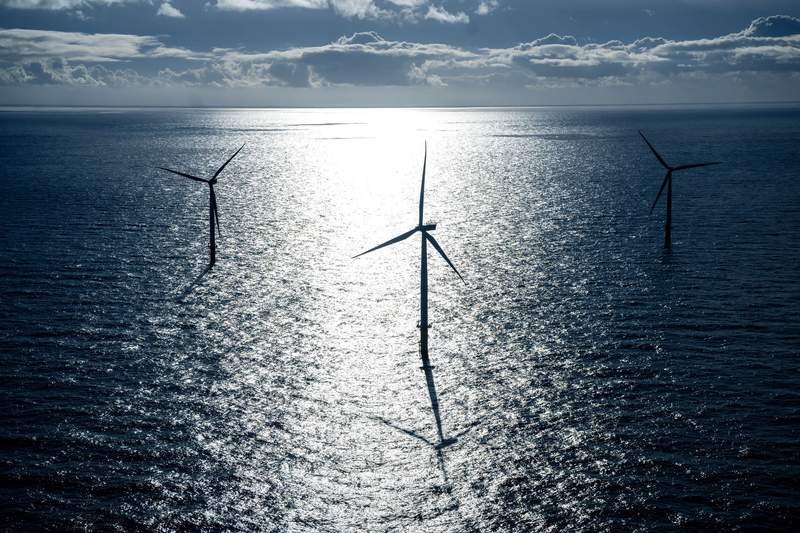
North Sea Offshore Wind Expansion: Netherlands Pushes Toward 2030 Renewable Target
The Netherlands is accelerating its offshore wind ambitions with a major expansion in the North Sea, as the country races to meet its target of generating 70 per cent of electricity from renewable sources by 2030. New tenders issued in mid-2026 will add an additional 10 gigawatts of offshore wind capacity — enough to power approximately 11 million Dutch households.
The expansion focuses on the IJmuiden Ver and Nederwiek zones, located between 60 and 100 kilometres off the Dutch coast. These areas benefit from some of the strongest and most consistent wind speeds in European waters, making them ideal for large-scale turbine deployment. The first turbines in IJmuiden Ver are expected to begin producing electricity by late 2027, with full completion targeted for 2029.
Innovation in Deep-Water Foundations
One of the key engineering challenges — and opportunities — in the new zones is water depth. At up to 65 metres in parts of the Nederwiek zone, traditional monopile foundations become impractical. Instead, developers are turning to advanced jacket structures and floating turbine platforms, technologies in which Dutch engineering firms like Heerema Marine Contractors and SBM Offshore are world leaders.
“The Dutch offshore industry has decades of experience in complex marine engineering from the oil and gas sector,” explains energy analyst Petra van Dijk. “That expertise is now being redeployed for renewables, and it’s creating a massive competitive advantage. We’re not just building wind farms — we’re exporting the technology globally.”
Grid Integration and Green Hydrogen
TenneT, the Dutch-German transmission system operator, is investing €13 billion in offshore grid infrastructure to bring the new wind power ashore. The plan includes high-voltage direct current (HVDC) cables capable of transmitting electricity over long distances with minimal losses — technology that Dutch companies have pioneered.
Importantly, a growing share of the new offshore wind capacity is earmarked for green hydrogen production. Electrolyser facilities at the Port of Rotterdam will convert excess offshore wind energy into hydrogen, which can be stored, transported, and used to decarbonise heavy industries like steel and chemicals — sectors where direct electrification is challenging. This integrated approach to energy has become a hallmark of Dutch climate strategy.
Jobs and Economic Impact
The offshore wind expansion is expected to create approximately 25,000 direct and indirect jobs in the Netherlands by 2030, spanning turbine manufacturing, marine engineering, cable laying, and maintenance operations. Ports in Rotterdam, Amsterdam, and Eemshaven are expanding their facilities to serve as assembly and service hubs for the growing North Sea wind fleet.
With Europe seeking to reduce its dependence on imported fossil fuels and accelerate the green transition, the Netherlands’ North Sea expertise is not just a national asset — it is a strategic resource for the entire continent.
The Netherlands, for internationals
One email a week: the week's news for internationals in the Netherlands, new practical guides and what changed in the cities. No spam, unsubscribe any time.