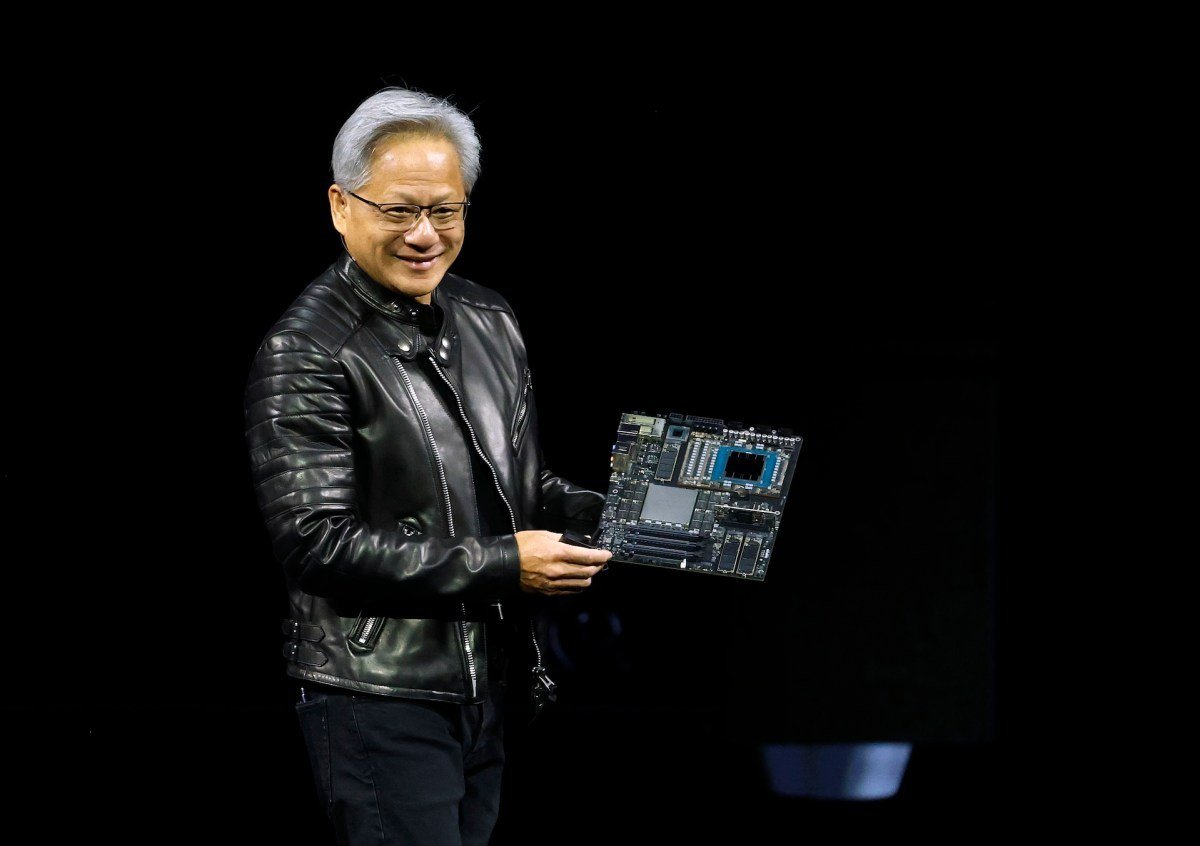
Nvidia is putting $1.5 billion into a SoftBank-backed data center developer, and the money comes with a condition that tells you exactly how the AI infrastructure race works right now. The developer is building a data center for OpenAI. Nvidia’s cash guarantees that its chips, and not anyone else’s, will run inside it.
That is the whole deal in one sentence, and it rewards a second reading. A chipmaker is helping pay to build the buildings that will then buy its chips. TechCrunch reported the arrangement on August 17, 2026, framing it as a straight line from Nvidia’s balance sheet to a locked-in customer at the far end of the supply chain.
Paying to be the only option
Most vendor relationships end when the invoice clears. This one starts earlier and reaches deeper. By taking a stake in the company that develops the physical site, Nvidia is not waiting to win the hardware contract. It is writing that outcome into the terms of its investment before the concrete sets.
SoftBank sits in the middle, as it tends to. The Japanese conglomerate has spent years positioning itself as a central financier of AI compute, and its data center developer is the vehicle carrying the OpenAI project forward. Nvidia’s $1.5 billion flows into that developer, which gives Nvidia an ownership interest in the very facility set to house racks of its GPUs. The chips are the product. The building is the guarantee they get sold.
Why would a company that already dominates AI accelerators feel the need to buy its way into a customer’s real estate? Because demand at this scale is not automatic. Building a hyperscale AI data center takes years, land, power contracts, and enormous capital, and every one of those steps is a place where a rival part or a custom in-house chip could slip in. Nvidia is closing that door early.
The circular economics of AI compute
A pattern is forming across these deals, and it looks a lot like money moving in a circle. Nvidia invests in the developer. The developer builds for OpenAI. OpenAI runs models that generate demand for more compute. That demand routes back to Nvidia hardware, which Nvidia’s own investment helped guarantee. Capital leaves through one door and returns through another.
Critics of the current AI boom have started calling arrangements like this circular, and not as a compliment. When a supplier finances its own customers, revenue can start to look sturdier than the underlying demand actually is. Nvidia would counter that it is simply removing friction from a market it understands better than anyone. Both things can be true at once, and that tension is what makes the $1.5 billion figure worth studying rather than skimming.
SoftBank has played this game before, occasionally to spectacular effect and occasionally to spectacular loss. Backing the infrastructure layer of a boom is a bet on volume rather than on any single winner. If OpenAI’s compute appetite keeps climbing, the developer holding those buildings holds something valuable. Nvidia clearly wanted a seat at that table, and it was willing to pay to reserve one.
What the deal signals to everyone else
For OpenAI, the read is straightforward. Its capacity plans now have another deep-pocketed party financially committed to seeing them built. When Nvidia holds a stake in the developer, it has every reason to prioritize chip supply, timelines, and support for that specific site. Scarcity of GPUs has been one of the industry’s hardest bottlenecks, and OpenAI just made its own bottleneck someone else’s problem too.
For Nvidia’s competitors, the message is colder. The battle for the next generation of AI data centers is being fought upstream, at the financing and development stage, long before anyone issues a purchase order. A rival chip cannot win a socket that was promised away during construction. That is a harder wall to climb than simply building a faster part.
Investors, meanwhile, get another data point in a debate that has been simmering all year. Is the AI buildout demand-driven or supplier-driven? A $1.5 billion check written to guarantee a customer does not settle that question. It sharpens it.
Watch what Nvidia does next, because a single deal is a decision and a series of them is a strategy. If more of these investments surface, each one wiring a data center to Nvidia silicon before the doors open, then the company is quietly rebuilding the AI supply chain around itself, one guaranteed building at a time. The open question is how long demand stays strong enough to keep the circle paying.
For more coverage of AI infrastructure, visit Mylistingo.
Source: Original Article
The Netherlands, for internationals
One email a week: the week's news for internationals in the Netherlands, new practical guides and what changed in the cities. No spam, unsubscribe any time.