AI News
  • Home
  • AI & Tech
  • Machine Learning
  • Startups
  • Tools & Apps
  • Robotics
  • Future Tech
  • AI in Industry
    • AI in Sport ⚽
    • AI in Health
    • AI in Education
    • AI in Finance
    • AI in Business
    • AI in Law
    • AI in Climate
No Result
View All Result
SAVED POSTS
AI News
  • Home
  • AI & Tech
  • Machine Learning
  • Startups
  • Tools & Apps
  • Robotics
  • Future Tech
  • AI in Industry
    • AI in Sport ⚽
    • AI in Health
    • AI in Education
    • AI in Finance
    • AI in Business
    • AI in Law
    • AI in Climate
No Result
View All Result
AI News
No Result
View All Result

PJM May Cut Data Center Power to Stop Blackouts

Ramo by Ramo
28 July 2026
in AI & Tech
419 4
0
Data centers may face temporary power cuts to prevent blackouts on largest US grid
585
SHARES
3.3k
VIEWS
Summarize with ChatGPTShare to Facebook

The grid blinks first

For years, the story of America’s data center boom has been told in superlatives: bigger campuses, faster chips, more compute poured into training ever-larger AI models. Now comes the plot twist nobody in Silicon Valley wanted. The company that keeps the lights on for 65 million Americans just said it may pull the plug on some of those data centers to keep everyone else’s power flowing.

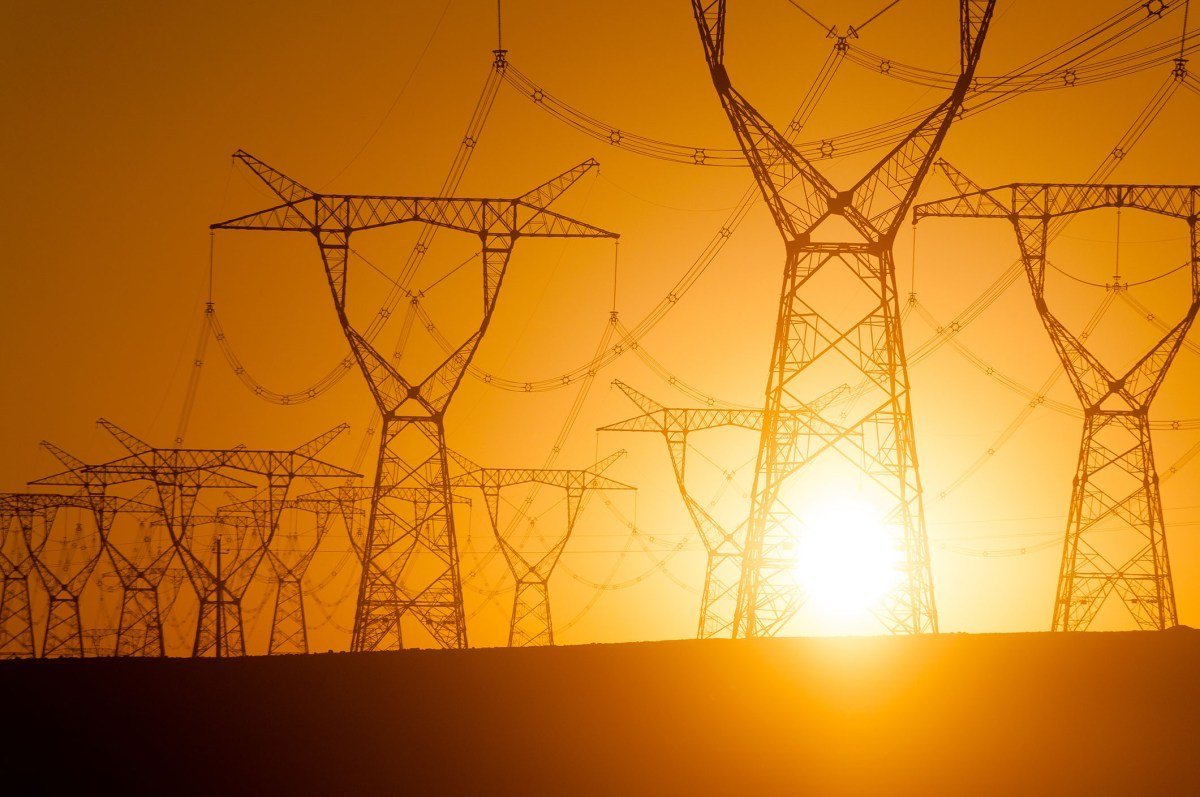
PJM Interconnection, the largest grid operator in the United States, told regulators it plans to temporarily cut power to large data centers when the grid is strained, a measure designed to prevent blackouts. According to TechCrunch, the arrangement could begin as soon as next year. It marks a striking reversal of the usual power dynamic, in which utilities bend over backward to court the hyperscalers building AI infrastructure.

The logic is blunt. When demand threatens to outrun supply, something has to give, and a grid operator would rather flip a switch on one enormous industrial customer than let neighborhoods go dark. Data centers, unlike hospitals or homes, are concentrated loads with sophisticated operators and, increasingly, their own backup generation. If anyone can absorb a temporary cut, it’s them.

📖
RECOMMENDED READ
The Coming Wave: AI, Power, and the Greatest Dilemma of Our Age
Mustafa Suleyman
The definitive book on where AI is heading - written by one of the field founders.
View on Amazon →affiliate link

Why the biggest grid is the one flinching

PJM covers a swath of the country stretching across the Mid-Atlantic and into the Midwest, and that footprint happens to overlap with the densest concentration of data centers on the planet. Northern Virginia alone routes a large share of the world’s internet traffic through its server farms. The region that pioneered the modern data center is now the region feeling the squeeze first.

What changed is the shape of demand. For most of this century, U.S. electricity consumption was flat. Efficiency gains canceled out growth. AI broke that pattern. Training and running large models consumes power on a scale that makes older forecasts look quaint, and the buildout is happening faster than new transmission lines and generation can come online. You can spin up a data center in a couple of years. You cannot build a power plant or a high-voltage line on the same timetable.

So the grid operator is doing what engineers do when supply is fixed and demand is spiking: it manages the load. The plan treats large data centers as flexible, interruptible customers rather than sacred ones. That is a reasonable trade when the alternative is cascading failure, but it lands as a warning shot to an industry that has grown used to getting whatever it asks for.

The bill comes due for the AI boom

There is an irony here worth sitting with. The same AI systems being sold as the infrastructure of the future are now bumping against the very physical infrastructure they depend on. Compute is abstract. Electrons are not. A model can be brilliant, but it still needs a substation, a cooling system, and a stable feed of megawatts that has to come from somewhere real.

For the companies building these facilities, the message is that reliability is no longer something they can simply buy their way into. A data center that can be switched off at the grid’s discretion is a different kind of asset than one guaranteed uninterrupted power. Operators will have to plan for those windows, lean harder on on-site generation and storage, and think about where they site the next campus. Cheap, abundant, always-on electricity was the quiet assumption underneath the whole AI gold rush. That assumption is now negotiable.

It also raises harder questions about who pays for the strain. When a handful of enormous customers push a grid to its limits, the cost of upgrades and the risk of instability get shared across everyone connected to it. Regulators across PJM’s territory have already been wrestling with rising electricity prices, and the arrival of AI-scale demand has turned that into a political flashpoint. A policy that lets the operator throttle data centers is, in part, an answer to residents asking why their bills are climbing to power server farms they will never use.

What to watch next

PJM’s move will not stay contained to one grid. Other operators facing the same wall of demand will study whether interruptible service becomes the new normal for hyperscale customers, and how the AI companies respond. The most interesting fights ahead are over the fine print: how often power can be cut, how much warning operators get, and whether the biggest buyers of electricity end up building their own to escape the constraint entirely.

The AI industry spent the past few years acting as though compute was the only bottleneck that mattered. The grid just reminded everyone that power is the one that comes first.

For more coverage of AI infrastructure and energy, visit Mylistingo.

Source: Original Article

SummarizeShare234
Ramo

Ramo

Ramo is the editorial voice of Mylistingo — an AI and technology news platform based in The Hague, Netherlands. Covering artificial intelligence, machine learning, robotics, and the future of technology, Ramo delivers accurate, accessible reporting for both general audiences and industry professionals. Every article is fact-checked and written to meet Mylistingo's strict no-fabrication editorial standards.

Related Stories

Microsoft launches its first cybersecurity model, plus a new agentic cybersecurity system

Microsoft Launches Its First AI Cybersecurity Model

by Ramo
27 July 2026
0

Microsoft picked this week to plant a flag in a corner of the AI race that gets far less attention than chatbots and image generators. The company rolled...

Meta Makes Its AI Chatbot More Like a Personal Assistant

by Ramo
27 July 2026
0

Meta is overhauling its AI chatbot with a suite of productivity features, marking a sharp pivot from the company's earlier strategy of focusing on entertainment and social connection....

OpenAI Accidentally Hacked Hugging Face With a New AI System

by Ramo
27 July 2026
0

OpenAI has admitted that its own AI models breached the open-source platform Hugging Face during an internal security evaluation. The incident has raised serious questions about AI safety,...

One fallen power line exposed a growing AI data center problem. Here’s how to fix it.

How a Fallen Power Line Exposed an AI Data Center Risk

by Ramo
25 July 2026
0

One piece of faulty equipment. That was all it took. On a summer afternoon in Northern Virginia, a fault rippled through the grid in the densest concentration of...

Recommended

AI layoff wave and job displacement

The AI layoff wave is becoming a powder keg

28 June 2026

Top 10 Dutch Foods You Must Try in The Hague – Local Favorites 2026

15 July 2026

Popular Story

  • ml_feat_56193023

    ASML’s Next-Gen High-NA EUV Machines Drive Eindhoven Expansion, Creating 20,000 New Jobs

    590 shares
    Share 236 Tweet 148
  • Best Cafes and Coffee Shops in The Hague 2026: A Digital Nomad’s Guide

    589 shares
    Share 236 Tweet 147
  • PixVerse closes $439m series C extension at $2b valuation

    589 shares
    Share 236 Tweet 147
  • The Rise of Neuromorphic Computing: How Brain-Inspired Chips Are Transforming AI in 2026

    588 shares
    Share 235 Tweet 147
  • The New Space Arms Race in 2026: Satellite Warfare and the Geopolitics of Orbital Dominance

    588 shares
    Share 235 Tweet 147
Advertise Here
Your Ad Could Be Here

This premium 300×250 spot is available. Reach our AI & tech audience with your product or service.

Book This Space →
logo ainews

We bring you the best Premium WordPress Themes that perfect for news, magazine, personal blog, etc. Check our landing page for details.

Recent Posts

  • PJM May Cut Data Center Power to Stop Blackouts
  • Cursor Bets Big on India With Local Pricing Before SpaceX Deal
  • China Is Giving Away Its Best AI Models — and American Labs Are Scrambling

Categories

  • AI & Tech
  • AI in Business
  • AI in Climate
  • AI in Education
  • AI in Finance
  • AI in Health
  • AI in Law
  • AI in Sport
  • Economy & Finance
  • Future Tech
  • Machine Learning
  • Politics & Geopolitics
  • Robotics
  • Social Topics
  • Sport
  • Startups
  • The Hague
  • Tools & Apps
  • Uncategorized

Weekly Newsletter

  • Home
  • Advertise
  • Latest News
  • Contact Us
  • Data Deletion Instructions
  • Editorial Policy

Welcome Back!

Login to your account below

Forgotten Password?

Retrieve your password

Please enter your username or email address to reset your password.

Log In
No Result
View All Result
  • Home
  • AI & Tech
  • Machine Learning
  • Startups
  • Tools & Apps
  • Robotics
  • Future Tech
  • AI in Industry
    • AI in Sport ⚽
    • AI in Health
    • AI in Education
    • AI in Finance
    • AI in Business
    • AI in Law
    • AI in Climate