A Replit founder takes the Disrupt stage
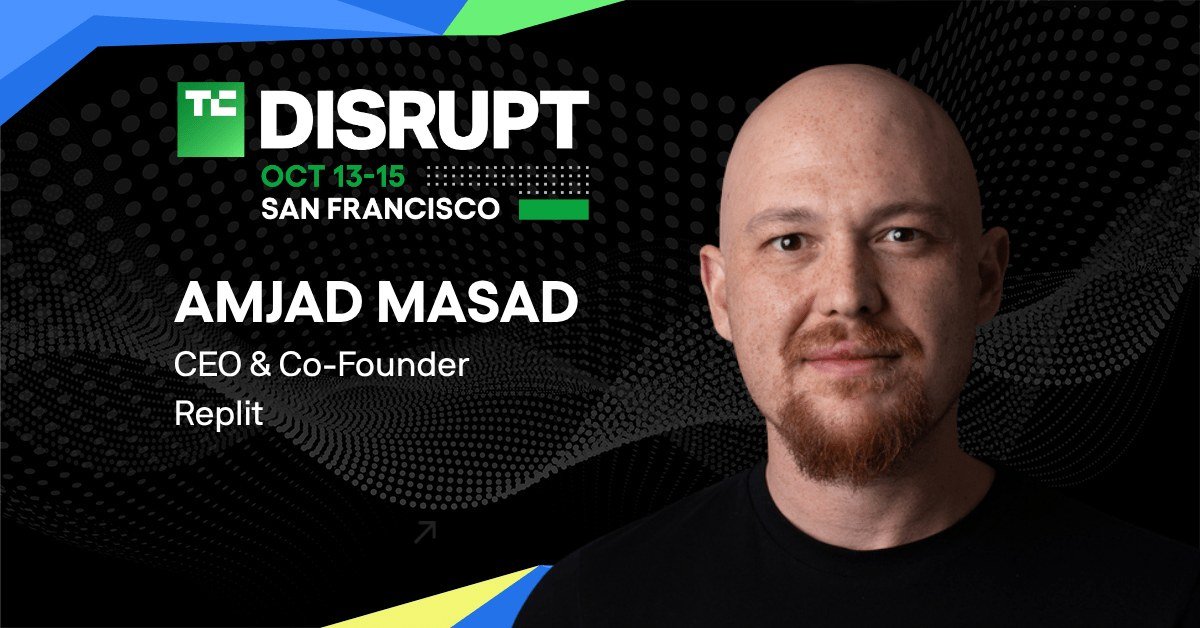
Amjad Masad is coming to San Francisco with an argument about what programming becomes next, and TechCrunch is handing him the microphone to make it. On August 24, 2026, TechCrunch confirmed that Masad, the CEO and co-founder of Replit, will join the Disrupt Stage at TechCrunch Disrupt 2026. The billing is simple: he will lay out his view of the future of programming and where Replit fits inside it. The subtext is anything but simple.
Few founders have staked a clearer position on the idea that writing software should stop being a specialist’s craft. Replit built its name on a browser-based coding environment that skips the ritual of local setup, letting anyone open a tab and start building. That premise looked like a convenience a few years ago. Now it reads like a thesis about who gets to make software at all.
Why this talk lands differently in 2026
Consider how much the ground has shifted since Replit launched its editor. Coding assistants have moved from autocomplete novelties to tools that draft whole functions, scaffold applications, and answer questions mid-keystroke. The job of a developer is quietly being renegotiated, and the people renegotiating it are often the ones who built the platforms underneath. That is why a founder’s stage time reads less like a product pitch and more like a status report on an industry rewiring itself in real time.
Masad has been vocal about a world where describing what you want, in plain language, is enough to produce working software. It is a bold claim, and it invites an obvious question. If the machine writes the code, what exactly is the human still doing? Is the developer becoming an editor, a director, a reviewer of work they no longer type by hand? These are the tensions a Disrupt conversation is built to surface, and they are the ones Masad has spent years pushing toward.
There is also a competitive edge to the timing. Replit is not operating in a vacuum. The category it helped define, cloud-based development that folds AI directly into the writing of code, has become one of the most contested corners of the software world. When a founder steps onto a stage this size, part of the performance is signaling: here is where we stand, here is what we see coming, here is why you should still be paying attention to us rather than the dozen other companies chasing the same future.
The bet under the keynote
Strip away the conference gloss and Masad’s appearance points at a single wager. He is betting that the barrier between having an idea and shipping software is collapsing, and that Replit sits at the exact seam where that collapse happens. If he is right, the population of people who can build a working app grows by orders of magnitude, and the tools that serve that population become enormously valuable. If he is wrong, or early, the same tools risk becoming clever demos that professionals abandon the moment the work gets serious.
What makes the talk worth watching is that nobody yet knows which version is true. The optimists point to a generation of non-engineers already shipping projects they could never have built before. The skeptics point to the gap between a plausible-looking prototype and production software that has to be secured, maintained, and trusted with real users. Both camps will be listening for how Masad handles that gap, because it is the hinge his entire argument swings on.
Disrupt has a long history of turning founder appearances into the moment an idea either gains altitude or gets punctured. The format rewards specificity and punishes hand-waving. An audience of builders, investors, and reporters tends to know when a vision is doing real work and when it is doing marketing. Masad will be talking to exactly that room.
What to listen for
The interesting signal will not be whether Masad says programming is changing. Everyone in the building already agrees on that. The signal will be in the details he is willing to commit to: how far he thinks natural-language software creation actually reaches today, where it breaks, and what Replit is building to close the distance. Vague futurism is easy. A founder describing the specific failure modes of his own product is the kind of honesty that separates a real roadmap from a highlight reel.
Watch, too, for how he frames the professional developer. A founder can pitch accessibility without dismissing expertise, and the most durable version of Masad’s argument treats AI as an amplifier of skilled engineers rather than a replacement for them. Which framing he chooses on the Disrupt stage will tell you a great deal about how Replit intends to grow, and who it plans to grow with.
For more coverage of the future of programming, visit Mylistingo.
Source: Original Article
The Netherlands, for internationals
One email a week: the week's news for internationals in the Netherlands, new practical guides and what changed in the cities. No spam, unsubscribe any time.