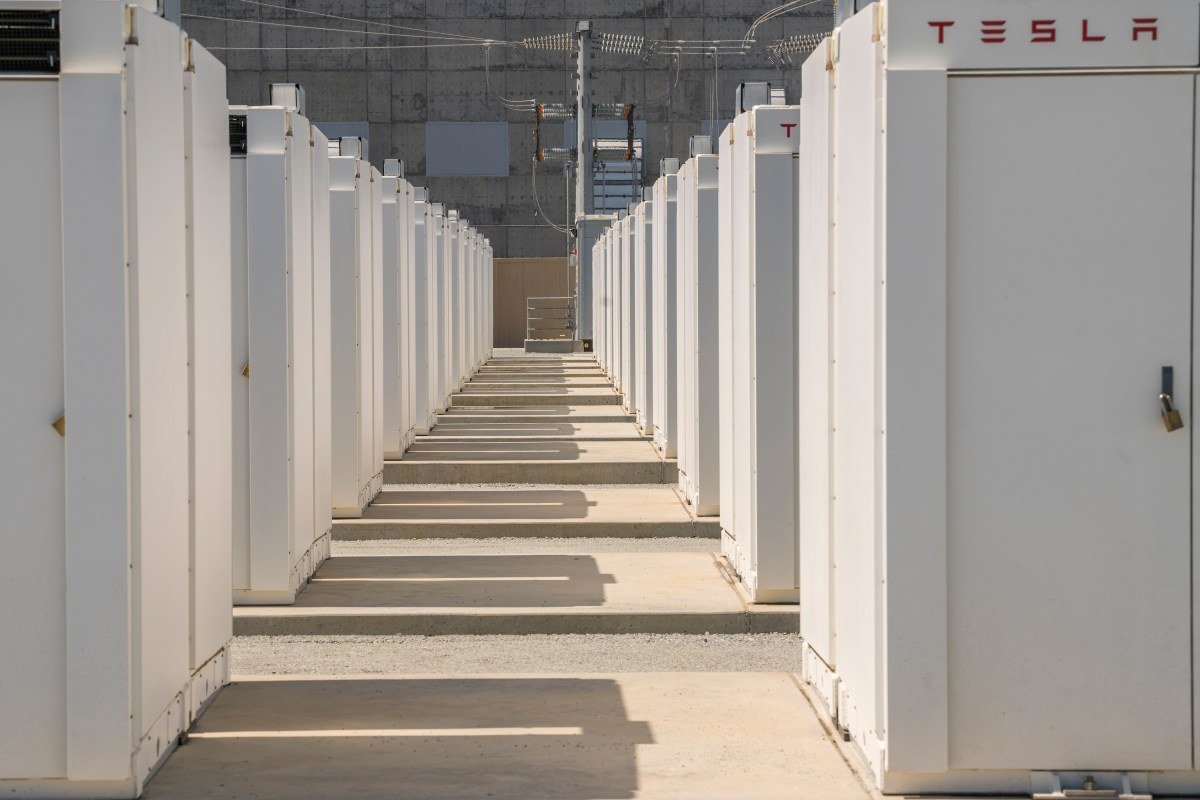
SpaceX has spent $329 million buying Tesla Megapacks so far this year. Two companies, one owner, one very large check moving from one side of Elon Musk’s empire to the other.
That figure, reported by TechCrunch on August 4, is the kind of number that would raise eyebrows in any other corner of corporate America. Here it barely counts as surprising. Musk controls both the rocket company writing the check and the carmaker cashing it, and the money flowing between them is a reminder that his businesses do not operate as separate planets so much as a single gravitational system.
What SpaceX is actually buying
Megapacks are Tesla’s utility-scale batteries, the refrigerator-sized units the company sells to power grids, data centers, and industrial sites that need to store large amounts of electricity and release it on demand. They are not consumer products. A single installation can run into the thousands of units, and the customers tend to be governments, utilities, and companies operating infrastructure at serious scale.
SpaceX qualifies as exactly that kind of customer. Launching rockets and running ground operations demands enormous, reliable power, and the appetite only grows as launch cadence increases. Buying $329 million of storage capacity from Tesla is, on its face, a straightforward infrastructure decision. SpaceX needs power that does not flicker when the grid does, and Tesla happens to make one of the best products on the market for that job.
The wrinkle is who owns both ends of the transaction.
One empire, many checkbooks
Musk’s companies have always leaned on one another. Engineers move between them. Talking points travel from Tesla earnings calls to SpaceX press briefings and back. When Musk bought Twitter, several of his other ventures ended up entangled in the deal in ways that took months to untangle. The $329 million Megapack purchase is a cleaner, more literal version of the same story: cash leaving one Musk balance sheet and landing on another.
There is nothing inherently improper about a company buying from a supplier that shares an owner. Related-party transactions happen constantly across the corporate world, and they can be perfectly ordinary. What makes this one worth attention is scale and concentration. When the buyer, the seller, and the person who ultimately benefits are all threads in the same web, the usual arm’s-length logic of a market gets harder to see. Is SpaceX getting the best price available, or the Musk price? Would a rival battery maker ever have a real shot at that contract?
Those questions do not have public answers, and that is part of the point. SpaceX is privately held, which means its spending faces far less disclosure than a public company’s would. The $329 million figure surfaced anyway, and it offers a rare glimpse into how tightly the machinery of Musk’s world is bolted together.
Why the plumbing matters
Follow the money and you start to see the outline of a self-reinforcing structure. Tesla books revenue from Megapack sales, revenue that helps a battery and energy business the company has been eager to grow. SpaceX gets hardware from a supplier it can coordinate with as easily as sending an internal email. And Musk, sitting above both, watches value circulate inside his own holdings rather than leaking out to competitors.
For investors in Tesla, that dynamic cuts two ways. A reliable, deep-pocketed customer is good for the energy division’s numbers. But a customer who exists partly because of shared ownership is a softer kind of demand than a contract won in open competition. Growth that depends on the boss’s other companies is growth with an asterisk, and analysts trying to judge Tesla’s energy business have to decide how much of it is real market pull.
The broader lesson sits above any single deal. Musk has spent two decades building companies that feed one another, and the Megapack purchase shows that flywheel spinning in plain sight. Capital, talent, and now hardware move between his ventures with a fluidity that most conglomerates could never manage, because most conglomerates are not run by one person with a controlling hand in every business.
Watch whether this number climbs. If SpaceX keeps buying Tesla batteries at this pace, the two companies stop looking like separate customers and suppliers and start looking like divisions of the same enterprise, held apart by paperwork more than by anything real. The next filing, whenever it surfaces, will say a lot about which direction Musk’s empire is drifting.
For more coverage of Elon Musk’s companies, visit Mylistingo.
Source: Original Article