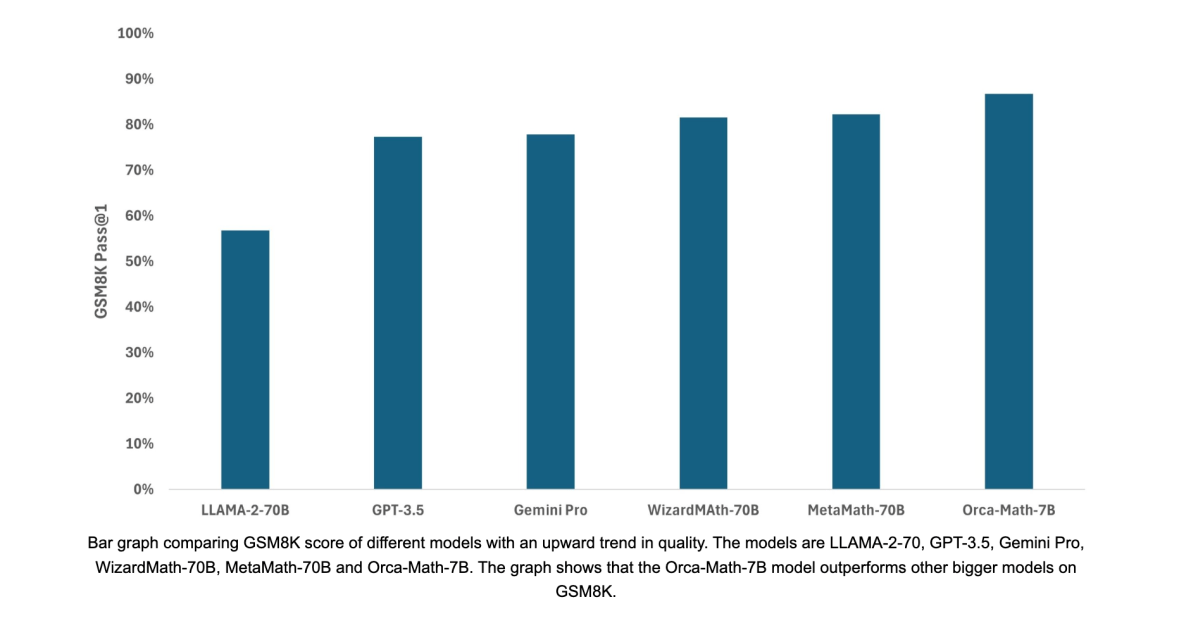
For most of the modern AI boom, the strategy was simple: make it bigger. More parameters, more data, more compute. But a quieter counter-trend has taken hold—small language models (SLMs) that trade raw size for speed, cost, and the ability to run almost anywhere. Increasingly, the smartest move is not the biggest model, but the right-sized one.
Why smaller is suddenly smarter
Frontier models are extraordinary, but they are also expensive to serve and power-hungry. For a great many real tasks—classification, summarisation, routing, extracting structured data—a compact model fine-tuned for the job can match or beat a giant general-purpose system at a fraction of the cost and latency. Efficiency, it turns out, is its own kind of intelligence.
- Lower cost: smaller models are cheaper to run at scale, which matters enormously for high-volume applications.
- Lower latency: fewer parameters mean faster responses, crucial for interactive products.
- Privacy: models small enough to run on a laptop or phone keep sensitive data on the device.
The techniques making it possible
Several maturing methods have made compact models punch well above their weight. Distillation trains a small “student” model to imitate a larger “teacher,” capturing much of its capability in a smaller package. Quantisation shrinks the numerical precision of a model’s weights, slashing memory use with minimal quality loss. And targeted fine-tuning on high-quality, domain-specific data lets a small model specialise rather than trying to know everything.
On-device AI changes the rules
When a capable model fits on consumer hardware, the entire product calculus shifts. There is no round-trip to a data centre, so responses are instant and work offline. There is no per-query server bill, so features can be generous. And because data never leaves the device, privacy improves by default. This is why phone makers and operating-system vendors have invested heavily in on-device models for everyday features like writing help, summarisation, and search.
A portfolio approach, not a winner-take-all
The future is not small models replacing large ones; it is intelligent routing between them. A well-designed system uses a small, fast model for routine requests and escalates to a frontier model only when a task genuinely demands deep reasoning. That tiered approach delivers the best of both worlds: low cost for the common case, high capability for the hard case.
What it means for builders
For startups and engineering teams, SLMs lower the barrier to shipping AI features. You no longer need a frontier budget to build something useful. Open-weight small models can be downloaded, fine-tuned, and deployed on modest infrastructure, which is democratising the field in a way the early scaling race never did.
The lesson of the past year is that scale is a tool, not a trophy. The teams winning with AI are the ones matching model size to the problem—and discovering that, very often, smaller is exactly enough.
Track the models reshaping machine learning with ongoing analysis from Mylistingo.
The Netherlands, for internationals
One email a week: the week's news for internationals in the Netherlands, new practical guides and what changed in the cities. No spam, unsubscribe any time.