Microsoft and Quantinuum Set New Record in Logical Qubit Reliability
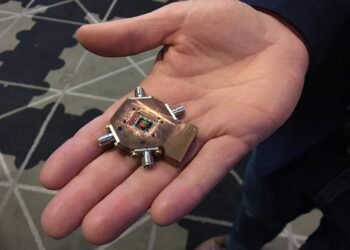
In a milestone that inches practical quantum computing closer to reality, Microsoft and Quantinuum have demonstrated a logical qubit error rate 800 times lower than the underlying physical qubits — the best ratio ever reported. The result, published in July 2026, uses Microsoft’s qubit-virtualization system paired with Quantinuum’s H2 trapped-ion processor to create logical qubits that maintain coherence long enough to run complex algorithms.
The breakthrough addresses the core bottleneck that has kept quantum computers confined to research labs: noise. Physical qubits are exquisitely sensitive to environmental interference. Every stray photon, thermal fluctuation, or electromagnetic whisper can corrupt a calculation. Error correction — combining dozens or hundreds of physical qubits into a single, more reliable logical qubit — has been the theoretical solution for decades. The problem has been that the error correction itself introduces so much overhead that the logical qubit performs worse than the physical ones it replaces.
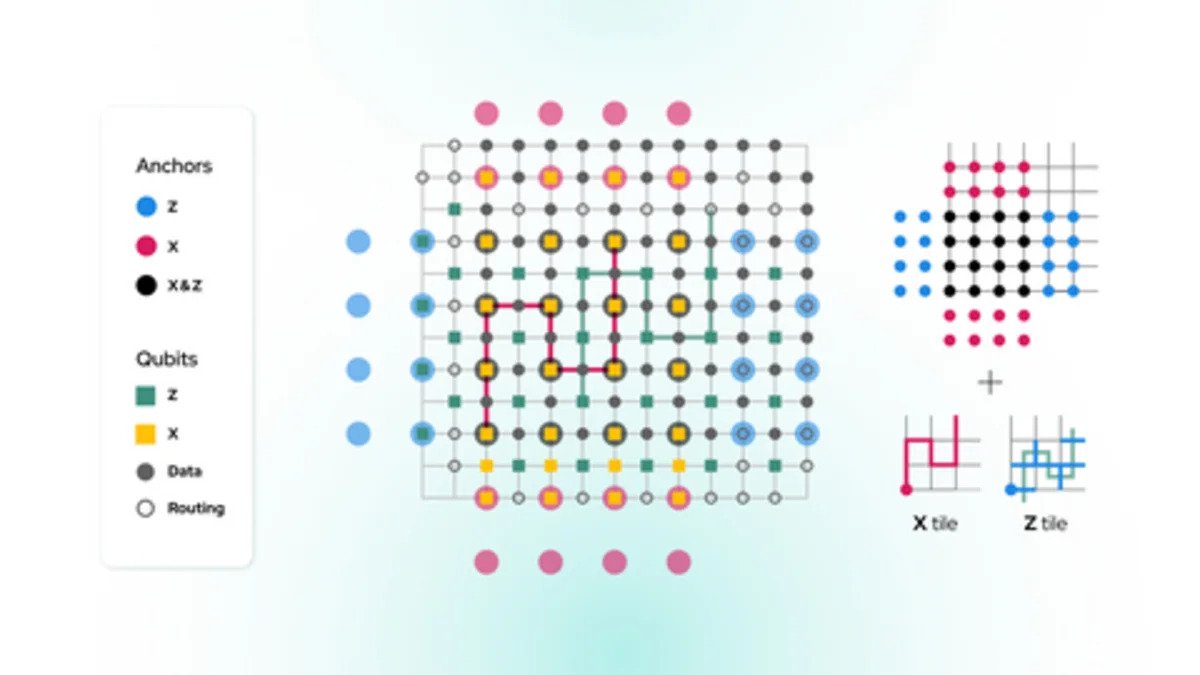
Microsoft’s team flipped that dynamic. Their logical qubits, built from 16 physical qubits each using a color-code architecture, delivered an error rate of 0.008% per operation. The best physical qubits in the same system operated at roughly 0.6%. That 800x improvement means a logical qubit can now perform over 10,000 operations before an error is expected — a threshold where real algorithmic work becomes viable.
“This is the first system where error correction demonstrably improves on the physical baseline,” said Dr. Krysta Svore, Microsoft’s VP of Advanced Quantum Development. “We’re not just theorizing about fault tolerance anymore. We’re measuring it in hardware.”
The demonstration ran a 24-logical-qubit circuit executing Shor’s algorithm components — the factoring protocol that, at scale, would break RSA encryption. While 24 logical qubits can’t crack real-world encryption, the error-corrected execution produced the correct prime factors for small test numbers with 99.7% fidelity, compared to 62% without error correction.
The technique combines two innovations: Microsoft’s real-time qubit virtualization layer, which dynamically reroutes computation around failing physical qubits, and Quantinuum’s all-to-all connectivity architecture, which eliminates the nearest-neighbor constraints that force most quantum processors to waste qubits on communication overhead.
Why this matters for business: fault-tolerant quantum computing unlocks drug discovery, materials science, and financial modeling at scales classical computers cannot approach. The pharmaceutical industry alone estimates quantum chemistry could cut drug development timelines by 40%. With logical qubits now outperforming physical ones, the race to scale beyond 100 logical qubits begins in earnest.
The Netherlands, for internationals
One email a week: the week's news for internationals in the Netherlands, new practical guides and what changed in the cities. No spam, unsubscribe any time.