AI News
  • Home
  • AI & Tech
  • Machine Learning
  • Startups
  • Tools & Apps
  • Robotics
  • Future Tech
  • AI in Industry
    • AI in Sport ⚽
    • AI in Health
    • AI in Education
    • AI in Finance
    • AI in Business
    • AI in Law
    • AI in Climate
No Result
View All Result
SAVED POSTS
AI News
  • Home
  • AI & Tech
  • Machine Learning
  • Startups
  • Tools & Apps
  • Robotics
  • Future Tech
  • AI in Industry
    • AI in Sport ⚽
    • AI in Health
    • AI in Education
    • AI in Finance
    • AI in Business
    • AI in Law
    • AI in Climate
No Result
View All Result
AI News
No Result
View All Result

Microsoft and Quantinuum Set New Record in Logical Qubit Reliability

Ramo by Ramo
6 July 2026
in Future Tech
414 9
0
ml_feat_95885714
585
SHARES
3.3k
VIEWS
Summarize with ChatGPTShare to Facebook

Microsoft and Quantinuum Set New Record in Logical Qubit Reliability

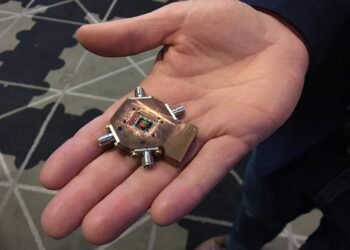
In a milestone that inches practical quantum computing closer to reality, Microsoft and Quantinuum have demonstrated a logical qubit error rate 800 times lower than the underlying physical qubits — the best ratio ever reported. The result, published in July 2026, uses Microsoft’s qubit-virtualization system paired with Quantinuum’s H2 trapped-ion processor to create logical qubits that maintain coherence long enough to run complex algorithms.

The breakthrough addresses the core bottleneck that has kept quantum computers confined to research labs: noise. Physical qubits are exquisitely sensitive to environmental interference. Every stray photon, thermal fluctuation, or electromagnetic whisper can corrupt a calculation. Error correction — combining dozens or hundreds of physical qubits into a single, more reliable logical qubit — has been the theoretical solution for decades. The problem has been that the error correction itself introduces so much overhead that the logical qubit performs worse than the physical ones it replaces.

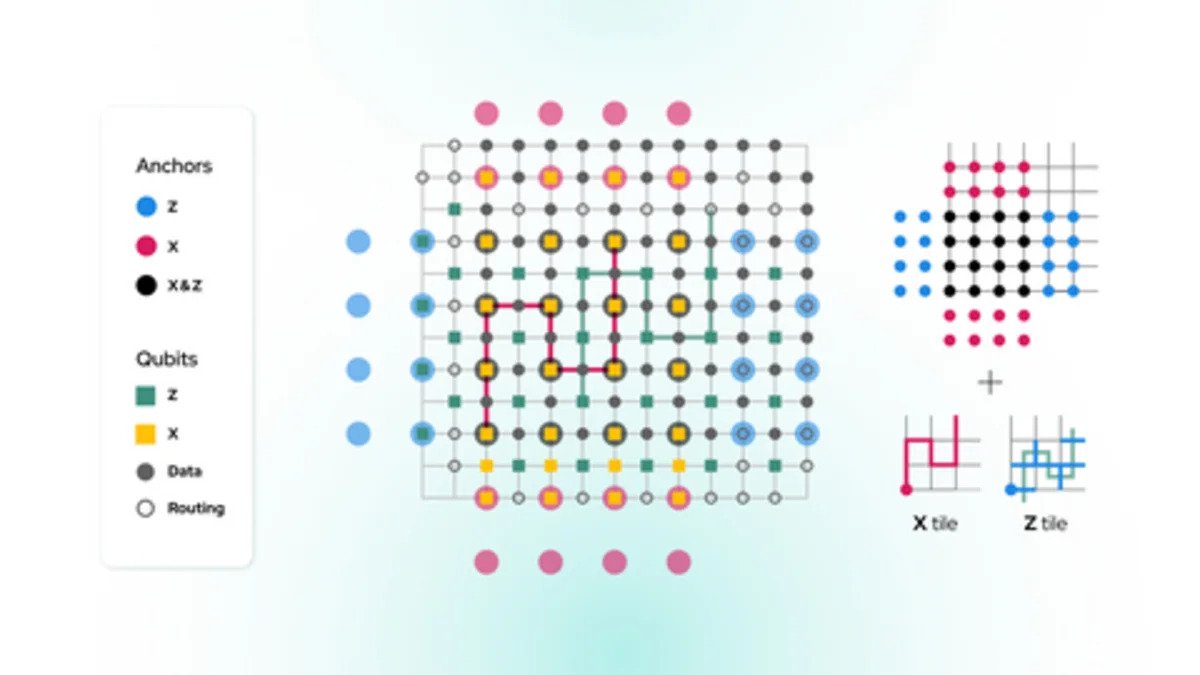
Microsoft’s team flipped that dynamic. Their logical qubits, built from 16 physical qubits each using a color-code architecture, delivered an error rate of 0.008% per operation. The best physical qubits in the same system operated at roughly 0.6%. That 800x improvement means a logical qubit can now perform over 10,000 operations before an error is expected — a threshold where real algorithmic work becomes viable.

🔮
RECOMMENDED READ
The Singularity Is Nearer: When We Merge with AI
Ray Kurzweil
An updated roadmap for the technologies reshaping human civilisation this decade.
View on Amazon →affiliate link

“This is the first system where error correction demonstrably improves on the physical baseline,” said Dr. Krysta Svore, Microsoft’s VP of Advanced Quantum Development. “We’re not just theorizing about fault tolerance anymore. We’re measuring it in hardware.”

The demonstration ran a 24-logical-qubit circuit executing Shor’s algorithm components — the factoring protocol that, at scale, would break RSA encryption. While 24 logical qubits can’t crack real-world encryption, the error-corrected execution produced the correct prime factors for small test numbers with 99.7% fidelity, compared to 62% without error correction.

The technique combines two innovations: Microsoft’s real-time qubit virtualization layer, which dynamically reroutes computation around failing physical qubits, and Quantinuum’s all-to-all connectivity architecture, which eliminates the nearest-neighbor constraints that force most quantum processors to waste qubits on communication overhead.

Why this matters for business: fault-tolerant quantum computing unlocks drug discovery, materials science, and financial modeling at scales classical computers cannot approach. The pharmaceutical industry alone estimates quantum chemistry could cut drug development timelines by 40%. With logical qubits now outperforming physical ones, the race to scale beyond 100 logical qubits begins in earnest.

SummarizeShare234
Ramo

Ramo

Ramo is the editorial voice of Mylistingo — an AI and technology news platform based in The Hague, Netherlands. Covering artificial intelligence, machine learning, robotics, and the future of technology, Ramo delivers accurate, accessible reporting for both general audiences and industry professionals. Every article is fact-checked and written to meet Mylistingo's strict no-fabrication editorial standards.

Related Stories

Neuromorphic chip architecture illustrating brain-inspired neural network design with synaptic connections on a futuristic blue circuit board

The Rise of Neuromorphic Computing: How Brain-Inspired Chips Are Transforming AI in 2026

by Ramo
15 July 2026
0

Explore how neuromorphic computing is revolutionizing AI hardware in 2026 with brain-inspired chips that consume less power and process information faster than traditional GPUs.

Brain-Computer Interfaces Move from Labs to Real-World Applications in 2026

Brain-Computer Interfaces Move from Labs to Real-World Applications in 2026

by Ramo
14 July 2026
0

Brain-computer interfaces leave research labs in 2026. Neuralink, Synchron, and startups bring mind-controlled devices to patients and consumers.

European Digital Identity Wallet Rollout Accelerates Across EU in 2026

European Digital Identity Wallet Rollout Accelerates Across EU in 2026

by Ramo
14 July 2026
0

The European Union's digital identity wallet program enters a critical phase in 2026, with the Netherlands among the first member states deploying the interoperable digital ID for 450...

Robotaxis arrive in Rotterdam Netherlands autonomous ride-hailing fleet

Robotaxis Arrive in Rotterdam: Netherlands Launches Europe’s Largest Autonomous Ride-Hailing Fleet

by Ramo
13 July 2026
0

Rotterdam becomes the first Dutch city with commercial robotaxis, as AutoValet deploys 120 self-driving EVs across the city — with The Hague expansion expected by September 2026.

Recommended

ml_feat_7058120

EU AI Act Full Enforcement: What Dutch Businesses Need to Know in 2026

8 July 2026
Picsum ID: 126

Coworking Spaces in The Hague 2026 — 5 Best Places to Work

29 June 2026

Popular Story

  • ml_feat_56193023

    ASML’s Next-Gen High-NA EUV Machines Drive Eindhoven Expansion, Creating 20,000 New Jobs

    590 shares
    Share 236 Tweet 148
  • Best Cafes and Coffee Shops in The Hague 2026: A Digital Nomad’s Guide

    589 shares
    Share 236 Tweet 147
  • The New Space Arms Race in 2026: Satellite Warfare and the Geopolitics of Orbital Dominance

    588 shares
    Share 235 Tweet 147
  • Inside The Hague’s AI-Powered International Criminal Court: How Machine Learning Is Accelerating Justice

    588 shares
    Share 235 Tweet 147
  • Is Your Home Truly Safe The Smart Security Tech You Need in 2025

    587 shares
    Share 235 Tweet 147
Advertise Here
Your Ad Could Be Here

This premium 300×250 spot is available. Reach our AI & tech audience with your product or service.

Book This Space →
logo ainews

We bring you the best Premium WordPress Themes that perfect for news, magazine, personal blog, etc. Check our landing page for details.

Recent Posts

  • Global Stock Markets in 2026: Record Highs, Rate Decisions, and the AI Bubble Debate
  • How Digital Nomads Are Reshaping Global Economies in 2026
  • The Rise of Neuromorphic Computing: How Brain-Inspired Chips Are Transforming AI in 2026

Categories

  • AI & Tech
  • AI in Business
  • AI in Climate
  • AI in Education
  • AI in Finance
  • AI in Health
  • AI in Law
  • AI in Sport
  • Economy & Finance
  • Future Tech
  • Machine Learning
  • Politics & Geopolitics
  • Robotics
  • Social Topics
  • Sport
  • Startups
  • The Hague
  • Tools & Apps

Weekly Newsletter

  • Home
  • Advertise
  • Latest News
  • Contact Us
  • Data Deletion Instructions
  • Editorial Policy

Welcome Back!

Login to your account below

Forgotten Password?

Retrieve your password

Please enter your username or email address to reset your password.

Log In
No Result
View All Result
  • Home
  • AI & Tech
  • Machine Learning
  • Startups
  • Tools & Apps
  • Robotics
  • Future Tech
  • AI in Industry
    • AI in Sport ⚽
    • AI in Health
    • AI in Education
    • AI in Finance
    • AI in Business
    • AI in Law
    • AI in Climate