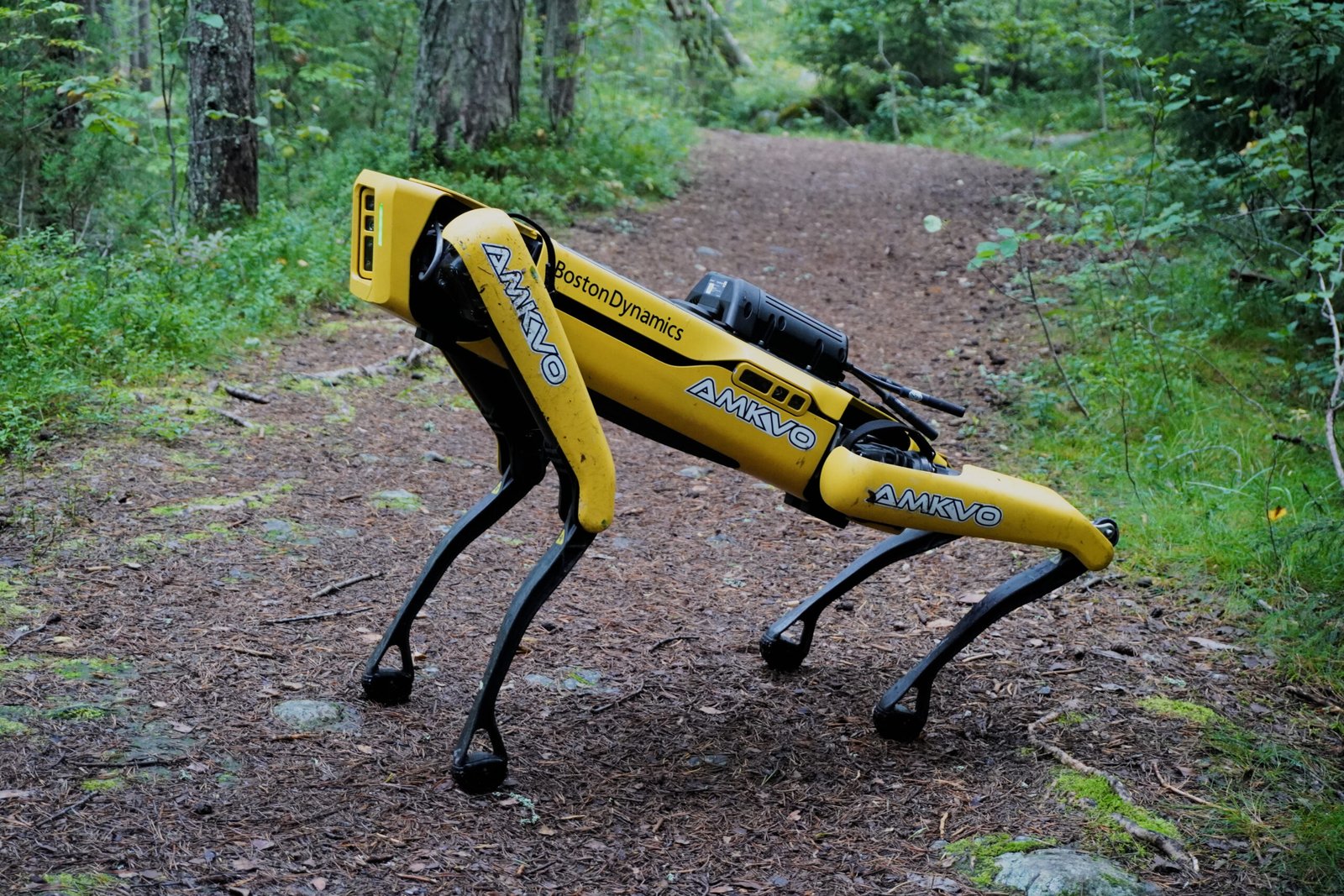
A pressure gauge with a needle sitting between two faint tick marks is one of the hardest things for a machine to read. Humans do it by eye in half a second. Robots have historically struggled, misjudging the angle, the lighting, or the scale. Boston Dynamics says its Spot robot can now do it with 98 percent accuracy, and the reason is a Google DeepMind model called Gemini Robotics-ER 1.6.
The integration, announced this spring and now expanding across Boston Dynamics’ commercial customer base, connects Spot and the company’s Orbit inspection software directly to Gemini’s reasoning capabilities. Where earlier versions of Spot relied on narrow, purpose-built vision models trained for specific tasks, the new system uses a general-purpose model that can interpret what it sees the way a person would: recognizing an analog dial, estimating the needle’s position relative to the printed scale, and flagging a reading that falls outside normal range.
From narrow vision models to general reasoning
Gemini Robotics-ER 1.6, released by DeepMind in April, is built for what researchers call embodied reasoning, the ability of a machine to interpret and act inside physical space rather than just classify an image. That distinction matters more than it sounds. A model that can label a photo as “gauge” is not the same as one that can determine whether the specific reading on that gauge, at that angle, under that lighting, indicates a problem worth a technician’s attention.
Boston Dynamics built its business on mobility, teaching Spot to walk across uneven terrain, climb stairs, and right itself after a fall. The harder problem, the one the company has spent the past two years working on with Google, is judgment. A robot that can walk into a boiler room is only useful if it can also tell the difference between a normal reading and one that needs a human to look twice.
What changes for the people running factories
Orbit, Boston Dynamics’ fleet management platform, is where the practical impact shows up first. Industrial customers, oil and gas operators, utilities, manufacturing plants, use Orbit to schedule Spot’s inspection routes and review what it finds. With Gemini Robotics-ER 1.6 built in, Orbit can now support continuous learning across a facility rather than one-off tasks, meaning the system improves its readings of a particular plant’s equipment over repeated visits instead of treating every inspection as a blank slate.
That is a meaningful shift for an industry that has been promised autonomous inspection for the better part of a decade without much to show for it beyond pilot programs. Pressure gauges, thermometers and sight glasses, the unglamorous analog instruments that still run much of heavy industry, are exactly the kind of equipment that resisted earlier computer vision approaches because the readings are continuous rather than binary. A dial does not just say “normal” or “abnormal.” It says 47, and someone or something has to know that 47 matters.
The bigger bet behind the partnership
For Google, the Spot integration is a proof point for Gemini Robotics as a platform rather than a one-off product. DeepMind has been positioning the Robotics-ER line as infrastructure other hardware makers can build on, similar to how cloud providers sell compute rather than finished applications. Boston Dynamics, a company with decades of mobility engineering but a comparatively small AI research team next to Google’s, gets a reasoning layer it did not have to build from scratch.
The partnership also puts Boston Dynamics in more direct competition with humanoid robotics startups that have leaned heavily on their own foundation models, including several backed by rival AI labs. Whether a four-legged inspection robot with borrowed intelligence outcompetes a humanoid built end to end by one company is still an open question, and probably one that gets answered in industrial contracts rather than demo videos.
For more coverage of robotics and machine learning, visit Mylistingo.
The Netherlands, for internationals
One email a week: the week's news for internationals in the Netherlands, new practical guides and what changed in the cities. No spam, unsubscribe any time.