
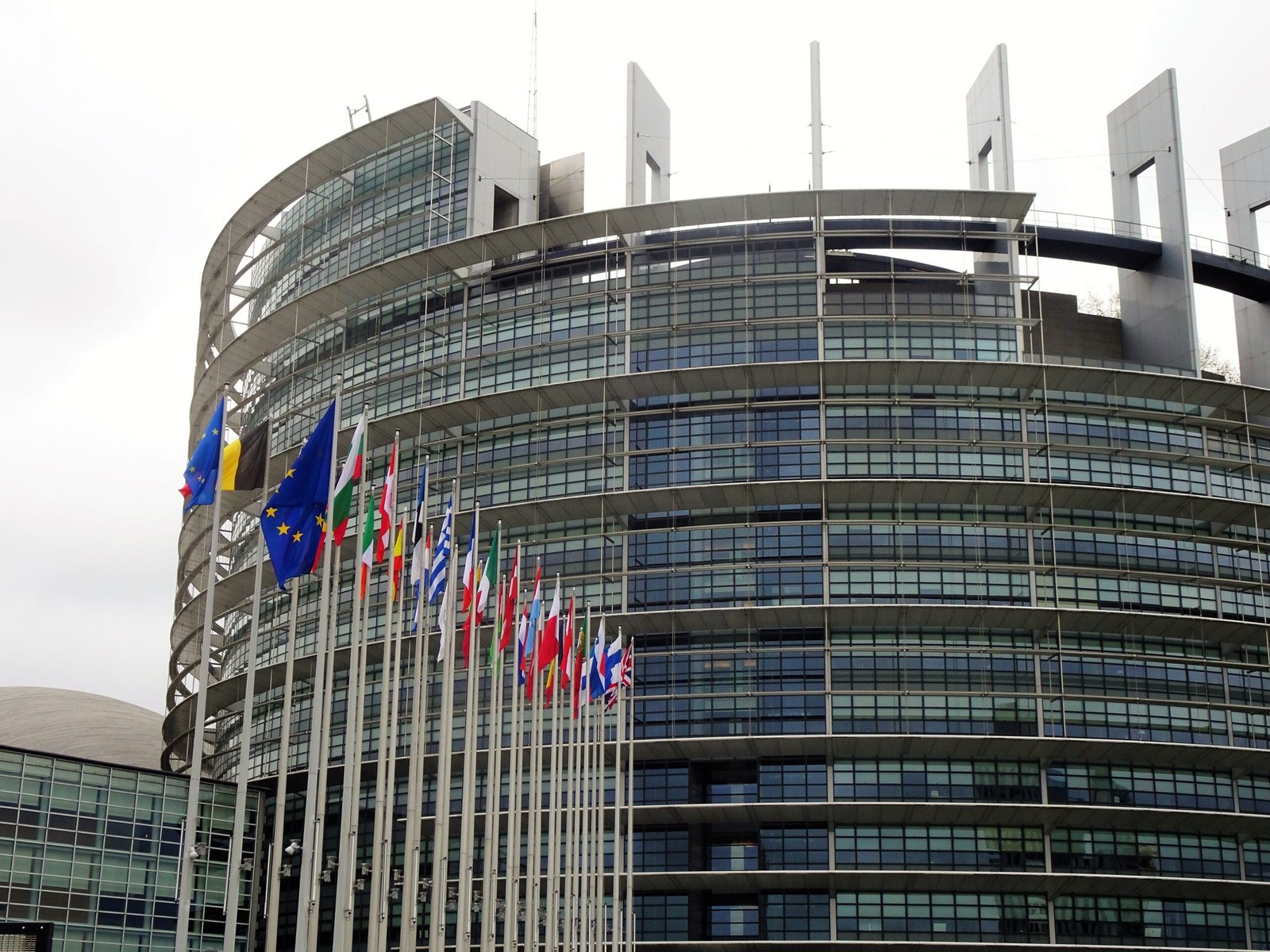
The EU AI Act: A Year of Implementation
It has been just over a year since the European Union’s Artificial Intelligence Act entered into force, and the landmark regulation is already reshaping not only Europe’s technology landscape but also influencing AI governance frameworks across the globe. The EU AI Act, adopted in 2024 and phased in throughout 2025 and 2026, represents the world’s first comprehensive legal framework for artificial intelligence, categorizing AI applications by risk level and imposing corresponding obligations on developers and deployers.
The Act’s tiered approach has created a regulatory blueprint that governments from Ottawa to Tokyo are now studying closely. Under the framework, AI systems are classified into four risk categories: unacceptable risk (prohibited), high risk (strict obligations), limited risk (transparency obligations), and minimal risk (no obligations). Systems deemed to pose unacceptable threats to safety, livelihoods, or rights — such as social scoring by governments or real-time biometric surveillance in public spaces — are banned outright.
Enforcement began in earnest in early 2026, with the newly established European AI Office in Brussels coordinating national authorities across all 27 member states. The European Commission has reported that implementation has been broadly successful, with most member states establishing their national competent authorities by the February 2026 deadline. However, concerns remain about inconsistent enforcement standards across the bloc and the capacity of smaller member states to effectively police AI systems.
Global Ripple Effects: The Brussels Effect in AI Regulation
The EU AI Act is already generating what scholars call the “Brussels Effect” — the phenomenon whereby EU regulations become de facto global standards due to the size and influence of the single market. Major technology companies including Google, Microsoft, and Meta have restructured their AI development pipelines to comply with EU requirements, changes that naturally extend to their global operations.
Canada has introduced the Artificial Intelligence and Data Act (AIDA), drawing heavily on the EU framework’s risk-based approach. Brazil’s Congress is debating Bill 2338/2023, which similarly mirrors the EU’s tiered classification system. Japan has announced plans for binding AI regulations by 2027 that borrow the EU’s high-risk categorization. Even the United States, which has favored a more voluntary approach to AI governance, has seen individual states like Colorado and Connecticut adopt AI laws that reference the EU framework.
The United Nations has also taken notice. In March 2026, the UN Secretary-General’s High-Level Advisory Body on AI released recommendations that echo the EU’s emphasis on human oversight, transparency, and accountability. The International Telecommunication Union (ITU) is exploring whether the EU AI Act’s conformity assessment procedures could serve as a template for international AI safety standards.
Not all reactions have been positive. Critics in Asia and North America argue that the EU’s approach is overly prescriptive and could stifle innovation. Some startups have complained that compliance costs — estimated at 40,000 to 400,000 euros for high-risk AI systems — are prohibitive for smaller companies. The European Commission has responded by establishing regulatory sandboxes and innovation hubs, but the tension between safety and competitiveness remains a defining challenge.

Enforcement Actions and Early Case Law
The first major enforcement actions under the EU AI Act are now emerging. In April 2026, the Italian data protection authority ordered a halt to a municipal AI-powered social benefits fraud detection system, finding that it operated without adequate human oversight and disproportionately affected vulnerable populations. The decision sent shockwaves through Europe’s burgeoning GovTech sector and has prompted several similar reviews across the continent.
Germany’s Federal Office for Information Security (BSI) issued the first formal warning to a major social media platform for insufficient transparency in its content moderation AI. The platform was given 90 days to provide users with clearer explanations of how automated decisions about content removal are made. Meanwhile, the French data protection authority, CNIL, has opened investigations into three companies deploying AI hiring tools that may discriminate based on protected characteristics.
The Court of Justice of the European Union (CJEU) has yet to hear its first AI Act case, but legal scholars expect a wave of references from national courts in the coming year. Key questions likely to reach Luxembourg include the scope of the prohibition on “social scoring,” the territorial reach of the Act’s obligations for non-EU AI providers, and the interaction between the AI Act and the GDPR — particularly around the processing of special category data by AI systems.
Industry Adaptation and Compliance Challenges
Europe’s technology industry has undergone significant restructuring in response to the AI Act requirement. Major corporations have established dedicated AI ethics and compliance teams, while consulting firms have launched lucrative AI Act advisory practices. The conformity assessment process under Annex III of the regulation — which requires third-party auditing of certain high-risk AI systems — has created a new profession of accredited AI auditors.
Small and medium-sized enterprises (SMEs) have faced the greatest challenges. The European DIGITAL SME Alliance has reported that many smaller AI developers are struggling with the documentation requirements, which include detailed technical specifications, risk management documentation, and human oversight protocols. The European Commission has responded by releasing simplified documentation templates and launching an AI regulatory sandbox platform where SMEs can test their compliance approaches under regulatory supervision.
The open-source AI community has raised particular concerns about the Act’s treatment of foundation models and general-purpose AI systems. The compromise reached in the trilogue negotiations — imposing transparency and copyright-related obligations on all general-purpose AI models, with additional systemic risk obligations on the most capable models — has been criticized from both sides. Some open-source advocates argue the rules are unworkable for community-developed models, while safety advocates contend they don’t go far enough to address catastrophic risks.
Comparative Analysis: EU vs. Other Regulatory Approaches
The EU AI Act is just one of several approaches to AI regulation globally, and the landscape is evolving rapidly. The United States has pursued a sectoral approach, with the White House Executive Order on Safe, Secure, and Trustworthy Development and Use of AI being followed by voluntary commitments from leading AI companies. The US approach emphasizes industry self-regulation and existing agency authorities, with the National Institute of Standards and Technology (NIST) developing an AI Risk Management Framework rather than binding rules.
China has taken a distinctly different path, with regulations focusing on algorithmic recommendation systems, deep synthesis (deepfake) content, and the “correct direction” of generative AI in line with socialist core values. China’s approach combines strict content controls with strong government support for AI development as a strategic priority. The contrast between China’s top-down approach and the EU’s rights-based framework illustrates the fundamental geopolitical dimension of AI governance.
The United Kingdom, having left the EU, has charted a middle course with its “pro-innovation” approach, avoiding binding legislation in favor of principles-based guidance distributed across existing regulators. The UK’s AI Safety Institute focuses primarily on technical evaluation of frontier models, while the government has resisted calls for a new AI-specific regulator. The EU AI Act’s demonstrated enforcement power is prompting reconsideration in London, with parliamentary committees increasingly questioning whether the UK’s light-touch approach provides adequate protection.
India and Singapore have adopted “regulatory sandbox” approaches that prioritize innovation while building institutional capacity for future regulation. These approaches deliberately delay binding rules to avoid constraining their domestic AI industries during a critical growth phase. The diversity of approaches reflects different cultural values, economic priorities, and governance traditions — but the EU AI Act has undeniably raised the baseline for what counts as adequate AI governance.
For a deeper look at how AI is driving demand for advanced computing hardware, read our coverage on the race for next-generation semiconductor manufacturing.
Looking Ahead: The AI Act in an Era of Rapid Change
The EU AI Act faces a fundamental challenge that all technology regulation confronts: the pace of legislative change lags far behind the pace of technological evolution. The Act was drafted before large language models achieved their current capabilities, and the generative AI boom has tested the framework’s assumptions. The European Commission has committed to annual reviews and updates, with the first major amendment expected in 2027.
Key areas likely to require amendment include the treatment of agentic AI systems — autonomous AI agents that can plan and execute complex tasks without human intervention — which were not anticipated during the legislative process. The relationship between the AI Act and the proposed AI Liability Directive, which would establish civil liability rules for AI-caused harm, will also need clarification. The extension of the Act’s rules to cover military and defense AI applications remains politically sensitive and largely excluded from the current framework.
International interoperability is emerging as a critical concern. If major economies maintain divergent AI regulatory regimes, companies operating globally face costly and complex compliance burdens. The EU has initiated discussions through the G7, G20, and the OECD toward mutual recognition of AI conformity assessments, but progress has been slow. The Trade and Technology Council (TTC) between the EU and the United States has established AI working groups, but fundamental differences in approach — binding regulation versus voluntary frameworks — remain unresolved.
Despite these challenges, the EU AI Act has achieved something remarkable: it has established that AI is not beyond the reach of democratic governance. As the first year of implementation draws to a close, the conversation has shifted from whether AI should be regulated to how regulation can best promote both innovation and the protection of fundamental rights. This shift in the Overton window may ultimately be the Act’s most enduring legacy, influencing AI governance for decades to come.
The Netherlands, for internationals
One email a week: the week's news for internationals in the Netherlands, new practical guides and what changed in the cities. No spam, unsubscribe any time.