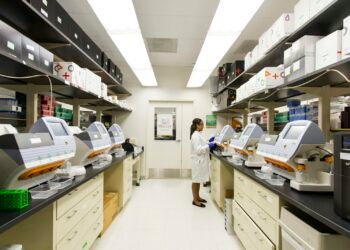
The AI Revolution in Pharmaceutical Research
Artificial intelligence is transforming the pharmaceutical industry at an unprecedented pace in 2026, with machine learning models now capable of predicting molecular interactions that would take human researchers years to discover. Major pharmaceutical companies have doubled their AI R&D budgets compared to just two years ago, signalling a fundamental shift in how drugs are discovered and developed.
According to recent industry reports, AI-driven drug discovery platforms have reduced the average time from target identification to lead optimization by nearly 40%. What once took four to five years can now be accomplished in under three, representing billions in saved costs and—more importantly—faster paths to treatments for patients with urgent medical needs.
From Protein Folding to Clinical Trials
The breakthrough moment came with advances in protein structure prediction. Deep learning models can now accurately predict how potential drug compounds will bind to target proteins, dramatically narrowing the field of candidates before any physical testing begins. This computational approach means that pharmaceutical companies can screen billions of virtual compounds in silico, selecting only the most promising few hundred for laboratory validation.
The impact extends beyond discovery into clinical trial optimization. AI systems are now being deployed to identify ideal patient populations for trials, predict potential side effects before they manifest in humans, and even design adaptive trial protocols that adjust in real-time based on incoming data. The FDA and EMA have both issued updated guidance frameworks in 2026 acknowledging AI-assisted trial designs as valid regulatory submissions.
Startups and Big Pharma Race Ahead
The competitive landscape is heating up. AI-first biotech startups raised over $12 billion globally in the first half of 2026 alone, while traditional pharmaceutical giants have formed strategic partnerships with tech companies to avoid being left behind. The message is clear: AI is no longer an experimental tool in drug discovery—it is the new standard.
With the first fully AI-discovered drugs now entering Phase III clinical trials, the question is shifting from “does this work?” to “how fast can we scale it?” The companies that master the integration of AI into every stage of pharmaceutical R&D will define the next decade of medicine.
The Netherlands, for internationals
One email a week: the week's news for internationals in the Netherlands, new practical guides and what changed in the cities. No spam, unsubscribe any time.