AI News
  • Home
  • AI & Tech
  • Machine Learning
  • Startups
  • Tools & Apps
  • Robotics
  • Future Tech
  • AI in Industry
    • AI in Sport ⚽
    • AI in Health
    • AI in Education
    • AI in Finance
    • AI in Business
    • AI in Law
    • AI in Climate
No Result
View All Result
SAVED POSTS
AI News
  • Home
  • AI & Tech
  • Machine Learning
  • Startups
  • Tools & Apps
  • Robotics
  • Future Tech
  • AI in Industry
    • AI in Sport ⚽
    • AI in Health
    • AI in Education
    • AI in Finance
    • AI in Business
    • AI in Law
    • AI in Climate
No Result
View All Result
AI News
No Result
View All Result

Anthropic Eyes Samsung to Manufacture Its First Custom AI Chip

Ramo by Ramo
7 July 2026
in Uncategorized
414 9
0
585
SHARES
3.3k
VIEWS
Summarize with ChatGPTShare to Facebook

Anthropic Eyes Samsung to Manufacture Its First Custom AI Chip

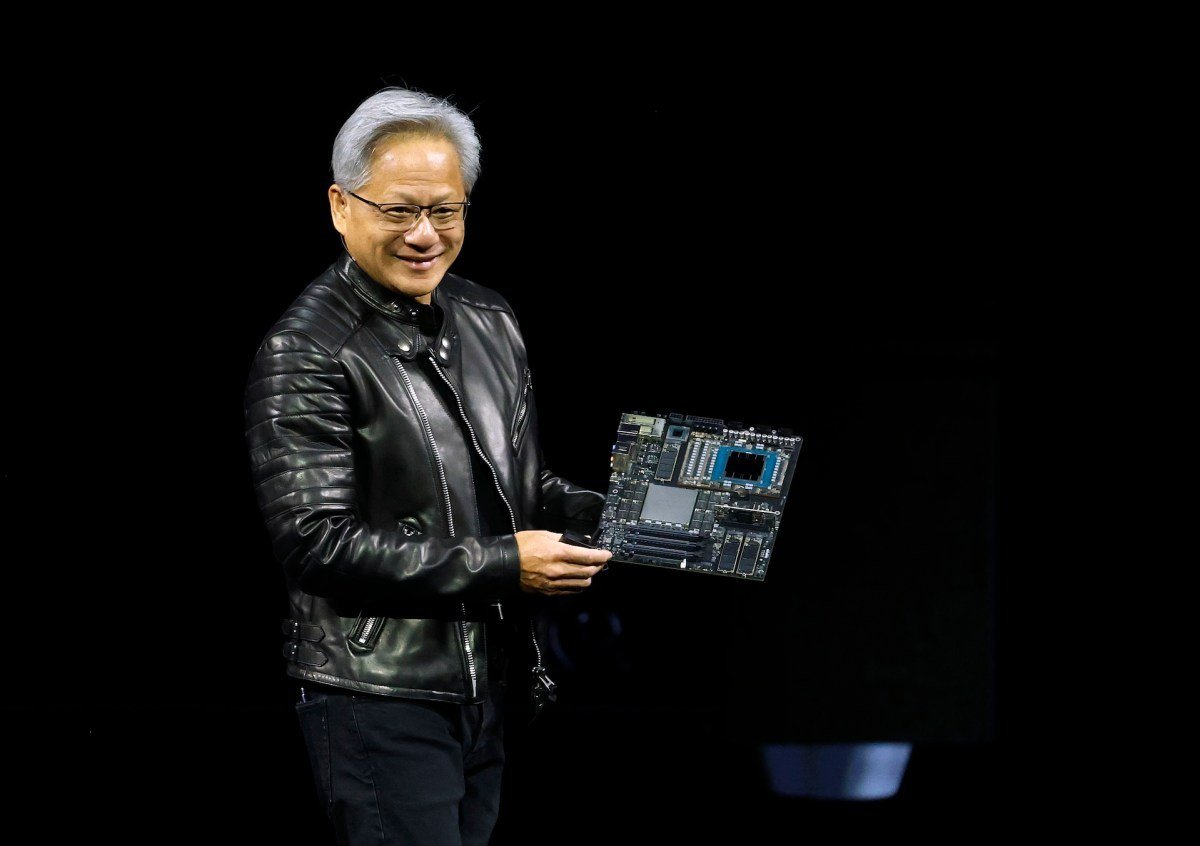
Anthropic, the San Francisco-based AI company behind the Claude family of large language models, is reportedly in advanced talks with South Korean electronics giant Samsung to manufacture its first custom artificial intelligence chip. The move would represent a significant escalation in the AI industry’s push toward designing purpose-built hardware — and away from its near-total dependence on NVIDIA.

According to sources familiar with the discussions, Anthropic is exploring a partnership that would leverage Samsung’s advanced chip fabrication capabilities to produce specialised AI inference chips optimised specifically for running Claude-scale models. Unlike the general-purpose GPUs that dominate the market today, these custom chips would be designed from the ground up to handle the unique computational patterns of transformer-based language models.

Breaking Free from NVIDIA

The semiconductor industry has been reshaped by the AI boom, with NVIDIA capturing an estimated 80% or more of the data centre GPU market. That dominance has led to soaring prices, long wait times for hardware, and a growing desire among AI companies to diversify their supply chains. Anthropic’s move toward custom silicon mirrors similar efforts at OpenAI, Google, Microsoft, and Amazon — all of whom are developing proprietary AI chips.

📖
RECOMMENDED READ
The Coming Wave: AI, Power, and the Greatest Dilemma of Our Age
Mustafa Suleyman
The definitive book on where AI is heading - written by one of the field founders.
View on Amazon →affiliate link

“When you’re spending billions on compute, even a 20% efficiency gain from custom silicon translates into enormous savings,” explained one semiconductor industry analyst. “Every major AI lab is asking the same question: can we build something more efficient than an H100 for our specific workloads?”

Why Samsung?

Samsung’s foundry business, while smaller than TSMC’s, offers several advantages for an AI startup looking to move quickly. The company has invested heavily in advanced packaging technologies that are particularly well-suited to AI workloads, and it has been aggressively courting AI chip designers as part of its strategy to close the gap with TSMC.

For Samsung, landing Anthropic as a customer would be a major validation of its AI chip ambitions. The foundry has struggled to attract high-profile AI chip customers, with most of the industry’s biggest names — including NVIDIA, AMD, and Intel — relying primarily on TSMC for their most advanced chips.

A Growing Trend

Anthropic’s move toward custom hardware is part of a broader industry trend. OpenAI is developing its own AI chips in partnership with Broadcom and TSMC. Google’s Tensor Processing Units (TPUs) are already on their sixth generation. Microsoft recently unveiled its Maia AI accelerator. Even Meta is working on custom silicon for its recommendation and AI workloads.

The rise of custom AI chips signals a maturing industry — one that is moving beyond the one-size-fits-all approach of general-purpose GPUs toward specialised hardware optimised for the specific demands of frontier AI models. For Anthropic, which positions itself as a safety-focused AI company, controlling its own hardware stack could also offer additional benefits for security and interpretability research. As one industry watcher put it: “In AI, controlling the silicon increasingly means controlling your destiny.”

SummarizeShare234
Ramo

Ramo

Ramo is the editorial voice of Mylistingo — an AI and technology news platform based in The Hague, Netherlands. Covering artificial intelligence, machine learning, robotics, and the future of technology, Ramo delivers accurate, accessible reporting for both general audiences and industry professionals. Every article is fact-checked and written to meet Mylistingo's strict no-fabrication editorial standards.

Related Stories

Europe’s Top Bankers and Regulators Warn: AI Is Outpacing the Rules

by Ramo
7 July 2026
0

ECB officials and banking leaders from Deutsche Bank, BNP Paribas, and ING warn that AI is advancing far faster than financial regulations. The EU AI Act provides a...

Amazon Quietly Winds Down Mechanical Turk as AI Makes Human Microtasking Obsolete

by Ramo
7 July 2026
0

Amazon has stopped accepting new customers for its Mechanical Turk platform, ending a nearly two-decade run for the pioneering crowdsourcing marketplace. The same AI systems that MTurk workers...

AI Policing Expands While Regulations Struggle to Keep Pace

by Ramo
7 July 2026
0

Law enforcement agencies are rapidly adopting AI tools for predictive policing and facial recognition, but legal frameworks remain fragmented. The EU AI Act provides guardrails, yet enforcement varies...

Dutch Tech Startups Smash Funding Records in H1 2026

by Ramo
7 July 2026
0

Dutch startups raised €2.8 billion in H1 2026, a 41% increase year-over-year. Amsterdam fintech and Eindhoven deep tech lead the surge, with funding now spreading to Groningen, Enschede,...

Recommended

Picsum ID: 306

Why Apple’s slow-and-steady AI bet is starting to look pretty smart

28 June 2026
Picsum ID: 357

Statenkwartier The Hague — A Complete Neighborhood Guide

28 June 2026

Popular Story

  • 46698681

    Inside The Hague’s AI-Powered International Criminal Court: How Machine Learning Is Accelerating Justice

    588 shares
    Share 235 Tweet 147
  • Is Your Home Truly Safe The Smart Security Tech You Need in 2025

    587 shares
    Share 235 Tweet 147
  • Dutch Biking Rules for Beginners — How to Cycle Safely in the Netherlands

    587 shares
    Share 235 Tweet 147
  • OpenAI unveils Lockdown Mode to protect sensitive data from prompt injection attacks

    587 shares
    Share 235 Tweet 147
  • Apple iPhone 18 Launch Date Leaked: What We Know So Far

    587 shares
    Share 235 Tweet 147
Advertise Here
Your Ad Could Be Here

This premium 300×250 spot is available. Reach our AI & tech audience with your product or service.

Book This Space →
logo ainews

We bring you the best Premium WordPress Themes that perfect for news, magazine, personal blog, etc. Check our landing page for details.

Recent Posts

  • BRICS De-Dollarization: How the Global Reserve Currency System Is Changing in 2026
  • The Rise of Agentic AI: How Autonomous AI Agents Are Reshaping Workflows in 2026
  • Global Economy Mid-2026: Central Banks, AI Productivity, and the Inflation Puzzle

Categories

  • AI & Tech
  • AI in Business
  • AI in Climate
  • AI in Education
  • AI in Finance
  • AI in Health
  • AI in Law
  • AI in Sport
  • Economy & Finance
  • Future Tech
  • Machine Learning
  • Politics & Geopolitics
  • Robotics
  • Social Topics
  • Sport
  • Startups
  • The Hague
  • Tools & Apps
  • Uncategorized

Weekly Newsletter

  • Home
  • Advertise
  • Latest News
  • Contact Us
  • Data Deletion Instructions
  • Editorial Policy

Welcome Back!

Login to your account below

Forgotten Password?

Retrieve your password

Please enter your username or email address to reset your password.

Log In
No Result
View All Result
  • Home
  • AI & Tech
  • Machine Learning
  • Startups
  • Tools & Apps
  • Robotics
  • Future Tech
  • AI in Industry
    • AI in Sport ⚽
    • AI in Health
    • AI in Education
    • AI in Finance
    • AI in Business
    • AI in Law
    • AI in Climate