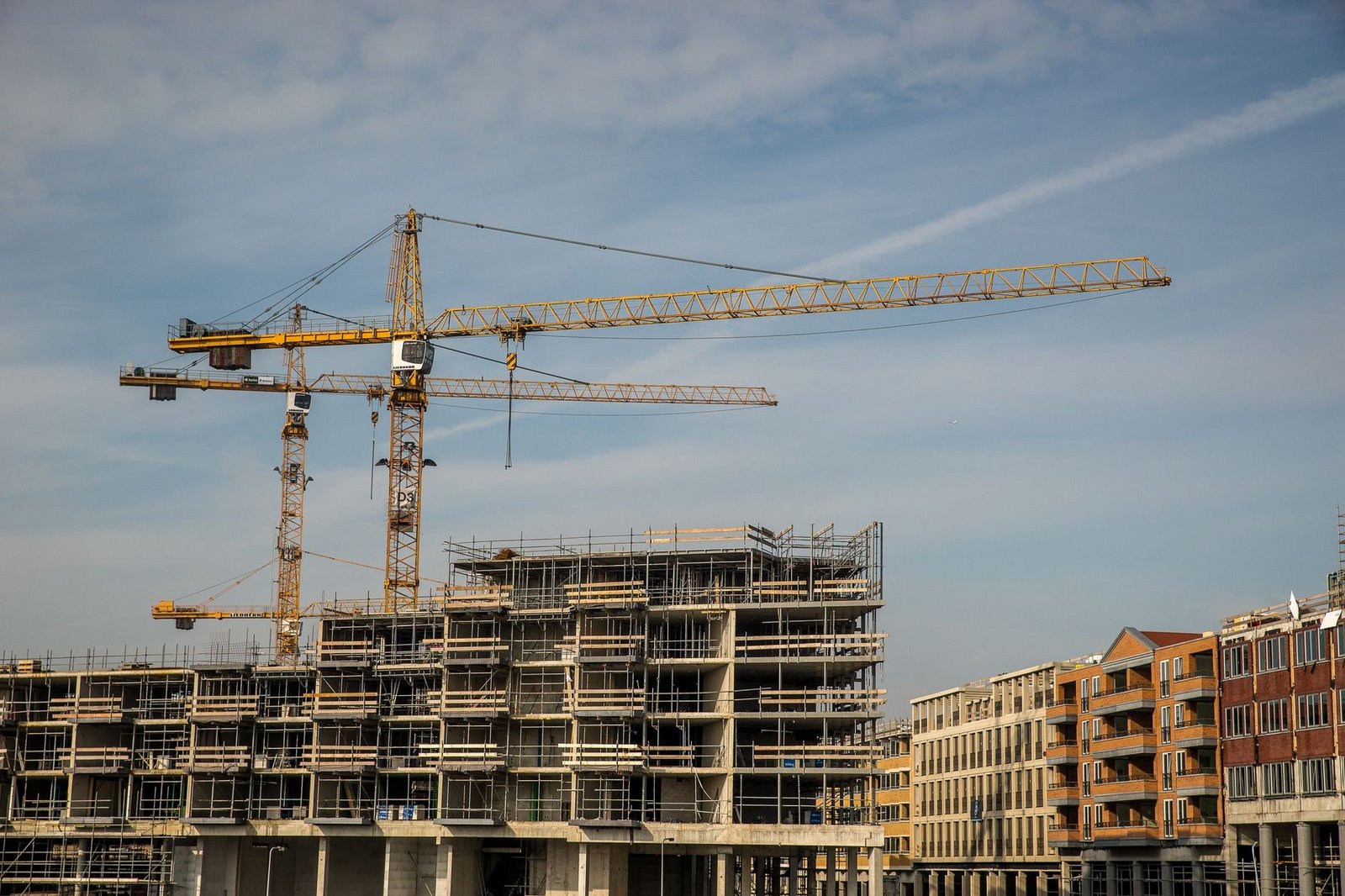
Building new homes in Berlin has stalled, and the region surrounding the capital is now seeing a sharp fall in construction too, according to the annual report of the Berlin-Brandenburg housing association BBU, as reported by the Berliner Morgenpost. For anyone hunting for a flat in Berlin, the report suggests that moving out to the commuter belt is unlikely to bring much relief.
What happened
The BBU Verband Berlin-Brandenburgischer Wohnungsunternehmen (the umbrella association of housing companies in Berlin and Brandenburg) has published its annual report. According to the Berliner Morgenpost, investment in new construction by BBU member companies in the Berliner Umland (the towns and districts surrounding Berlin) fell by 40.1 per cent in 2025. Across the whole of Brandenburg, member companies started building only 451 flats, 44.5 per cent fewer than in 2024.
The market in the surrounding region is already tight. Only 1.8 per cent of flats there are empty. BBU board member Maren Kern told the paper that a market is considered balanced at around three per cent.
The BBU names high financing and construction costs as the main brake on new building. It gives a worked example: with construction costs of 4,700 euros per square metre, 80 per cent of the project financed by a loan and two per cent annual repayment, interest rates from mid-October produce a Kostenmiete (the rent needed simply to cover costs) of at least 24 euros per square metre. For a 65-square-metre flat, that comes to 1,560 euros nettokalt, meaning before heating and service charges. Kern said such rents would be unaffordable for most households, and that affordable new housing cannot be built economically without public subsidy. Around 86 per cent of housing companies in the surrounding region consider current subsidy levels insufficient, and the BBU wants subsidy amounts to be adjusted regularly in line with construction costs.
The report lands as Die Linke, the Greens and the SPD hold talks on forming Berlin’s next government. Their Sondierungspapier (the paper summarising the exploratory coalition talks) aims for 100,000 building permits by 2031, each meant to become a flat. The parties also want to launch a “public housing programme”, but the paper gives no figure for it. The 16 billion euros mentioned in the paper relate only to compensation for Vergesellschaftung, the plan to take large private housing stocks into public ownership. The paper itself admits an “imbalance” in the city’s budget.
What it means for you
If you are looking for a flat in Berlin and thinking of widening your search to Brandenburg, the BBU figures point to limited supply there as well. With a vacancy rate of 1.8 per cent and new construction falling, competition for flats in the commuter belt is likely to stay high.
The BBU’s cost calculation also gives a sense of what newly built, unsubsidised flats would need to charge. If you are offered a new-build flat at a high rent, it may reflect these costs rather than an outlier landlord. When comparing offers, check whether the advertised rent is nettokalt or warm (including heating and service charges), since the BBU figure of 1,560 euros excludes those.
The BBU rejected the idea that the debate over socialisation in Berlin will push housing companies to build more in Brandenburg instead. It warned that Berlin’s interventions could even make construction loans more expensive in the surrounding region.
What to watch next
The coalition talks are the main thing to follow. Building and housing associations are sceptical. Katarzyna Siwek, managing director of the Fachgemeinschaft Bau Berlin und Brandenburg (a construction trade body representing around 900 firms), called it a contradiction in housing policy to mobilise private capital while preparing socialisation. “Paper does not create housing,” she said, adding that 100,000 permits must in the end become 100,000 flats, which would only happen if building became more economical and investors could rely on stable rules.
Berlin’s Wohnungsbaugenossenschaften (housing cooperatives, which members jointly own), given a central role in the parties’ plans, also have reservations. Up to 25 per cent of new building on state-owned land could go to cooperatives. Jörg Kneller, spokesperson for the cooperatives, called this “positive for now” but said the terms were unclear. Berlin currently gives land to cooperatives only through Erbpacht (a long-term ground lease, where the land stays with the state). Kneller said this contradicts the cooperative principle of long-term stability, and that for most cooperatives Erbpacht is not an option. Whether the final coalition agreement names a budget for public housing and changes these land terms will shape how much new housing actually gets built.
Source: Berliner Morgenpost
Sources
- Berliner Morgenpost: Wohnungsbau in Berlin stockt – und bricht auch im Umland ein, accessed 20 October 2026
Berlin, for internationals
One email a week: what changed for internationals in Berlin, the week's news from Germany, and one guide worth reading. No spam, unsubscribe any time.