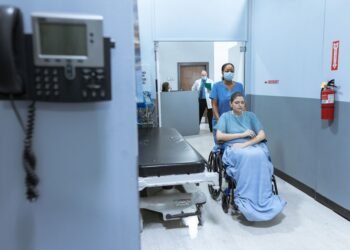
People who phone the medical on-call line before going to a hospital emergency department could be seen faster under a national reform of emergency care that the Bundestag, Germany’s federal parliament, is now debating. According to the Frankfurter Rundschau, hospitals in Frankfurt and elsewhere in Hessen already use several parts of the plan.
What happened
The Bundestag is debating a major reform of Notfallversorgung (emergency care). The Frankfurter Rundschau reports that the draft law centres on a so-called “Fast Lane”, which gives priority treatment to patients who call ahead and have their problem assessed by phone before going to hospital.
Federal Health Minister Carsten Linnemann (CDU) defended the plan in comments to the newspaper Bild. He said people with an emergency should get fast, targeted help. The aim, he said, is a new system that decides on the phone, on a sound medical basis, where each person will be treated best and fastest. He said a harmless infection does not belong in an emergency department, while in a heart attack every second counts. The reform also aims to take pressure off overloaded emergency departments and to limit rising deficits in the health and care system.
According to the Statistisches Bundesamt (Federal Statistical Office), German hospitals see around 13 million outpatient emergency patients each year. The Frankfurter Rundschau lists the main changes in the draft:
- Mandatory initial assessment: the on-call medical service 116 117 would become a central Akutleitstelle (acute care control centre). It would assess callers in a structured way and be linked to the 112 emergency number.
- Fast Lane: if you call 116 117 first and are assessed, you would be seen sooner at the emergency centre. When two patients are equally urgent, the one who called ahead would be treated first.
- Integrierte Notfallzentren (INZ, integrated emergency centres): hospitals would run a single point of contact that combines the hospital emergency department with the out-of-hours practice run by doctors who treat statutory insurance patients. A central desk would decide on the spot who needs to be admitted and who can be treated as an outpatient.
- Treatment instead of transport: the ambulance service would become a medical service in its own right, paid for by the statutory health insurers. Paramedics would no longer have to take every patient to hospital. They could treat people where they are or send them to a doctor’s practice.
What it means for you
The law is still being debated, so the national rules have not changed yet. If it passes, the main point for Frankfurt residents is simple: before going to an emergency department with a problem that is urgent but not life-threatening, call 116 117. Being assessed by phone first would give you priority over someone equally urgent who simply turns up.
Some of this is already happening locally. The Frankfurter Rundschau reports that hospitals including the Bürgerhospital Frankfurt and the Klinikum Frankfurt-Höchst, as well as hospitals in Darmstadt and Offenbach, already have a “Gemeinsamer Tresen” (joint reception desk). Staff there use a digital system to assess patients on arrival. The Bürgerhospital’s emergency department has around 30,000 patient contacts a year. Its management estimates that a considerable share of these patients did not need emergency hospital care and could have gone to a regular practice. If you go to one of these hospitals, you may be assessed at the desk and sent to a practice instead.
If you live in the Main-Taunus-Kreis or Main-Kinzig-Kreis districts, you may already see the “treatment instead of transport” approach. Hessen is testing it there and in other areas through a project called SaN (Sektorenübergreifende ambulante Notfallversorgung, or cross-sector outpatient emergency care). Under SaN, ambulance crews can take less serious cases straight to participating practices. Figures from the state government show why: in 2022 alone, Hessen’s ambulance service attended almost 86,000 call-outs where treatment at a practice would have been enough.
Hessen’s Landeskrankenhausplan (state hospital plan) also requires emergency hospitals to be reachable within 30 minutes on average.
What to watch next
The Bundestag debate is the start of the national reform process, and parts of the plan are disputed. The Kassenärztliche Bundesvereinigung (KBV, the national association of statutory insurance doctors) and the Hausärzteverband (GPs’ association) warn against excessive requirements for a mandatory 24/7 on-call service, saying practices lack the staff. The Deutsche Krankenhausgesellschaft (DKG, German Hospital Federation) is calling for adequate funding.
The Bundesrat, the chamber representing the federal states, welcomes the medical approach in principle. Hessen’s Health Minister Diana Stolz (CDU), who has called the Hessian model a possible blueprint for the whole country, warns against rigid budget limits and too much control from Berlin. She argues that a federal committee dominated by the health insurers must not make decisions that bypass the states’ own care structures. “Anyone who is resuscitated after cardiac arrest is being treated medically, not transported,” she said.
The aid organisations DRK (German Red Cross), Johanniter, Malteser and ADAC air rescue want firm funding commitments and a clear say in the planned federal expert committee. The statutory health insurers support the reform. Ulrike Elsner, chair of the Verband der Ersatzkassen (vdek, an association of health insurers), says a standard initial assessment is the most effective tool against overcrowded emergency departments. The Frankfurter Rundschau notes that statutory health insurance spending on ambulances and air rescue rose by more than 20 per cent between 2023 and 2025. If the law comes into force, the open question is how well the new rules will fit with Hessen’s existing pilot projects.
Source: Frankfurter Rundschau
Sources
- Frankfurter Rundschau: „Fast Lane“: Was sich mit Linnemann-Gesetz für Patienten in Hessen ändert, accessed 14 October 2026
Frankfurt, for internationals
One email a week: what changed for internationals in Frankfurt, the week's news from Germany, and one guide worth reading. No spam, unsubscribe any time.