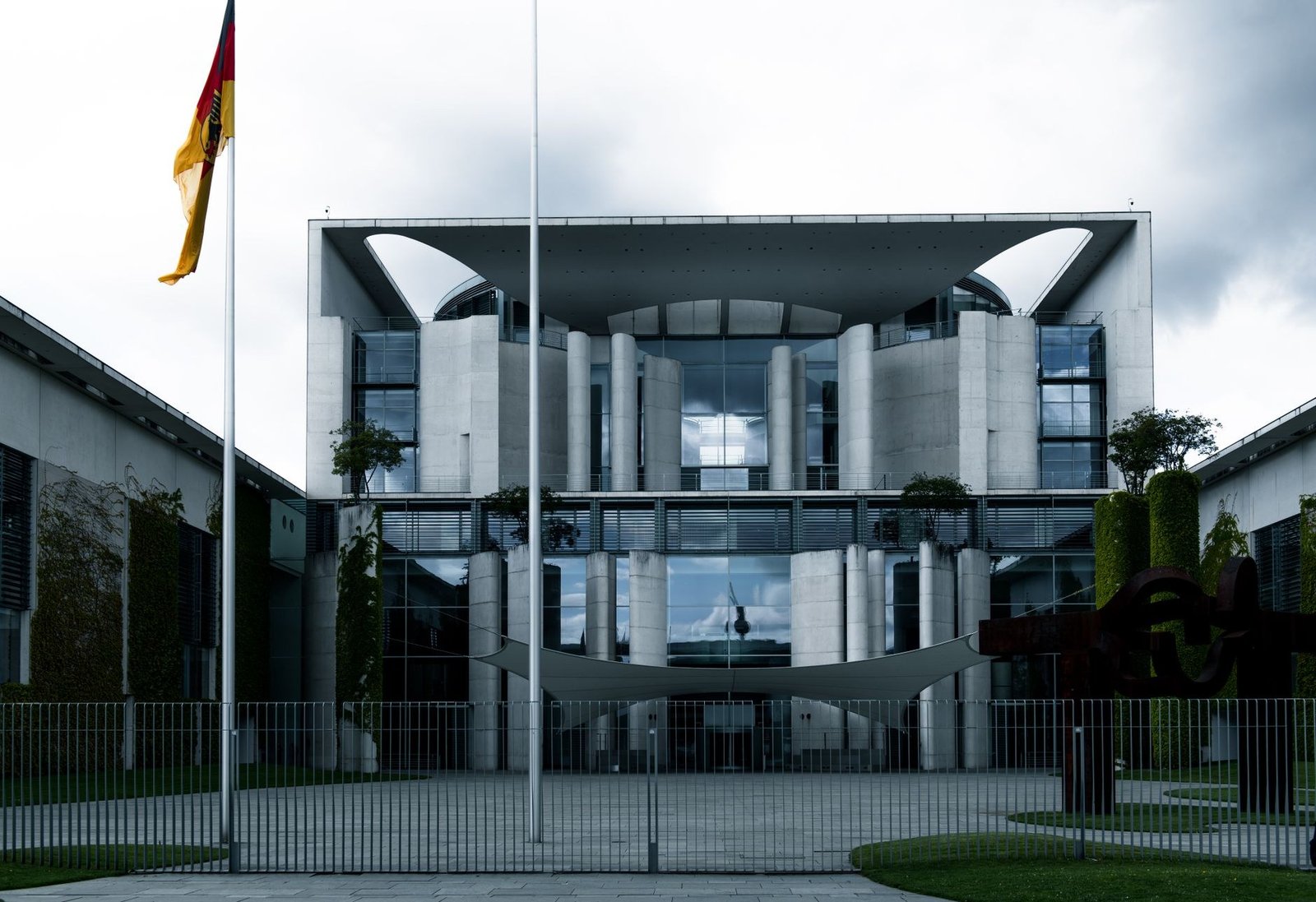
The German government is holding an investment summit (Investitionsgipfel) in Berlin on Monday and Tuesday to persuade international business leaders to put money into Germany, and Nvidia chief executive Jensen Huang is among the guests. In a commentary published ahead of the event, the tech publication t3n argues that famous guests and big announcements will not fix Germany’s weak investment record unless the government changes the conditions businesses work under.
What happened
The summit is led by Bundeskanzler (Federal Chancellor) Friedrich Merz, Wirtschaftsministerin (Minister for Economic Affairs) Katherina Reiche, both of the CDU, and Finanzminister (Finance Minister) Lars Klingbeil of the SPD. According to t3n, the government wants to send a “strong welcome signal” to investors and sees artificial intelligence as one of the most important technologies of the coming years. Citing media reports, t3n says Nvidia could commit to Germany as a location and support work on industrial AI, robotics and advanced AI models.
The commentary sets the summit against some sobering figures. Fixed investment in Germany fell by 6.4 percent between 2019 and 2025, t3n writes. Over the same period it rose by 6.7 percent in the rest of the euro area and by 20.2 percent in the United States. The publication argues that the gap has less to do with a lack of confidence or capital than with the conditions that make investments hard to plan and deliver.
Bureaucracy is the first problem it names. In an Ifo survey from September 2026, one in two companies said bureaucracy and regulation were the biggest problem with Germany as a business location. The reduction in red tape promised in the coalition agreement has not yet reached businesses or individuals, t3n says. It points in particular to complex approval procedures that take an unpredictable amount of time. The commentary does not call for scrapping rules that protect the environment, safety and consumers. Instead it suggests binding deadlines for processing applications, parallel rather than sequential checks, and one digital point of access where companies can apply for every permit and authorities can share data rather than asking for it again. Scandinavian and Baltic countries already work this way, t3n notes, and the initiative “Gemeinsam Schneller Gründen” (roughly “Founding Faster Together”) from the Bundesdigitalministerium, the Federal Ministry for Digital Affairs, shows that a single point of contact can work in Germany too.
Why it matters if you live in Germany
If you work for a small or mid-sized company, the commentary’s second point is aimed at your employer. t3n argues that new data centres alone will not create lasting growth. Companies also need to use AI productively in their products, services and processes. That especially applies to the Mittelstand, Germany’s backbone of small and medium-sized, often family-owned firms. According to the KfW-Digitalisierungsbericht 2025, a digitalisation report from the state development bank KfW, only 30 percent of these firms carried out digitalisation projects most recently. That is fewer than before the pandemic, and their digital spending has also fallen.
For people working in startups, or thinking of founding one, t3n describes a market where investor money goes to a small number of companies while many others struggle to fund their next stage of growth. The publication also reports a counter-trend: AI and deep-tech companies including Codesphere, Langdock and Focused Energy have moved their base back to Germany from the US. These companies say customers value the move for reasons of digital sovereignty and predictability. To keep that momentum, t3n says, founders need reliable tax rules and legal certainty around AI development.
Germany also looks better from outside than its own public debate suggests, the commentary argues. It is the only G7 country with a triple-A credit rating. It still has strong research institutions and universities that train skilled workers, notably in biotechnology and AI. It ranks near the top for patent applications at the European Patent Office, and it offers a central location, a large market and access to the EU single market. t3n cites a recent Deutsche Bank survey of 1,200 executives from outside Europe, which found Germany to be the most attractive investment destination in Europe. For internationals who chose to build a career here, that is a useful counterweight to the gloomier headlines.
What to watch next
The first test is whether Nvidia, or any other company at the summit, makes a concrete commitment to Germany. t3n warns that flagship projects announced with great publicity have not always happened in the past. That makes it worth following up on any pledge, not just reporting the headline.
The second test is about delivery. t3n suggests the government should cut the time between an investment decision and the start of a project, and publish figures that show progress. Look out for movement on approval deadlines and digital application systems, as these would also affect anyone dealing with German authorities.
Finally, there is the national mood. t3n recalls that Merz recently called for more optimism at the Deutscher Arbeitgebertag, the annual conference of German employers, and got tangled up over whether the glass was half full or half empty. The commentary concludes that confidence cannot be ordered from above. It comes when reforms take effect and economic success follows. The main task after the summit, t3n argues, is to make the glass fuller through quick social reforms instead of debating how full it already is.
Source: t3n
Sources
- t3n: Investitionsgipfel: An diesen Stellschrauben muss die Bundesregierung drehen, accessed 19 October 2026
Germany, for internationals
One email a week: the week's news for internationals in Germany, new practical guides and what changed in the cities. No spam, unsubscribe any time.