AI News
  • Home
  • AI & Tech
  • Machine Learning
  • Startups
  • Tools & Apps
  • Robotics
  • Future Tech
  • AI in Industry
    • AI in Sport ⚽
    • AI in Health
    • AI in Education
    • AI in Finance
    • AI in Business
    • AI in Law
    • AI in Climate
No Result
View All Result
SAVED POSTS
AI News
  • Home
  • AI & Tech
  • Machine Learning
  • Startups
  • Tools & Apps
  • Robotics
  • Future Tech
  • AI in Industry
    • AI in Sport ⚽
    • AI in Health
    • AI in Education
    • AI in Finance
    • AI in Business
    • AI in Law
    • AI in Climate
No Result
View All Result
AI News
No Result
View All Result

ChatGPT Drops Message Limits for Free and Go Users

Ramo by Ramo
6 August 2026
in Tools & Apps
419 4
0
ChatGPT brings unlimited text chats to free users
586
SHARES
3.3k
VIEWS
Summarize with ChatGPTShare to Facebook

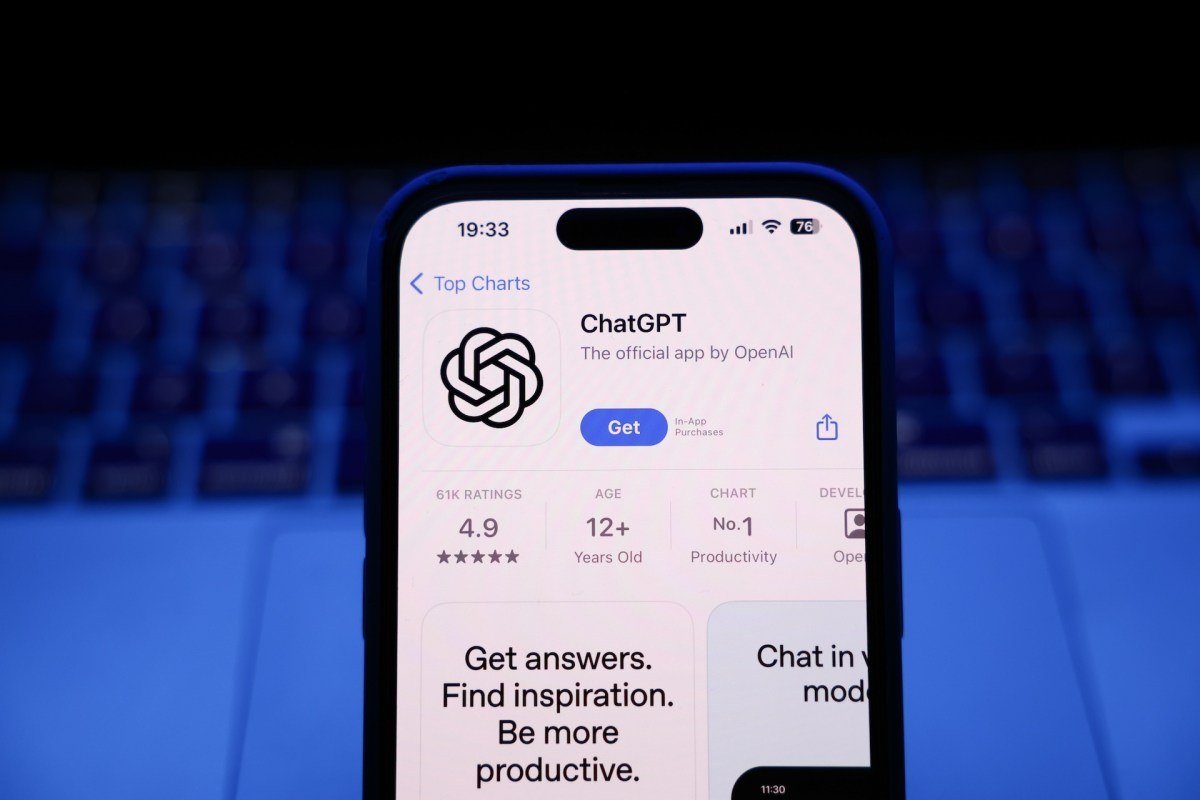
Free ChatGPT has always come with a ceiling. Send enough messages in a short window and the app would slow you down, nudge you toward a paid plan, or make you wait. On August 6, 2026, OpenAI knocked that ceiling out. The company said free and Go users can now hold unlimited text chats, removing one of the most visible reminders that they weren’t paying customers.

It’s a bigger shift than it sounds. For most people who use ChatGPT casually, the message cap was the single feature that separated the free experience from a subscription. Take it away and the line between “trying it out” and “using it every day” mostly disappears.

What actually changed

The headline is simple: text conversations are no longer rationed for free users or for people on the lower-cost Go tier. You can keep typing, keep asking follow-ups, and keep going without hitting the wall that used to appear mid-session. OpenAI framed the move as opening up the core product to the widest possible audience, and text chat is the part of ChatGPT that the widest audience actually touches.

Alongside that, free and Go users are getting a new think button aimed at complex queries. Rather than treating every prompt the same way, the button lets a user tell the model to slow down and work through a harder problem more deliberately. Ask it to plan a trip with a dozen constraints, untangle a piece of code, or reason through a math-heavy question, and the think option is meant to route that request toward more careful processing instead of a fast, surface-level reply.

Putting deliberate reasoning in front of non-paying users is the part worth watching. For a long stretch, the more capable “thinking” behavior sat behind a subscription. Handing a version of it to free and Go accounts changes what someone can expect before they ever enter a credit card.

Why OpenAI is giving away the ceiling

Generosity is rarely just generosity. OpenAI is competing for attention against Google’s Gemini, Anthropic’s Claude, and a growing field of free-to-use assistants, and the fastest way to lose a user is to interrupt them. A cap that stops you mid-thought is an invitation to open a competitor’s tab. Removing it keeps people inside ChatGPT, and the more time they spend there, the more the product becomes a habit rather than a novelty.

There’s a business logic underneath the goodwill. Free users are the top of the funnel. Give them a smoother experience and a taste of the smarter reasoning that used to be gated, and some fraction converts to paid plans when they hit a wall that still exists, like heavier usage limits on the most advanced models, image tools, or longer context. The Go tier sits right in that gap, a cheaper option for people who want a little more than free without paying for the full stack.

Scale also has a cost. Unlimited text chat for a user base this size is a real infrastructure commitment, and the fact that OpenAI feels able to make it says something about where the economics of running these models have landed. Text generation has gotten cheaper to serve than it was a couple of years ago, and the company is betting that the growth and loyalty it buys are worth more than the compute it spends.

The competitive squeeze

Every major assistant is now racing to make its free version good enough that you never leave. Google has folded Gemini into Search and Android, putting it in front of billions of people by default. Anthropic has pushed Claude’s free tier and its reasoning features. Against that backdrop, keeping a strict message cap on free ChatGPT started to look less like a business decision and more like a liability.

Free is quietly becoming the real battlefield. The paid tiers still matter for revenue, but the fight for who becomes the default assistant, the one people reach for without thinking, is being fought on what you can do without paying. OpenAI just raised the floor, and its rivals will feel pressure to answer.

The think button hints at where this goes next. Reasoning was the marquee upgrade of the last generation of models, the thing that separated a quick answer from a genuinely useful one. Sliding it toward free users suggests that “smart enough to actually help” is becoming table stakes rather than a premium perk.

Watch what OpenAI still holds back. Unlimited text is a clear line in the sand, but the company hasn’t erased the difference between free and paid, and the features it chooses to keep behind the paywall will tell you where it thinks the money still is. If the strongest reasoning, the newest models, and the richest tools stay gated while everyday chat goes free, that’s the shape of the strategy: get everyone in the door, then sell the upgrades that power users can’t live without.

For more coverage of OpenAI and ChatGPT, visit Mylistingo.

Source: Original Article

SummarizeShare234
Ramo

Ramo

Ramo is the editorial voice of Mylistingo — an AI and technology news platform based in The Hague, Netherlands. Covering artificial intelligence, machine learning, robotics, and the future of technology, Ramo delivers accurate, accessible reporting for both general audiences and industry professionals. Every article is fact-checked and written to meet Mylistingo's strict no-fabrication editorial standards.

Related Stories

Gen Z dating apps like Ditto ditch swiping in favor of AI matchmaking

Gen Z Ditches Swiping for AI Matchmaking Apps Like Ditto

by Ramo
6 August 2026
0

Swiping was supposed to be the future of romance. A decade and change later, the generation that grew up on it wants out. Gen Z's 20-somethings have soured...

Meta says AI is making it easier to build new apps — and more are coming

Meta Says AI Is Making It Faster to Build New Apps

by Ramo
30 July 2026
0

Building a consumer app used to be a bet measured in quarters. You staffed a team, you shipped a prototype, you waited to see whether anyone cared. Meta...

Hint, a new AI startup co-founded by Martha Stewart, offers an AI assistant for homeowners

Martha Stewart Co-Founds Hint, an AI App for Homeowners

by Ramo
29 July 2026
0

Martha Stewart has sold cookware, magazines, a media empire, and more recently a certain kind of unbothered internet celebrity. Now she is selling software. On July 29, 2026,...

Cursor makes its biggest India push yet ahead of SpaceX acquisition with localized pricing

Cursor Bets Big on India With Local Pricing Before SpaceX Deal

by Ramo
28 July 2026
0

Why India moved to the front of the line Third place is not a vanity metric. For a company selling a tool that developers open every single day,...

Recommended

ml_feat_96505790

Tesla Berlin Gigafactory Hits 5,000 Cars Per Week as European EV Race Intensifies

8 July 2026
Featured image for artificial intelligence and technology article

Global Debt Markets in 2026: Navigating the New Normal of Rising Bond Yields

10 July 2026

Popular Story

  • ml_feat_56193023

    ASML’s Next-Gen High-NA EUV Machines Drive Eindhoven Expansion, Creating 20,000 New Jobs

    590 shares
    Share 236 Tweet 148
  • PixVerse closes $439m series C extension at $2b valuation

    589 shares
    Share 236 Tweet 147
  • Best Cafes and Coffee Shops in The Hague 2026: A Digital Nomad’s Guide

    589 shares
    Share 236 Tweet 147
  • The Rise of Neuromorphic Computing: How Brain-Inspired Chips Are Transforming AI in 2026

    588 shares
    Share 235 Tweet 147
  • Inside The Hague’s AI-Powered International Criminal Court: How Machine Learning Is Accelerating Justice

    588 shares
    Share 235 Tweet 147
Advertise Here
Your Ad Could Be Here

This premium 300×250 spot is available. Reach our AI & tech audience with your product or service.

Book This Space →
logo ainews

We bring you the best Premium WordPress Themes that perfect for news, magazine, personal blog, etc. Check our landing page for details.

Recent Posts

  • ChatGPT Drops Message Limits for Free and Go Users
  • Gen Z Ditches Swiping for AI Matchmaking Apps Like Ditto
  • Meta Launches Muse Code, an AI Agent for Big Codebases

Categories

  • AI & Tech
  • AI in Business
  • AI in Climate
  • AI in Education
  • AI in Finance
  • AI in Health
  • AI in Law
  • AI in Sport
  • Economy & Finance
  • Future Tech
  • Machine Learning
  • Politics & Geopolitics
  • Robotics
  • Social Topics
  • Sport
  • Startups
  • The Hague
  • Tools & Apps
  • Uncategorized

Weekly Newsletter

  • Home
  • Advertise
  • Latest News
  • Contact Us
  • Data Deletion Instructions
  • Editorial Policy

Welcome Back!

Login to your account below

Forgotten Password?

Retrieve your password

Please enter your username or email address to reset your password.

Log In
No Result
View All Result
  • Home
  • AI & Tech
  • Machine Learning
  • Startups
  • Tools & Apps
  • Robotics
  • Future Tech
  • AI in Industry
    • AI in Sport ⚽
    • AI in Health
    • AI in Education
    • AI in Finance
    • AI in Business
    • AI in Law
    • AI in Climate