



The New Scramble for Resources
The global competition for critical minerals has intensified dramatically in 2026, emerging as one of the most consequential geopolitical battlegrounds of the decade. Rare earth elements, lithium, cobalt, and other strategic minerals essential for modern technology have transformed from obscure industrial inputs into instruments of geopolitical leverage. As nations race to secure supply chains for electric vehicles, renewable energy infrastructure, and advanced military systems, the geopolitics of critical minerals is redrawing the map of international alliances and rivalries.
The stakes could not be higher. According to the International Energy Agency, demand for critical minerals could increase by 400 to 600 percent by 2040, driven by the global energy transition. Yet supply remains concentrated in a handful of countries, creating vulnerabilities that are reshaping foreign policy strategies from Washington to Brussels to Canberra. The United States, European Union, and other major economies are now pursuing aggressive policies to diversify supply chains, reduce dependence on dominant producers, and secure their technological futures.
China’s Dominance and the Global Response
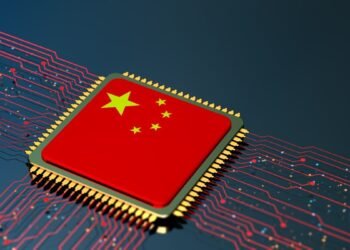
China’s commanding position in the critical minerals supply chain remains the single most consequential factor in this evolving landscape. Beijing controls approximately 60 percent of global rare earth mining and an even larger share of processing capacity — over 85 percent for some key elements. This dominance has not gone unnoticed. In late 2025 and through 2026, China has increasingly used its control over critical mineral exports as a geopolitical tool, imposing export controls on gallium, germanium, and antimony that sent shockwaves through global supply chains.
The Biden administration in the United States has responded with the most ambitious critical minerals strategy in American history. The Defense Production Act has been invoked to fund domestic mining and processing projects, while the Department of Energy has allocated billions in grants for rare earth separation facilities. The Inflation Reduction Act’s provisions for critical mineral sourcing from free-trade partners have created powerful incentives for allies to develop their processing capabilities. However, industry experts caution that building new processing capacity takes years, and near-term dependence on Chinese supply remains a significant strategic vulnerability.
Europe has not been idle. The European Union’s Critical Raw Materials Act, which came fully into force in 2024, sets targets for domestic extraction (10 percent of annual consumption), processing (40 percent), and recycling (15 percent) by 2030. In 2026, the EU has intensified diplomatic efforts to establish partnerships with resource-rich nations across Africa, Latin America, and Southeast Asia. The Global Gateway initiative has been deployed to fund mining infrastructure projects in countries like Chile, Indonesia, and Namibia, combining development assistance with strategic resource access.
New Alliances and the Mineral Diplomacy Race
The critical minerals challenge has spawned a new form of diplomatic engagement that analysts are calling “mineral diplomacy.” The Minerals Security Partnership (MSP), launched by the United States and key allies, has expanded significantly in 2026 to include a dozen new partner nations. The MSP facilitates investment in mining and processing projects across the supply chain, with a explicit goal of reducing dependence on any single source. Projects funded through the partnership now span five continents, from lithium projects in Argentina and Australia to copper processing in Zambia and rare earth separation in Brazil.
Australia has emerged as a pivotal player in this new geopolitical landscape. With vast deposits of lithium, rare earths, and other strategic minerals, plus a robust mining industry and strong rule of law, Canberra has positioned itself as the preferred supplier for both the United States and Japan. The Australia-US Critical Minerals Compact, expanded in early 2026, provides billions in financing for Australian processing facilities. Similarly, Japan’s Metal and Energy Security Organization has deepened cooperation with Australian miners, offering long-term offtake agreements that provide the certainty needed for multi-billion-dollar investments.
Meanwhile, the Global South is increasingly asserting agency in this new mineral order. Countries like Indonesia, the Democratic Republic of Congo, and Chile have moved to assert greater control over their mineral wealth, imposing export restrictions and demanding domestic processing requirements. Indonesia’s ban on raw nickel exports, which successfully attracted billions in battery manufacturing investment, has become a model that other resource-rich nations are eager to emulate. This trend presents both opportunities and challenges for Western nations seeking to diversify supply chains while respecting the sovereignty of partner countries.
For a deeper look at how technology and economics intersect in global supply chains, check out our analysis of Global Trade Wars and Tech Decoupling in 2026.
The Military Dimension: Strategic Minerals and Defense Readiness
Critical minerals are not merely an economic concern — they are fundamental to national defense. Modern military systems, from fighter jets to missile guidance systems to secure communications equipment, depend on rare earth elements and other strategic minerals. The F-35 Joint Strike Fighter, for instance, requires more than 400 kilograms of rare earth materials. The Pentagon’s 2026 Strategic Materials Assessment identified several critical minerals for which the United States relies entirely on imports, with no domestic production capacity whatsoever.
This defense dependency has catalyzed unprecedented cooperation between defense departments and mining companies. The Defense Logistics Agency has established strategic stockpiles of key minerals, while the Defense Advanced Research Projects Agency (DARPA) has funded research into substitute materials and recycling technologies. In Europe, NATO has designated critical mineral supply chain resilience as a strategic priority, with member states conducting joint assessments of vulnerabilities and coordinating stockpiling efforts. The securitization of mineral supply chains represents a fundamental shift in how nations think about resource security.
Environmental and Social Challenges
The rush to secure critical minerals is not without its costs. Mining operations, particularly for lithium and cobalt, have been associated with significant environmental degradation and human rights concerns. Lithium extraction in the salt flats of Chile and Argentina consumes vast quantities of water in already arid regions, threatening local ecosystems and indigenous communities. Cobalt mining in the Democratic Republic of Congo has long been associated with child labor and unsafe working conditions, challenges that have proved difficult to eradicate despite international pressure.
In response, a growing movement is demanding higher environmental and social standards across the critical minerals supply chain. The OECD’s Due Diligence Guidance for Responsible Supply Chains has been updated to include specific provisions for the energy transition minerals, and the EU’s Battery Regulation imposes strict sustainability requirements on batteries sold in the European market. These regulatory frameworks are creating a two-tier market, with premium prices available for minerals produced to higher environmental and social standards. For producing nations, this regulatory landscape presents both a challenge and an opportunity to capture greater value from their mineral resources.
Recycling and circular economy approaches are also gaining momentum. The University of Birmingham’s Rare Earth Recycling facility, which opened in 2025, can recover 97 percent of rare earth elements from end-of-life electronics and magnets. Similar facilities are under development in the United States, Japan, and South Korea. While recycling cannot currently meet the scale of demand growth, analysts project that by 2040, recycled materials could supply 20 to 30 percent of global critical mineral needs, significantly reducing the pressure on primary extraction.
Looking Ahead: The Geopolitical Outlook for 2027 and Beyond
As 2026 progresses, the geopolitics of critical minerals shows no signs of easing. The competition between the United States and China for influence over resource-rich nations is intensifying, with each side offering infrastructure investment, technology transfer, and market access in exchange for preferential access to minerals. The outcome of this competition will shape not only the energy transition but the broader balance of power in the twenty-first century. Nations that manage their mineral wealth strategically stand to gain leverage and prosperity; those that fail to diversify their supply chains risk strategic vulnerability.
The critical minerals challenge is ultimately a test of international cooperation. No single nation possesses all the resources, technology, and capital needed to build secure, sustainable supply chains. Success will require unprecedented collaboration between governments, mining companies, manufacturers, and civil society. As the world transitions to a low-carbon economy, the minerals beneath our feet have become the foundation of geopolitical power, and how nations manage this strategic resource will define the international order for generations to come.
The Netherlands, for internationals
One email a week: the week's news for internationals in the Netherlands, new practical guides and what changed in the cities. No spam, unsubscribe any time.