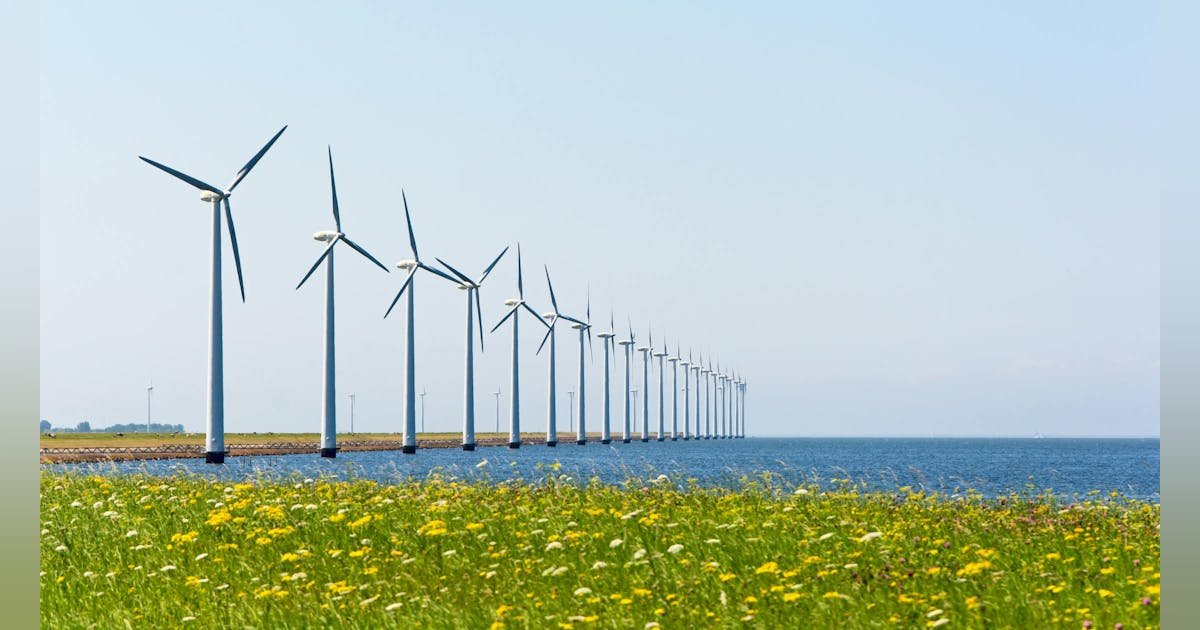
The Netherlands Leads Europe’s Clean Energy Transition
The Netherlands is quietly emerging as one of Europe’s most dynamic renewable energy markets in 2026, driven by a combination of ambitious government targets, innovative engineering, and favourable North Sea geography. With solar capacity doubling and offshore wind reaching new milestones, the country is on track to generate over 70% of its electricity from renewable sources by 2027.
What makes the Dutch approach distinctive is its integrated system design. Rather than treating solar, wind, and storage as separate silos, Dutch energy planners are building a connected grid where surplus offshore wind powers green hydrogen production, and rooftop solar feeds neighbourhood battery networks.
Offshore Wind: The North Sea Powerhouse
The Borssele and Hollandse Kust wind farms, now operating at full capacity, together generate enough electricity to power over 5 million Dutch homes. Construction has begun on the next generation of offshore sites further into the North Sea, where stronger and more consistent winds promise even higher capacity factors.
The Dutch government’s target of 21 GW of offshore wind by 2030 — nearly double the current 11 GW — is considered achievable by industry analysts. What was once seen as an aspirational goal now looks conservative, given the pace of technological improvement in turbine design and installation efficiency.
Solar Innovation on Land and Water
The Netherlands now has the highest solar panel density per capita in Europe, a remarkable achievement for a country not known for abundant sunshine. The secret is innovation in deployment: floating solar farms on reservoirs and inland lakes, solar-covered bike paths, and agrivoltaic systems that combine farming with energy generation.
A pilot project in Flevoland combines solar panels with tulip cultivation, with the panels providing partial shade that extends the growing season while generating electricity. Early results show a 12% increase in tulip yield alongside 200 MWh of annual solar production per hectare.
Green Hydrogen and Storage
The Port of Rotterdam is building Europe’s largest green hydrogen hub, using offshore wind electricity to produce hydrogen for industrial use and heavy transport. By 2028, the port expects to produce 500,000 tonnes of green hydrogen annually, reducing the Netherlands’ reliance on natural gas imports.
For a country that built its prosperity on natural gas, the pivot to renewables represents both a cultural and economic transformation. The Netherlands is demonstrating that a fossil-fuel legacy can become a clean-energy advantage when engineering expertise meets political will.
The Netherlands, for internationals
One email a week: the week's news for internationals in the Netherlands, new practical guides and what changed in the cities. No spam, unsubscribe any time.