Today’s digest covers getting ready for emergencies in Berlin, what commuting into Munich really costs, a heat-damaged tram network in Leipzig and higher postage from 2027. It also looks at school stress among teenagers and how foreign residents feel about life in Germany.
Berliners told to plan for blackouts themselves
In Berlin, getting ready for a power cut or another crisis is partly a private responsibility, and German law says so. The city’s districts (Bezirke, the local councils that run many public services) cannot yet be fully relied on to step in. Anyone living in Berlin should make sure their household could cope on its own for a while.
Source: rbb24
Does commuting into Munich still pay?
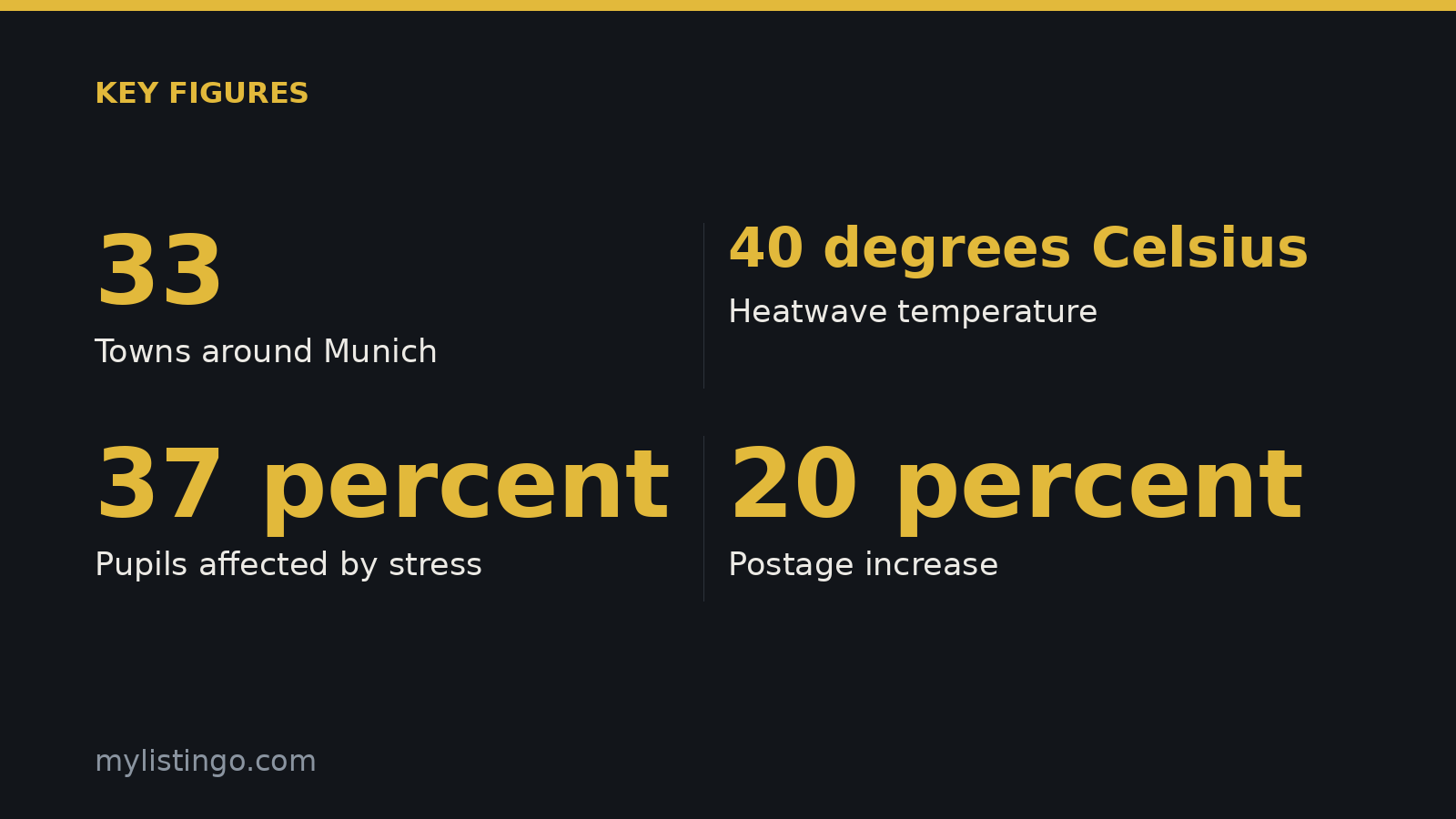
The Postbank commissioned a study of 33 towns around Munich that compared property prices with the cost of travelling into the city. It looked at where commuting still makes financial sense and how driving compares with bus and train. If Munich rents are pushing you to look at the suburbs, this is useful background.
Source: tz
Leipzig’s tram tracks need to cope with hotter summers
In Leipzig, all trams run by LVB, the city’s public transport company, stopped at the end of June. The sealant in the track joints swelled in the heat and gummed up the trams’ brakes and running gear. The breakdown showed that key parts of the network are not built for future heatwaves of 40 degrees Celsius and above, so more work on the tracks is likely.
Source: Leipziger Internet Zeitung
School stress weighs heavily on teenagers
A study by Barmer, one of Germany’s statutory health insurers, finds that school stress seriously affects daily life for 37 percent of pupils aged 14 to 17. Girls report sleep problems more often than boys. The insurer is raising the issue in Hesse, the state that includes Frankfurt, which matters to parents of teenagers in the German school system.
Source: Frankfurter Rundschau
Foreign residents on how Germany has changed
The Local asked its readers how Germany has changed since they arrived. Many mentioned rising costs, the housing shortage and political tension, yet many also said they would not want to live anywhere else.
Source: The Local Germany
Sending a letter will cost more from 2027
Deutsche Post, which belongs to DHL, has been allowed to raise the price of letters in Germany sharply from 2027. Postage is expected to go up by around 20 percent. People who still post official documents, applications or contracts should expect to pay more.
Source: The Local Germany
Deutsche Bahn drops most planned train cuts around Munich
After strong protests, Deutsche Bahn has dropped most of its plans to cut regional trains in the Munich area. From 2028, far fewer trains to and from Augsburg will be cancelled than first planned. That is good news for anyone who commutes between the two cities.
Source: Süddeutsche Zeitung
Germany Today is a curated digest: we summarise and link, the reporting belongs to the publications named. Something wrong or missing? Tell us.
Sources
- rbb24: Wie sich Berliner auf den Katastrophenfall vorbereiten können, accessed 13 October 2026 (archived copy)
- tz: Immobilienpreise und Fahrtkosten: Wo sich rund um München das Pendeln noch lohnt, accessed 13 October 2026
- Leipziger Internet Zeitung: Hitzeschäden der LVB im Juni: Das Gleisnetz muss jetzt an heiße Sommer angepasst werden, accessed 13 October 2026
- Frankfurter Rundschau: Hessische Krankenkasse macht aufmerksam: Viele Jugendliche leiden unter Schulstress, accessed 13 October 2026
- The Local Germany: 'It's been a whirlwind': How Germany's foreign residents say life has changed, accessed 13 October 2026
- The Local Germany: German postage prices expected to increase by 20 percent next year, accessed 13 October 2026
- Süddeutsche Zeitung: Nach heftigen Protesten: Bahn nimmt Streichpläne für Münchner Regionalzüge weitgehend zurück, accessed 13 October 2026
Germany, for internationals
One email a week: the week's news for internationals in Germany, new practical guides and what changed in the cities. No spam, unsubscribe any time.