AI News
  • Home
  • Choose country
    • Netherlands
    • United Kingdom
  • Editorial Policy
  • Contact
  • English
  • العربية
No Result
View All Result
AI News
  • Home
  • Choose country
    • Netherlands
    • United Kingdom
  • Editorial Policy
  • Contact
  • English
  • العربية
No Result
View All Result
AI News
No Result
View All Result

Mastercard Completes Europe’s First AI Agentic Payment

Ramo by Ramo
10 July 2026
in AI in Finance
0
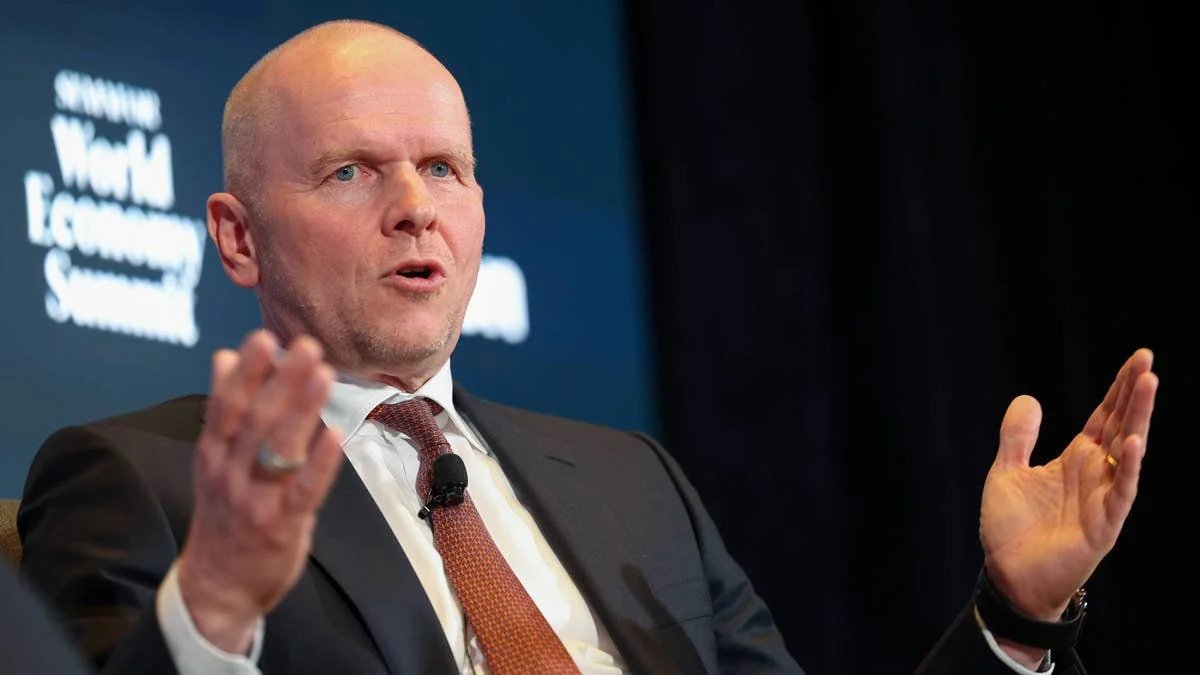
Editorial photo for: Mastercard Completes Europe’s First AI Agentic Payment

Mastercard Completes Europe’s First AI Agentic Payment

0
SHARES
4
VIEWS
Summarize with ChatGPTShare to Facebook

On the floor of Money20/20 Europe in June 2026, something happened that the payments industry had been anticipating for years. An AI agent, operating on behalf of a consumer through ING’s banking infrastructure, browsed a merchant catalogue, identified concert tickets that fit within a pre-set budget, and completed the purchase. Worldline handled the processing. Mastercard’s Agent Pay framework provided the network-level standards. The human customer confirmed the transaction with a single approval action and the purchase was done.

Mastercard, ING, and Worldline announced on June 3 that this transaction, completed in a live production environment in the Netherlands, represented Europe’s first end-to-end agentic payment. It is a milestone that most financial technology observers had expected to arrive eventually. The fact that it has arrived in 2026, in a live environment rather than a lab, marks a meaningful shift in what AI is actually doing inside the financial system versus what it has been discussed as capable of doing.

What Makes a Payment “Agentic”

The term gets used loosely, so it is worth being precise about what happened here. An agentic payment is one in which an AI agent takes the initiative to identify, initiate, and complete a financial transaction within parameters the user has set in advance. It is distinct from automation, where rules execute fixed actions, because the agent is making judgment calls about options within the permitted scope.

💹
RECOMMENDED READ
Artificial Intelligence in Finance: A Python-Based Guide
Yves Hilpisch
How machine learning is transforming trading strategies, risk models and financial decisions.
View on Amazon →affiliate link

In this case, the AI had been given a budget ceiling and a goal. It searched, evaluated, and selected. Critically, it then paused for explicit consumer approval before the money moved. That approval step is not incidental. It reflects the framework that Mastercard has built into Agent Pay, which requires that consumers remain in control of final authorization. The identifiers embedded in the transaction also told ING that it was handling an agentic payment rather than a standard one, preserving full visibility for the issuing bank throughout the process.

Regulators Are Paying Close Attention

The timing of this agentic payment milestone coincides with a notable tightening of regulatory scrutiny around AI in financial services. As of June 12, 2026, banking AI explainability has become a formal regulatory requirement in several jurisdictions. In the United States, the Office of the Comptroller of the Currency and the Federal Reserve have both begun asking banks, during routine examinations, to map out how they use AI in higher-risk functions including lending decisions, know-your-customer checks, and sanctions screening.

The underlying concern is straightforward. When an AI makes or influences a decision that affects a customer’s access to credit, or flags a transaction as suspicious, or prices a financial product, regulators want to be able to understand the reasoning. Black-box outputs are no longer acceptable in contexts where consumer harm is a real risk.

This regulatory pressure creates a genuine tension with the pace at which banks are deploying AI. Cambridge Judge Business School’s 2026 Global AI in Financial Services Report found that 70 percent of commercial banks have adopted AI in at least one core banking function, and 78 percent of those banks have seen positive return on investment within 18 months. The incentives to deploy are strong. The governance infrastructure to do it responsibly is still catching up.

The Gap Between Investment and Profitability

The Cambridge report also surfaced a finding that should give pause to anyone expecting AI to transform bank economics quickly. Only 40 percent of respondents report increased profitability as a result of their AI investments. Forty-three percent report no change. The gap between what AI can theoretically contribute and what it is delivering in actual bank income statements is substantial.

McKinsey’s estimates that generative AI could add between $200 billion and $340 billion in annual value to the global banking sector are frequently cited, but those figures represent a ceiling under ideal conditions, not a baseline that banks should expect to reach in the near term. The path from promising pilot to institution-wide value is longer and more operationally complex than early projections suggested.

For the latest on how AI is changing finance, investment, and the global economy, follow coverage at Mylistingo.

What the Agentic Future Actually Looks Like

The Mastercard, ING, and Worldline pilot points toward a near future in which AI agents handle a growing share of routine financial transactions on consumers’ behalf. Recurring purchases within pre-set budgets, subscription management, price comparison before renewal, and delegated purchasing within family or corporate accounts are all use cases that the three companies say they are already planning to expand into.

The friction that remains is not primarily technical. It is about trust. Consumers need to believe that an AI agent working on their behalf will stay within the boundaries they set, that the approval step is genuine rather than performative, and that when something goes wrong there is a clear path to resolution. Financial institutions need to be confident that agentic transactions do not create new vectors for fraud or compliance exposure.

Those questions will take longer to answer than the technology itself took to build. The live payment completed in the Netherlands this month is a starting point, not an endpoint. But it is a starting point that moved the conversation from theory to production.

The Netherlands, for internationals

One email a week: the week's news for internationals in the Netherlands, new practical guides and what changed in the cities. No spam, unsubscribe any time.

SummarizeShare
Ramo

Ramo

Ramo is the editorial voice of Mylistingo — an AI and technology news platform based in The Hague, Netherlands. Covering artificial intelligence, machine learning, robotics, and the future of technology, Ramo delivers accurate, accessible reporting for both general audiences and industry professionals. Every article is fact-checked and written to meet Mylistingo's strict no-fabrication editorial standards.

Related Stories

Empty trading desk with multiple monitors showing market data

OpenAI Aims ChatGPT at Investment Banking First

by Ramo
12 September 2026
0

OpenAI's new ChatGPT for Financial Services builds valuation models and pitchbooks. Morgan Stanley and Evercore helped design it.

Situational Awareness, star AI hedge fund that nearly imploded, now being probed by the SEC

SEC Probes Situational Awareness, the Star AI Hedge Fund

by Ramo
25 August 2026
0

A year ago, Situational Awareness was the name every allocator wanted in their portfolio. Today it is the name attached to federal subpoenas. That collapse in reputation, from...

Stripe didn’t really buy OpenRouter because of the ‘singularity’

Why Stripe Really Bought OpenRouter (Not the Singularity)

by Ramo
20 August 2026
0

A payments company buys a prompt router When Stripe announced last week that it had acquired OpenRouter, the stated reason raised eyebrows across Silicon Valley. Stripe pointed to...

Financial market data displayed on a trading terminal screen

Wall Street Is Building a $500B Pipeline for AI Compute

by Ramo
19 August 2026
0

Nvidia signed agreements with Apollo, BlackRock, Blackstone, Brookfield, Goldman Sachs and KKR to mobilise over $500bn for AI infrastructure.

Next Post
Editorial photo for: how google and nvidia are shaping the future of ai computing

how google and nvidia are shaping the future of ai computing

Leave a Reply Cancel reply

Your email address will not be published. Required fields are marked *

The Netherlands, for internationals

One email a week: the week's news for internationals in the Netherlands, new practical guides and what changed in the cities. No spam, unsubscribe any time.

Free European Bank Account
Open a 100% mobile bank account in minutes
Free virtual Mastercard, zero foreign transaction fees, and instant European IBAN setup with no paperwork.
Get Started Free
Sponsored · Advertise
Second-hand marketplace
Sell the clothes you no longer wear, or buy pre-loved for less
Selling on Vinted is free, with no seller fees. Join with this invite link.
Join Vinted
Sponsored · Advertise
Web hosting
Build your website on Hostinger with 20% off your first purchase
Web hosting, VPS servers and an AI website builder. The 20% discount applies through this link.
Get 20% off
Sponsored · Advertise
Your ad here
Put your business in front of internationals in the Netherlands
This spot is open. See the prices and how to book it.
See advertising options

Recommended

Dutch cycling infrastructure global gold standard

Why Dutch Cycling Infrastructure Remains the Global Gold Standard

13 July 2026
Linux Foundation: Slash Costs, Boost Growth with Open-Source AI

Linux Foundation: Slash Costs, Boost Growth with Open-Source AI

16 July 2026

Popular Story

  • Robotaxis arrive in Rotterdam Netherlands autonomous ride-hailing fleet

    Robotaxis Arrive in Rotterdam: Netherlands Launches Europe’s Largest Autonomous Ride-Hailing Fleet

    0 shares
    Share 0 Tweet 0
  • ASML’s Next-Gen High-NA EUV Machines Drive Eindhoven Expansion, Creating 20,000 New Jobs

    0 shares
    Share 0 Tweet 0
  • Registration in Den Haag: How to Register at The Hague Municipality, Step by Step

    0 shares
    Share 0 Tweet 0
  • How to Find a Rental Apartment in The Hague in 2026

    0 shares
    Share 0 Tweet 0
  • PixVerse closes $439m series C extension at $2b valuation

    0 shares
    Share 0 Tweet 0
logo ainews

Mylistingo: daily news and practical guides for internationals in the Netherlands, in English.

Recent Posts

  • Weekend Reads: 3 October 2026
  • UK Today: 2 October 2026
  • Netherlands Today: 2 October 2026

Partner

Free European Bank Account
Open a 100% mobile bank account in minutes
Free virtual Mastercard, zero foreign transaction fees, and instant European IBAN setup with no paperwork.
Get Started Free
Sponsored · Advertise

Categories

  • AI & Tech
  • AI & Tech in the Netherlands
  • AI in Business
  • AI in Climate
  • AI in Education
  • AI in Finance
  • AI in Health
  • AI in Law
  • AI in Sport
  • Amsterdam
  • Economy & Finance
  • Future Tech
  • Machine Learning
  • Moving to the Netherlands
  • Netherlands News
  • Politics & Geopolitics
  • Robotics
  • Rotterdam
  • Social Topics
  • Sport
  • Startups
  • The Hague
  • Tools & Apps
  • Uncategorized
  • Utrecht
  • Weekend Reads

The Hague, for internationals

One email a week: what changed for expats, what's on, one guide worth reading.

  • Home
  • Advertise
  • Latest News
  • Contact Us
  • Data Deletion Instructions
  • Privacy Policy
  • Editorial Policy

  • English
  • العربية
No Result
View All Result
  • Home
  • Choose country
    • Netherlands
    • United Kingdom
  • Editorial Policy
  • Contact