Almost one in five women going through the menopause in Germany is considering retiring early because of their symptoms, according to a tagesschau report. The piece draws on a new report published by the Antidiskriminierungsstelle des Bundes, the Federal Anti-Discrimination Agency, which argues that employers and doctors are not yet ready for what the menopause, or Wechseljahre, means for working life.
What happened
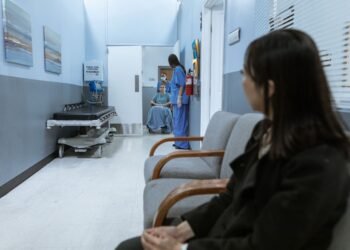
tagesschau has published a report on how menopausal symptoms affect women at work. It follows a 54-year-old teacher at a Berufsschule (a vocational college), whom tagesschau calls Antje Krause. That is not her real name. She describes heavy, irregular periods that make long lessons difficult. “When I have 90 minutes of teaching before the next break, I do ask myself whether I can manage it or whether I will have to stop in the middle,” she told tagesschau. With some classes she can set group work so she can leave the room for the toilet. With others, she cannot.
Krause says she first noticed changes in her mid-40s. By 50 she had what she calls a whole “bouquet” of symptoms: mood swings, abdominal pain, brain fog, hair loss, joint pain and migraine. She kept going back to doctors. She was prescribed an antidepressant and supplements, and doctors even carried out a lumbar puncture because they suspected multiple sclerosis. It was only after talking to friends that she linked her symptoms to the perimenopause, the early stage of the menopause. According to tagesschau, nine to eleven million people in Germany are in this phase, and 85 percent of them have similar symptoms.
Miriam Stein co-wrote the report “Gleichberechtigt in den Wechseljahren” (“Equal in the menopause”) with Franzi von Kempis. In the ARD documentary “Wechseljahre – Zu heiß für Deutschland?” (“Menopause: too hot for Germany?”), Stein said that many doctors, including gynaecologists, are not properly prepared for the menopause. On sleep loss, she said: “The UN classes sleep deprivation as a method of torture, so it is no wonder that a woman has brain fog. And that always affects her ability to work.”
Doctors often recommend strength training. Krause told tagesschau that the gym became an extra burden. The smells, the lighting and the music were too much for her. These days she walks her dog instead. She also travels in a camper van so she always has a toilet nearby, had her coil removed, which she says balanced her hormones, and takes supplements such as iron. At her school, female teachers have put a basket of hygiene products in the toilets. She would like to see “more rest rooms, quieter places to retreat to”.
Why it matters if you live in Germany
The studies that Stein and von Kempis reviewed suggest the effects go well beyond individual discomfort. According to tagesschau, one in four female managers is considering stepping back from a leadership role. Women between 40 and 50 also see doctors more often and earn less during this stage of life than before. Stein argues that the menopause could therefore be a further poverty risk for women, alongside motherhood.
This affects sectors that many internationals work in or rely on. Women aged 40 to 59 are among the groups in Germany with the highest employment rates, tagesschau reports, and many work in fields with skills shortages, such as nursing and schools. Pascale Hilberger-Kürlum, vice-president of the Deutscher Pflegerat (German Nursing Council), said that nurses tell him the same thing again and again: “The first sentence is always: I love my job. And the second sentence is always: I can’t manage it any more.” Ferda Ataman, the Unabhängige Antidiskriminierungsbeauftragte des Bundes (the Federal Government’s independent anti-discrimination commissioner), said society depends on high-performing women going through the menopause.
According to Stein, some groups are hit particularly hard because the health system often overlooks them: women in rural areas, women with a migration background, women on low incomes, women with disabilities, and trans and intersex people. If you have moved to Germany and are dealing with these symptoms, the report suggests you may find it harder than most to get a clear diagnosis.
For workers and employers, Stein says the right solutions depend on the job. She lists flexible working hours, suitable room temperatures, the chance to change clothes at work and, for women who work outdoors, access to toilets. She also says company doctors (Betriebsärztinnen and Betriebsärzte) should be trained on the subject and offer advice. She compares it with back-pain prevention in workplace health programmes, which she says many colleagues used without it harming their standing: “In one case it’s your back, in the other it’s the menopause.”
What to watch next
tagesschau points to the United Kingdom as an example. From 2027, British companies with more than 250 employees will be required to have a menopause strategy. Germany has no equivalent rule, according to the report, so it is worth watching whether the Federal Anti-Discrimination Agency’s findings lead to political or employer action here.
Stein also frames the issue as one of discrimination. She says women face age-related prejudice earlier than men, and that treating a woman worse at work or assuming she can do less “of course has something to do with discrimination”. Krause believes talking openly is key, especially because not every woman can rearrange her life as she has: “We must not forget: we are the first generation to talk about it openly. Men have to learn this together with us.” The topic was also covered on the WDR 2 morning programme Der Morgen.
Source: tagesschau
Sources
- tagesschau: Wechseljahre im Job: Wie Hitzewallungen den Arbeitsalltag erschweren, accessed 18 October 2026 (archived copy)
Germany, for internationals
One email a week: the week's news for internationals in Germany, new practical guides and what changed in the cities. No spam, unsubscribe any time.