Google’s Quantum Leap: The Willow Chip and the Road Ahead
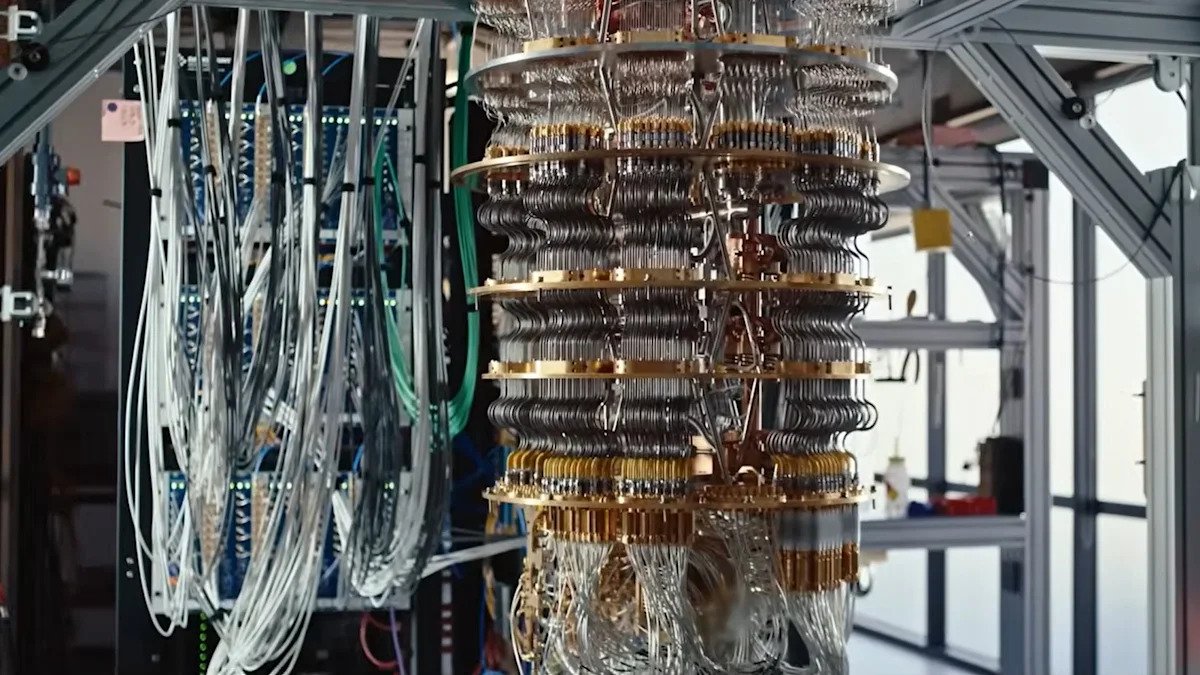
Google’s Quantum AI team has achieved another milestone with its Willow quantum computing chip, demonstrating error correction capabilities that bring practical quantum computing closer than ever before. The breakthrough, first announced in late 2024, has continued to mature through 2026 with increasingly impressive benchmark results.
The fundamental challenge of quantum computing has always been error rates. Quantum bits, or qubits, are exquisitely sensitive to environmental noise — a stray photon, a tiny temperature fluctuation, or even cosmic rays can corrupt a computation. For decades, researchers have pursued quantum error correction as the solution, but implementing it requires so many physical qubits to protect each logical qubit that practical machines seemed perpetually decades away.
Willow changes that calculus. Google’s team demonstrated that as they increased the number of qubits in their error-correcting code, the error rate decreased exponentially — a phenomenon known as being “below threshold.” This is the holy grail of quantum error correction, and Willow is the first system to achieve it convincingly.
Real-World Applications Emerge
While fault-tolerant quantum computers are still years away, the error-correction advances in Willow are already opening doors. Pharmaceutical companies are partnering with Google to simulate molecular interactions for drug discovery. Financial institutions are running portfolio optimization algorithms on early quantum hardware. And materials science researchers are using quantum simulations to design new battery chemistries.
The competition in quantum computing is intensifying. IBM’s Heron processor and its roadmap to a 100,000-qubit system by 2033 represent a different architectural approach. Chinese researchers at the University of Science and Technology of China have also reported error-correction milestones. And startups like PsiQuantum and IonQ are pursuing alternative qubit technologies — photonics and trapped ions, respectively — that could leapfrog superconducting approaches.
What’s Next
Google’s roadmap calls for a “long-lived logical qubit” demonstration by 2027, followed by a commercially relevant quantum computer before 2030. The company is investing billions in dedicated fabrication facilities and cryogenic infrastructure. If the Willow trajectory holds, the era of quantum advantage — where quantum computers solve problems that classical supercomputers cannot — may arrive within this decade rather than the next.
The Netherlands, for internationals
One email a week: the week's news for internationals in the Netherlands, new practical guides and what changed in the cities. No spam, unsubscribe any time.