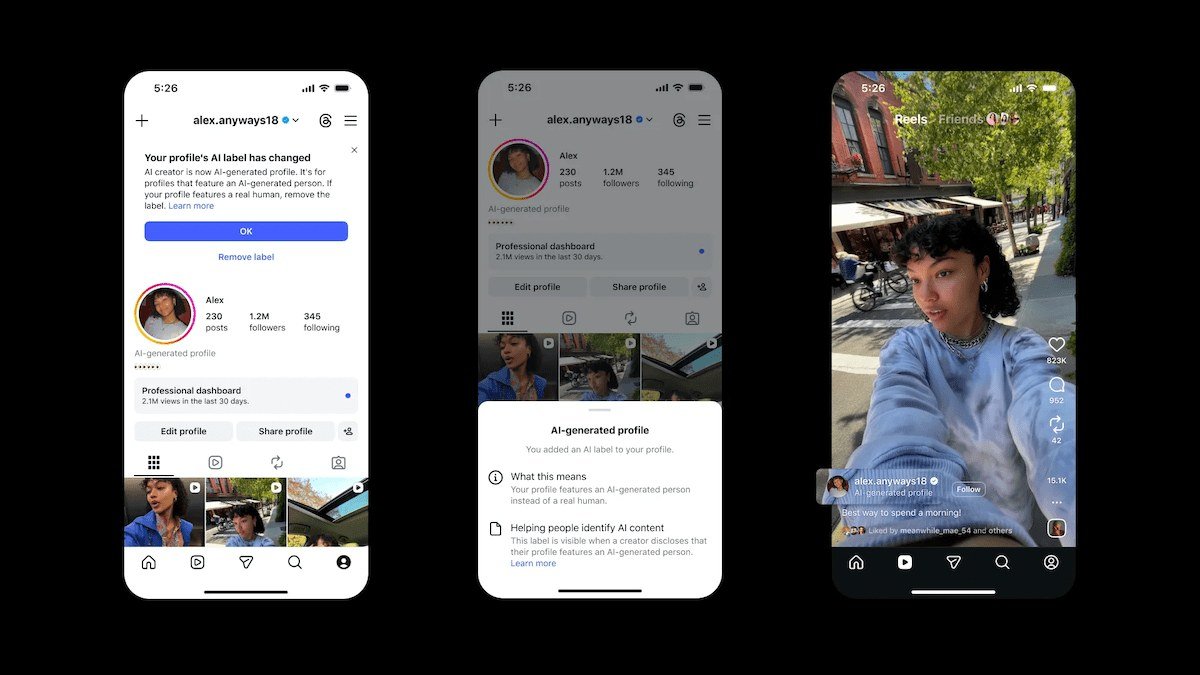
Starting this week, Google is letting users strip the visible watermark from images its AI tools generate. The little tag that announced a picture was made by a machine, the one that sat in the corner as a kind of honesty signal, can now be switched off with a setting. What Google is not letting you remove is the part you can’t see.
Two watermarks, only one you can touch
Every AI image carries two kinds of marks. One is visible: a logo, a label, something a person can spot at a glance. The other is invisible, woven into the pixels themselves, readable by software but not by the human eye. Google’s change this week affects only the first kind. Turn off the visible watermark, and the invisible signal that identifies a file as AI-generated stays exactly where it was.
That distinction is the whole story. A visible watermark is a courtesy to the person looking at the image. An invisible one is infrastructure, a way for platforms, researchers, and Google itself to trace a file’s origin long after it has been downloaded, cropped, reposted, and stripped of any obvious tell. By keeping the hidden layer mandatory while making the obvious one optional, Google is drawing a line between what users want and what the company needs.
Why anyone wanted the badge gone
Ask a designer why the visible watermark bothered them and the answer is practical. A tag in the corner of a generated image is fine for a quick draft and a nuisance for anything headed toward real work. It has to be cropped out, painted over, or worked around, and every one of those steps adds friction to a workflow that was supposed to feel effortless. For people using these tools professionally, the badge was less a mark of honesty than a chore.
Google clearly heard that. Removing the visible mark makes its image tools more competitive with rivals that never made users advertise how a picture was made. The output looks cleaner, ships faster, and drops into a project without an editing detour. For the person generating the image, this is a straightforward win, and Google is treating it as one.
The trade the company is making is subtle. It gives users the cosmetic freedom they asked for while surrendering none of the traceability it built the invisible system to provide. You get to lose the logo. Google gets to keep knowing.
The honesty problem nobody solved
Here is the tension the change exposes. The visible watermark was the version of provenance that ordinary people could actually use. You didn’t need a detection tool or a Google API to know a picture was synthetic. You just looked at it. The invisible watermark, however durable, does nothing for a person scrolling a feed who has no way to run a file through a checker.
So the labeling that survives is the labeling regular viewers can’t read, and the labeling that disappears is the one they could. That’s a meaningful shift in who provenance is really for. It moves from the audience looking at an image toward the systems processing it. Detection becomes a job for platforms and software, not a judgment any of us can make with our own eyes.
None of this makes Google’s decision wrong. Invisible watermarks are harder to remove and harder to fake than a corner logo, which a determined user could always crop away anyway. If the goal is reliable tracing, the hidden mark was always the stronger tool. But the goal of a visible mark was never reliability. It was transparency in the plainest sense, the kind a person understands without instruction. That version is now something you can turn off.
What this signals for AI labeling
Google is one of the largest producers of AI-generated media on the planet, and where it sets defaults, the rest of the industry tends to follow. Making the visible watermark optional sends a message about which form of disclosure the company considers essential and which it considers negotiable. The essential one is machine-readable. The negotiable one is human-readable.
That priority may prove correct as detection tooling matures and platforms build the invisible signal into how they surface AI content. It also leans on a bet that the systems checking for these marks will be everywhere they need to be, quietly doing the work that a visible badge used to do out in the open. If that bet holds, most people will never notice the difference. If it doesn’t, we lose the one form of AI disclosure that required no expertise to read.
Watch what other model makers do next. Google just made it acceptable to hide the obvious signal while keeping the hidden one, and that framing is easy to copy. The real test is whether the invisible layer proves as trustworthy in practice as it sounds on paper, because for now it is carrying the entire weight of telling real from synthetic.
For more coverage of AI watermarking and content provenance, visit Mylistingo.
Source: Original Article
The Netherlands, for internationals
One email a week: the week's news for internationals in the Netherlands, new practical guides and what changed in the cities. No spam, unsubscribe any time.