AI News
  • Home
  • AI & Tech
  • Machine Learning
  • Startups
  • Tools & Apps
  • Robotics
  • Future Tech
  • AI in Industry
    • AI in Sport ⚽
    • AI in Health
    • AI in Education
    • AI in Finance
    • AI in Business
    • AI in Law
    • AI in Climate
No Result
View All Result
SAVED POSTS
AI News
  • Home
  • AI & Tech
  • Machine Learning
  • Startups
  • Tools & Apps
  • Robotics
  • Future Tech
  • AI in Industry
    • AI in Sport ⚽
    • AI in Health
    • AI in Education
    • AI in Finance
    • AI in Business
    • AI in Law
    • AI in Climate
No Result
View All Result
AI News
No Result
View All Result

Atlantic ocean current collapse may already be locked in, study finds

Ramo by Ramo
7 July 2026
in AI in Climate
410 13
0
Atlantic ocean current collapse may already be locked in, study finds
585
SHARES
3.3k
VIEWS
Summarize with ChatGPTShare to Facebook

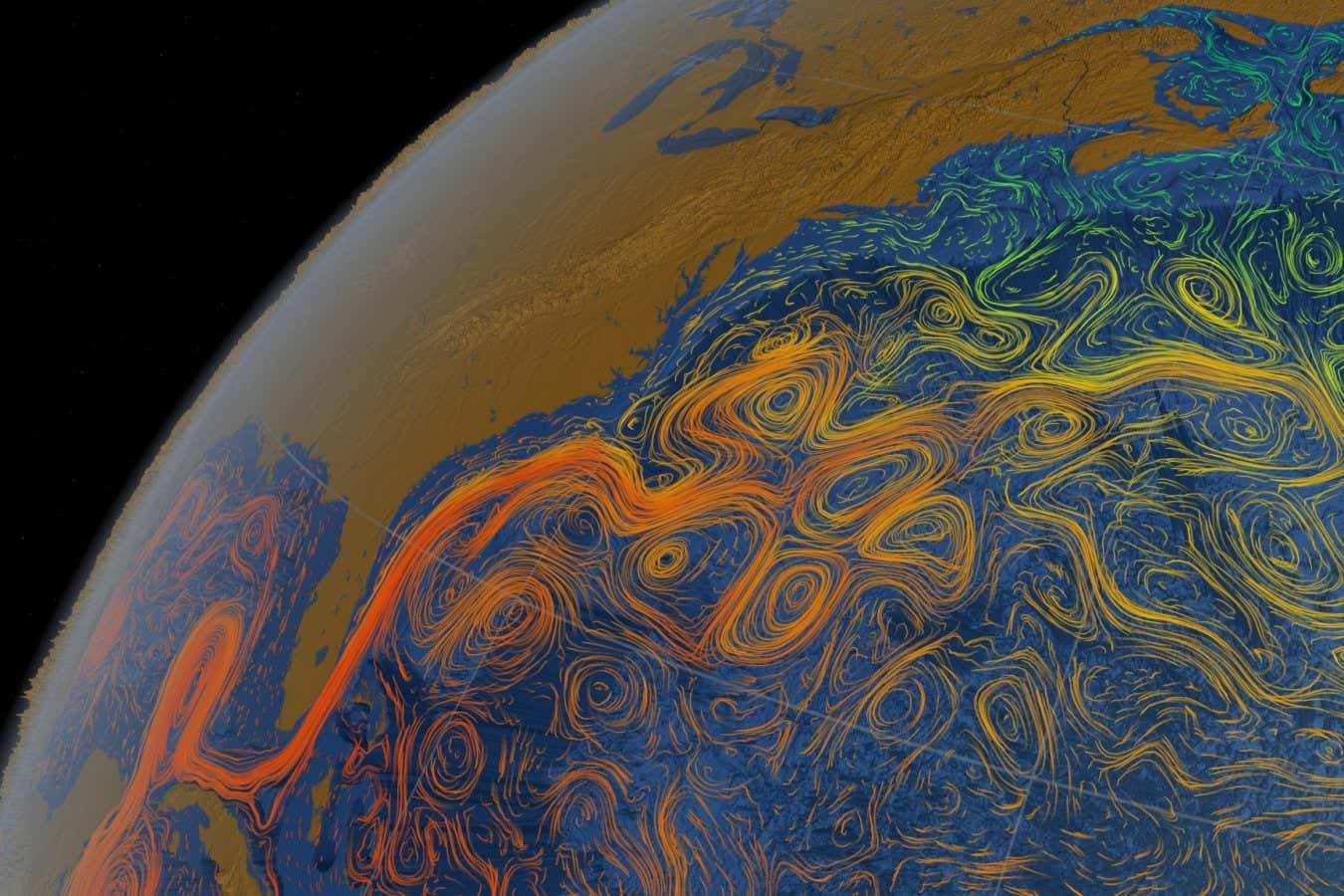
A new study suggests that the Atlantic Meridional Overturning Circulation, or AMOC, could already be on an irreversible path toward collapse. Researchers estimate a 10 to 23 percent chance that the tipping point has been crossed, even if emissions are cut aggressively today. The findings, published by scientists at the Open University and the University of Exeter, add urgency to global climate action.

What is the AMOC and why does it matter?

The AMOC is a massive system of ocean currents that carries warm, salty water from the tropics toward the North Atlantic. As this water cools, it sinks and flows back south, helping regulate temperatures across Europe, Africa, and the Americas. Without it, Europe could experience near-Arctic conditions, and monsoon patterns worldwide could weaken. The system is already showing signs of strain. Melting Greenland ice sheet, driven by climate change, is adding freshwater to the North Atlantic. That freshwater makes the ocean less dense, slowing the sinking process that drives the circulation. Scientists have warned for years that a full shutdown could trigger abrupt, far reaching climate shifts.

The new study: a sobering look at committed collapse

To assess the risk, Phil Holden, Tim Lenton, and their team ran 21 computer simulations. Each simulation varied when greenhouse gas emissions would peak, from 2005 through 2135, and included different rates of Greenland ice melt. The models assumed emissions would fall to net zero over 35 years after the peak, with Greenland ice melt held constant. Each run covered 300 years. Under the most conservative scenario, with emissions peaking in 2025 and Greenland ice adding only 54 millimeters to sea level rise by 2100, the model found a 10 percent chance that AMOC collapse is already locked in. If net zero is delayed until 2100, that probability jumps to 80 percent. With a less conservative ice melt projection of 274 millimeters of sea level rise by 2100, the chance of being committed rises to 23 percent.

🌍
RECOMMENDED READ
Speed and Scale: An Action Plan for Solving Our Climate Crisis Now
John Doerr
A data-driven blueprint for the technologies including AI that can actually fix the climate.
View on Amazon →affiliate link

The researchers defined committed collapse as the point when the circulation no longer transports heat to high latitudes, effectively shutting down the overturning current. Even after that point, the actual collapse takes time. The average delay between commitment and the collapse event is 84 years in the simulations, with the earliest possible collapse occurring around 2060. The model used relatively low resolution, with 5 degree grids, compared to the 1 degree grids used in many state of the art climate models. But Lenton said the low resolution was a deliberate choice to run many long simulations. He noted that recent work with higher resolution models suggests the risk estimates might actually be higher, not lower.

What can we do?

Taken together, these findings suggest that the window to prevent AMOC collapse is narrow but not yet closed. The model shows that delaying net zero by just 10 years beyond the point of commitment accelerates the collapse timeline from 84 years to 57 years on average. That reinforces the need for rapid emissions cuts. Tim Lenton says the model is telling us to do everything in our power to get to net zero as quickly as possible, to keep the probability at the lower end of the scale. Other scientists urge caution. Jonathan Baker at the Met Office says the low resolution model may not capture all the sensitivity of the AMOC, and further work with multiple climate models is needed before drawing reliable conclusions. Still, the study provides a new way to frame the risk: not just when collapse might happen, but whether we are already committed to it.

Climate models like the one used in this study are increasingly powered by machine learning techniques that can simulate complex systems more efficiently. For teams working on emissions scenarios, these AI driven tools help identify the most likely paths forward. If you are exploring how artificial intelligence can assist in climate modeling or other fields, check out our guide to the best AI tools in 2026 to see what is on the horizon.

Tags: AI in climateAMOCclimate changeclimate modelingocean currents
SummarizeShare234
Ramo

Ramo

Ramo is the editorial voice of Mylistingo — an AI and technology news platform based in The Hague, Netherlands. Covering artificial intelligence, machine learning, robotics, and the future of technology, Ramo delivers accurate, accessible reporting for both general audiences and industry professionals. Every article is fact-checked and written to meet Mylistingo's strict no-fabrication editorial standards.

Related Stories

ml feat fix 13601

AI’s Environmental Bill Is Coming Due

by Ramo
3 July 2026
0

A UN report warns AI data centres could consume nearly triple current electricity levels by 2030, with vast water and e-waste costs too.

Picsum ID: 537

Microsoft develops new AI data center cooling system

by Ramo
1 July 2026
0

Microsoft debuts a new cooling system for AI data centers that cuts water use. The design uses outside air and chillers to manage heat.

Picsum ID: 558

AI’s Hidden Environmental Costs: Water, Land, and a Planet Under Pressure

by Ramo
28 June 2026
0

A new UN report reveals AI data centers could drain water equivalent to 1.3 billion people's needs by 2030, demanding urgent action on sustainable AI.

Picsum ID: 590

How AI Is Accelerating Climate Research in 2026

by Ramo
28 June 2026
0

A new AI model called Aurora was trained on over a million hours of data and is outperforming the best physics-based climate forecasts. Here's what AI means for...

Recommended

ml_feat_53801946

Samsung Galaxy Unpacked July 2026: Everything Expected to Launch

6 July 2026
Picsum ID: 939

Best Barbers in The Hague — 7 Quality Haircuts Worth Your Money

29 June 2026

Popular Story

  • 46698681

    Inside The Hague’s AI-Powered International Criminal Court: How Machine Learning Is Accelerating Justice

    588 shares
    Share 235 Tweet 147
  • Is Your Home Truly Safe The Smart Security Tech You Need in 2025

    587 shares
    Share 235 Tweet 147
  • Dutch Biking Rules for Beginners — How to Cycle Safely in the Netherlands

    587 shares
    Share 235 Tweet 147
  • OpenAI unveils Lockdown Mode to protect sensitive data from prompt injection attacks

    587 shares
    Share 235 Tweet 147
  • Apple iPhone 18 Launch Date Leaked: What We Know So Far

    587 shares
    Share 235 Tweet 147
Advertise Here
Your Ad Could Be Here

This premium 300×250 spot is available. Reach our AI & tech audience with your product or service.

Book This Space →
logo ainews

We bring you the best Premium WordPress Themes that perfect for news, magazine, personal blog, etc. Check our landing page for details.

Recent Posts

  • BRICS De-Dollarization: How the Global Reserve Currency System Is Changing in 2026
  • The Rise of Agentic AI: How Autonomous AI Agents Are Reshaping Workflows in 2026
  • Global Economy Mid-2026: Central Banks, AI Productivity, and the Inflation Puzzle

Categories

  • AI & Tech
  • AI in Business
  • AI in Climate
  • AI in Education
  • AI in Finance
  • AI in Health
  • AI in Law
  • AI in Sport
  • Economy & Finance
  • Future Tech
  • Machine Learning
  • Politics & Geopolitics
  • Robotics
  • Social Topics
  • Sport
  • Startups
  • The Hague
  • Tools & Apps
  • Uncategorized

Weekly Newsletter

  • Home
  • Advertise
  • Latest News
  • Contact Us
  • Data Deletion Instructions
  • Editorial Policy

Welcome Back!

Login to your account below

Forgotten Password?

Retrieve your password

Please enter your username or email address to reset your password.

Log In
No Result
View All Result
  • Home
  • AI & Tech
  • Machine Learning
  • Startups
  • Tools & Apps
  • Robotics
  • Future Tech
  • AI in Industry
    • AI in Sport ⚽
    • AI in Health
    • AI in Education
    • AI in Finance
    • AI in Business
    • AI in Law
    • AI in Climate