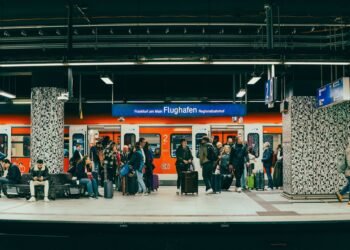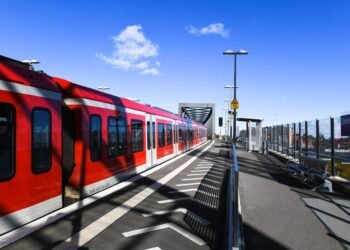
Fewer S-Bahn trains in the Rhein-Main region, which includes Frankfurt, were cancelled in the first half of 2026 because of sick train drivers. Trains are running late more often, though, and the first of almost 100 redesigned S-Bahn trains will start running at the end of October.
What happened
The Rhein-Main-Verkehrsverbund (RMV) is the public transport association that runs ticketing and timetables for Frankfurt and the surrounding region. An RMV spokesperson in Hofheim told the news agency dpa that “personalbedingte Ausfälle” (cancellations caused by staff shortages) on the S-Bahn, the suburban rail network, fell to 3.4 per cent in the first half of 2026. hessenschau reports that this is roughly a quarter of the figure for the same period a year earlier. In 2025, 13.2 per cent of journeys were cancelled because of illness.
Sick Lokführer (train drivers) were not the main reason trains failed to run. According to the RMV spokesperson, the most common causes were the large amount of construction work and operational disruption from technical problems and höhere Gewalt, the German legal term for force majeure.
Overall reliability also improved. Earlier RMV figures put S-Bahn reliability at 93.6 per cent in the first half of 2026. This figure measures how many trains listed in the timetable actually ran, so around six per cent of S-Bahn trains never set off. In the same period of 2025, reliability was 90.4 per cent, which meant almost one train in ten was cancelled.
Punctuality went the other way. RMV statistics show that both S-Bahn trains and Regionalbahnen (regional trains) in Rhein-Main arrived late more often in the first half of 2026 than a year earlier. hessenschau says this trend has continued for years. Lines S8 and S9 were late particularly often.
What it means for you
If you commute by S-Bahn in and around Frankfurt, your train is less likely to be cancelled than it was a year ago, but more likely to arrive late. This matters most if you rely on the S8 or S9, which the RMV figures single out for frequent delays.
It helps to know how the RMV defines lateness when you read its statistics. A train counts as unpunctual only if it reaches its final destination at least six minutes late. Anything below that counts as on time. A train that is five minutes late at your stop therefore still counts as punctual in the official figures.
Because construction work was named as one of the most common causes of cancellations, it is worth checking for planned engineering works on your line before you travel, especially if you need to make a connection or arrive at a fixed time.
What to watch next
From the end of October, the first of almost 100 redesigned S-Bahn trains will run in the Rhein-Main region. They will look quite different from the current fleet. Instead of red, the outside will be white with a blue stripe and a green front. Inside, white and grey dominate, with wood-effect details.
Several changes affect everyday travel:
- There is no longer a first-class section.
- Power sockets are fitted under the seats.
- There are new spaces for storing bicycles.
- The entrances are funnel-shaped, and seats near the doors have been removed so passengers can get on and off faster.
The RMV hopes the new entrance design will reduce delays and improve punctuality. It also expects 15 per cent more capacity per train. Whether the new trains improve the punctuality figures for lines such as the S8 and S9 should become clearer as more of them enter service and the RMV publishes its next statistics.
If you currently travel first class on the S-Bahn, note that the new trains will not have it. Keep an eye on RMV announcements about when the redesigned trains reach your line.
Source: hessenschau
Sources
- hessenschau: Weniger S-Bahn-Ausfälle in Rhein-Main: Krankenstand bei Lokführern gesunken, accessed 12 October 2026
Frankfurt, for internationals
One email a week: what changed for internationals in Frankfurt, the week's news from Germany, and one guide worth reading. No spam, unsubscribe any time.