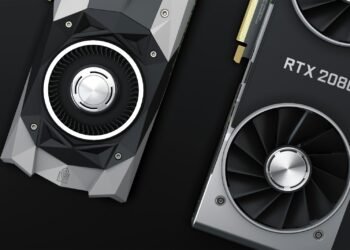
Nvidia is riding a wave of unprecedented demand for its consumer graphics cards, fueled by a pivot that blends gaming performance with artificial intelligence capabilities. The company’s latest earnings report shows that its GeForce RTX 50 series GPUs are selling faster than any previous generation, with revenue from the gaming segment surging by 62 percent year over year. This growth is not purely about better frames per second. It reflects a broader shift in how people use personal computers for AI tasks.
How AI reshaped the consumer GPU market
For years, Nvidia’s reputation in the consumer space rested almost entirely on gaming. That narrative has changed. The same tensor cores and CUDA cores that accelerate ray tracing in games are now being used for local AI inference, image generation, and running large language models on desktop machines. Nvidia has embraced this dual identity. The company introduced software tools like Chat with RTX, a local AI chatbot that runs entirely on a GeForce GPU, and RTX Video Super Resolution, which uses AI to upscale streaming video in real time.
These applications have opened a new market segment. Gamers upgrading for better visuals are now sharing the same product line with developers, artists, and hobbyists who need a local AI workstation. Nvidia’s CEO Jensen Huang stated during the recent earnings call that the personal computer is becoming “the most important AI platform in the world.” This sentiment is backed by data. The company reported that the average selling price of its consumer GPUs has increased by 15 percent as buyers opt for higher-end models that offer more VRAM and faster AI processing.
Supply chain and pricing dynamics
The surge in demand has created a familiar tension. Retailers report that RTX 5070 Ti and RTX 5090 cards are frequently out of stock within hours of new shipments. Scalpers are once again active, listing cards on secondary markets at premiums of 20 to 30 percent above retail. Nvidia has acknowledged the supply constraints but insists that availability will improve in the second half of the fiscal year. The company is also shifting some of its production capacity from data center chips to consumer GPUs to meet the elevated demand.
Pricing has also become a subject of debate within the industry. The RTX 5070 starts at $549, a notable increase from the $499 launch price of the previous generation. Analysts argue that the higher price point is justified by the added AI hardware and software support. Consumers appear to agree. Preorders for the entire RTX 50 series have exceeded internal forecasts by a margin of 40 percent according to Nvidia’s supply chain partners. The key takeaway is that the market is signaling a willingness to pay more for a GPU that serves as both a gaming device and an AI accelerator.
What this means for the broader tech landscape
Nvidia’s consumer strategy is now a template for the rest of the hardware industry. Competitors like AMD and Intel are racing to add similar AI acceleration features to their next-generation chips. AMD’s upcoming RDNA 4 architecture includes dedicated AI cores, and Intel’s Arc series has already introduced Xe Matrix Extensions for machine learning workloads. The shift has implications beyond hardware. Software developers are increasingly optimizing their applications for local AI execution, which could reduce dependence on cloud-based AI services over time.
For the first time in years, the upgrade cycle for consumer GPUs is being driven by capabilities that go beyond gaming. This is prompting a reevaluation of how we think about personal computing power. Nvidia is betting that the future of desktop computing involves a hybrid model where intense gaming and local AI tasks coexist on the same machine. Early sales figures suggest that bet is paying off. The company expects its consumer AI segment to grow by another 20 percent in the next quarter. As local AI tools become more sophisticated, the line between a gaming card and an AI accelerator may disappear entirely. For more insights on how these trends affect your own hardware decisions, see our analysis at Mylistingo.
The Netherlands, for internationals
One email a week: the week's news for internationals in the Netherlands, new practical guides and what changed in the cities. No spam, unsubscribe any time.