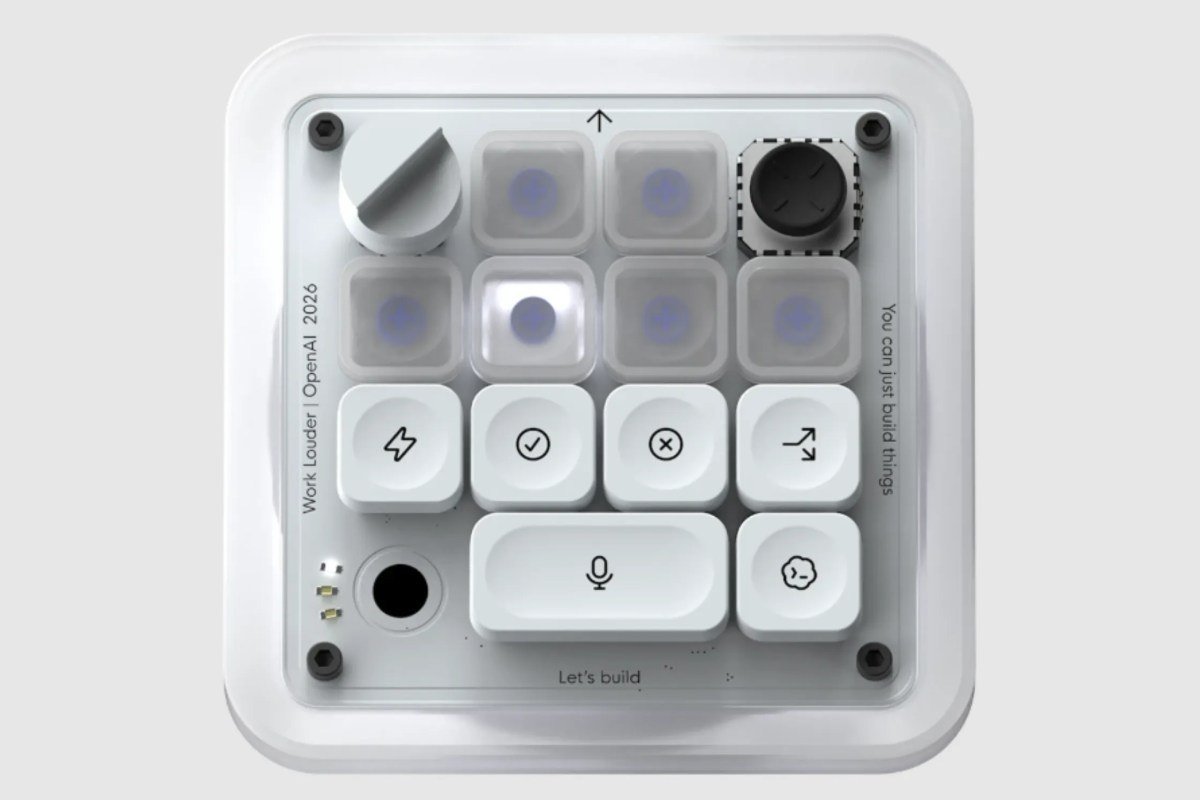
OpenAI built a keypad. Not a chatbot, not a model, not an app you open in a browser tab — a physical piece of hardware you put on your desk. And after someone actually spent time with it, the verdict landed somewhere between a shrug and a grin: fun for a certain kind of coder, faintly baffling to almost everyone else.
That split is the whole story. Most of what OpenAI ships arrives as software that anyone with a login can try in seconds. A keypad is different. It asks you to want it, to make room for it, to change how your hands move while you work. Plenty of people will look at it and quietly decide it isn’t for them.
A gadget that knows its crowd
The reviewer’s framing is refreshingly unhyped. This is a device that will be a lot of fun for some, and that many others are probably never going to touch. There’s no pretense that it’s for your parents, your accountant, or the person three desks over who still hasn’t turned on autocomplete. It’s a toy, and a tool, aimed at people who already live inside their keyboards.
Coders are the obvious target. If your day is a stream of commands, shortcuts, and repeated actions, a dedicated piece of hardware that folds AI into that flow has a clear appeal. You already think in keystrokes. Adding a smarter surface under your fingers is a small leap, not a lifestyle change. For that audience, “fun” is exactly the right word, and it’s not a faint compliment.
For everyone else, the same object reads as a puzzle. What is it, what problem does it solve, and why would you buy a separate thing when the AI you use already lives on the screen you’re staring at? The honest answer, going by the review, is that you probably wouldn’t. And OpenAI doesn’t seem to be pretending otherwise.
Why hardware is the harder game
Software forgives. You try it, you close the tab, you forget it ever existed. Hardware demands commitment before it earns any. It costs money, it takes up space, and it competes with the muscle memory you’ve spent years building. That’s a steep tax for a novelty, and it’s why a “slightly mystifying” reaction from the general public isn’t a failure so much as a fact of the category.
Think about how rarely a new input device actually sticks. The mouse did. The trackpad did. The touchscreen did. Almost everything else — the fancy keypads, the macro decks, the gesture gadgets — settled into a loyal but small following of people who genuinely love them. A keypad from OpenAI walking into that history is walking into a room where most guests eventually go home.
None of that makes the thing pointless. Enthusiast hardware has always been where interesting ideas get stress-tested before they either fade or filter down to everyone. The people willing to play with an AI keypad now are the same people who’ll tell the rest of us whether the idea has legs.
The bet underneath the buttons
What’s quietly interesting is that OpenAI is reaching for physical space at all. A company defined by models and interfaces on a screen is putting something on your desk with its name on it. Even a niche, playful device is a signal about where the company’s curiosity is pointing, and about a belief that the mouse-and-keyboard status quo isn’t the last word on how people talk to machines.
That’s the tension worth sitting with. The keypad may end up as a fun accessory for developers and a shrug for everyone else, and that would be a perfectly reasonable outcome for a first swing. But first swings are how a company learns what a second one should be. The value here isn’t the unit count. It’s what OpenAI notices when real people put their hands on it.
So the real question isn’t whether this specific keypad becomes a hit. It’s whether OpenAI keeps pushing into the physical world, and what it builds once it has watched how coders actually use the thing. A playful gadget today can be the rough draft of something far less optional tomorrow. Watch what comes after it more closely than the keypad itself.
For more coverage of OpenAI hardware, visit Mylistingo.
Source: Original Article
The Netherlands, for internationals
One email a week: the week's news for internationals in the Netherlands, new practical guides and what changed in the cities. No spam, unsubscribe any time.